Event 1
Thomas amputates his right hand in the library
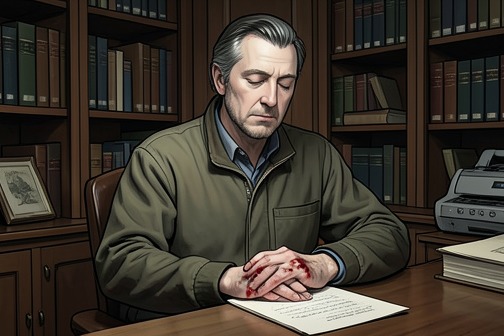
[Thomas Birdsey’s self-amputation](entity:action-recall-action-thomas-birdsey-s-self-8e1521be3c59) in the [Three Rivers Public Library](entity:location-recall-location-three-rivers-public-072cfe5509aa) is both a medical emergency and the public enactment of his belief that he had been chosen to warn the country. On [October 12, 1990](entity:time-recall-time-october-12-1990-18ff94a12147), he cut off his right hand, understood the act as a religious sacrifice, and later insisted that he had meant to awaken America, not to kill himself. The consequences extended beyond the library: his refusal of reattachment left [Dominick Birdsey](entity:character-recall-character-dominick-birdsey-4a27b6b8228a) to make a consequential medical decision, while Thomas’s account of his mission established the prophetic frame through which he interpreted the injury and its aftermath.
## Background and Setting
The incident took place on an afternoon when [Theresa Fenneck](entity:character-recall-character-theresa-fenneck-e0f3aa991629), the children’s librarian, was in charge of the Three Rivers Public Library because the head librarian was attending a meeting in Hartford. Thomas entered the library, went to a study carrel at the rear, and prayed. Fenneck could hear him from the front desk and warned that he must lower his voice or leave; if he wanted to pray, she told him, he should go to a church. The reprimand did not end his religious observance. He continued silently, repeating a passage from the Gospel of Matthew about removing a bodily part that causes one to sin.
The previous day, Dominick had spent several hours with his brother as part of their Sunday routine. He signed Thomas out of the [Settle Building](entity:location-recall-location-settle-building-5ce77e880d92), took him to lunch, and either visited their stepfather or drove with him before returning him to the hospital for supper. The ordinary structure of these visits contrasts with what followed: Dominick had recently been responsible for accompanying Thomas through a familiar routine, but on the day of the library incident he was away at work and did not witness the act.
Thomas used a ceremonial dagger that [Ray](entity:character-recall-character-ray-b860e51616e4) had brought home as a [World War II](entity:time-recall-time-world-war-ii-d4353dde1684) souvenir. Until the afternoon before the incident, the weapon had hung sheathed on a bedroom wall in the house where the twins grew up. Its movement from an overlooked household object to the instrument of Thomas’s public act links the library episode to their family history, without making the weapon’s earlier role in the home itself the cause of what happened.
## The Act in the Library
The narrative account is retrospective. Dominick says he learned what happened from Thomas and from newspaper coverage that appeared alongside news of Operation Desert Shield. In the library, after Fenneck’s warning, Thomas continued his prayer in silence and used his left hand to carry out an act he had rehearsed mentally. The attending orthopedic surgeon later described Thomas’s determination, noting that the pain would ordinarily have interrupted such an effort. The account makes the deliberateness of the act clear while distinguishing that deliberation from an intention to die.
After removing his right hand, Thomas threw it across the library floor and tried to control the bleeding. He then raised his arm and moved from the carrel to a nearby table, where he sat quietly and went into shock. The knife remained in the carrel. These details matter to the sequence: Thomas did not continue attacking anyone or use the knife against the people around him. His action was directed at himself, and the people present gradually understood that they were not facing an assault on the library’s patrons.
Their first response was panic. Some patrons ran for the exit, while two women hid among the stacks. Fenneck crouched behind the front desk and called emergency services. Once it became clearer that Thomas posed no threat to others, she rose and directed the custodian to cover the severed hand with a newspaper. Emergency medical technicians and police arrived at the same time. The technicians treated Thomas, secured him to a stretcher, and placed the hand in a bag packed with ice from the staff lounge refrigerator.
## Medical Decisions and Dominick’s Role
At the emergency room, Thomas regained consciousness and firmly refused an operation to reattach his hand. Ray was away and could not be reached. Dominick, who was working on scaffolding and power-washing a three-story Victorian house on Gillette Street, arrived after a police cruiser came to the house with its lights flashing. Because Thomas’s doctors regarded Dominick as his rational next of kin, they asked him to decide whether the proposed surgery should proceed.
The surgeon offered to sedate Thomas and restrain him during the first days after surgery, but Thomas warned that he would remove the hand again if it were reattached. He framed his refusal as part of a pact with God and rejected the doctor’s ability to act as his savior. The conflict thus concerned more than the technical possibility of restoring the hand: it placed Thomas’s stated wishes, his religious delusions, and the medical team’s proposed intervention in direct opposition.
Dominick initially experienced the doctor’s authority through the history of control Thomas had endured. The surgeon seemed to him like their stepfather and like other people who had bullied or wielded power over Thomas. Dominick’s decision against reattachment followed that response. The surgeon, already prepared for the operation, instead performed a four-hour procedure, taking skin from Thomas’s upper thigh to fashion a graft over the wrist. The decision did not restore the hand, and the alternative procedure addressed the wound while leaving Thomas’s refusal of reattachment in place.
## Aftermath and Significance
In the following days, Thomas received medication for pain, infection, and combativeness. An approved visitors list kept reporters away, although newspapers and television stations had already contacted Dominick’s home and spoken with [Joy](entity:character-recall-character-joy-aa3ba3cae50b). Thomas explained his purpose repeatedly to detectives, medical staff, and hospital workers. He said he had not intended suicide: he wanted a public statement that would make the country recognize the danger of greed and violence and follow a more spiritual course. He described himself as a doubting Thomas who had become Simon Peter, a prophet bearing both a gift and a burden.
The public meaning Thomas assigned to the act did not erase its medical and personal consequences. He was treated for a severe injury, remained under psychiatric care, and continued to insist that his message—not self-destruction—had been its purpose. The event therefore brings together his religious certainty and the institutional responses to his illness without making them identical: Thomas interpreted what he had done as prophecy, while hospital staff treated the immediate physical and psychiatric crisis.
The night before Thomas’s release and recommitment to [Three Rivers State Hospital](entity:location-recall-location-three-rivers-state-h-d769b42b4083), where he had been an intermittent resident since 1970, he again spoke to Dominick about carrying the burden of his mission. Dominick could not answer or look at the bandaged arm. Instead, he looked at his own work-stained hands and found himself gripping one wrist with the other. The closing image shifts the aftermath from Thomas’s claimed prophecy to Dominick’s bodily response: the twin who had made the decision could neither explain nor comfortably witness what had happened. The library act thus marks not only Thomas’s public declaration, but also a new burden in the brothers’ relationship—one shaped by Dominick’s choice, Thomas’s continuing conviction, and the distance between them in the face of the event.
Event 2
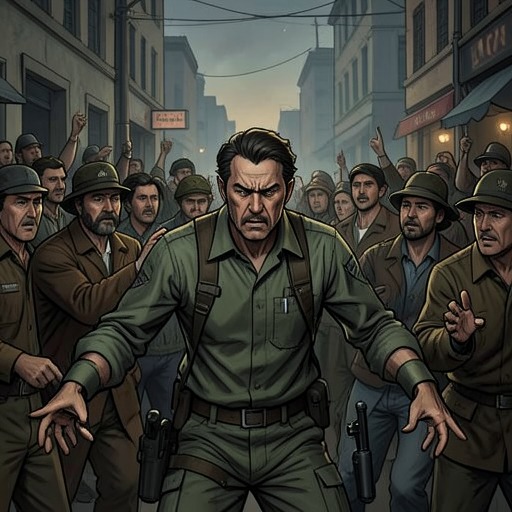
Thomas is taken to Hatch and involuntarily committed
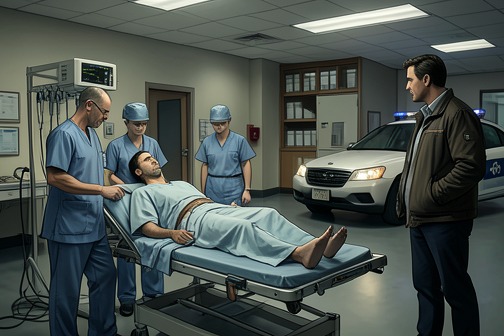
[Thomas is taken to Hatch and involuntarily committed](entity:event-recall-event-thomas-hatch-e31172ef80d2) in a sequence that transforms a routine return to outpatient care into a forced separation from Dominick. The transfer makes the hospital’s rules tangible: Thomas is restrained and admitted despite his brother’s repeated efforts to redirect the police, while Dominick is permitted only limited access. Their parting is also the start of a longer institutional process, first under an emergency certificate and later before the Psychiatric Security Review Board.
## Setting and Background
The transfer occurs within a declining state-hospital complex. As the police cruiser enters the grounds, Dominick recalls that the institution once housed more than four thousand patients; by this period, the inpatient population has fallen to around two hundred. Decay and downsizing have left only the [Settle Building](entity:location-recall-location-settle-building-5ce77e880d92) and [Hatch](entity:location-recall-location-hatch-fdeb24d75f73) operating. The diminished campus frames the encounter: the buildings remain, but the system’s use of them has changed.
Thomas’s established connection is with [Settle](entity:location-recall-location-settle-037b6270bdf7), where he participates in an outpatient program and works at the news rack and coffee cart. Dominick understands Settle as the proper destination after an episode, and expects its staff to contact Thomas’s doctor if anything needs clarification. The officers instead tell him their orders specify Hatch. The route past Settle therefore marks the decisive reversal: the destination familiar to Thomas and his brother is passed without stopping, and the police proceed to a more restrictive facility.
The later account of the legal system supplies part of the wider context. A patient named Jimmy Lane wandered away from a supervised group while on a day pass and killed a child. The case provoked public anger and reinforced the stereotype that people with mental illness were inherently dangerous. After the controversy over the insanity defense, the governor dismissed the commissioner and the department was restructured; the Psychiatric Security Review Board was then established. This history helps explain why Thomas’s admission belongs to a system shaped not only by individual care, but also by public scrutiny and concern about risk.
## The Transfer and Dominick’s Appeal
As the cruiser passes the Settle Building, Dominick tells the officers to turn back. He insists that Thomas belongs at Settle, where he works and receives outpatient care, and argues that a call to his doctor could resolve what he believes is an error. At Hatch’s gate, Dominick asks Sergeant Mercado to take Thomas the short distance back to Settle for a few minutes. He appeals to Mercado as a person with brothers, asking him to pause before carrying out what Dominick sees as an automatic police response.
The appeal does not alter the order. Thomas struggles against his restraints and repeatedly calls for Dominick’s help. Dominick tells him that he will straighten things out and get him back to Settle that night, although he admits to himself that he only partly believes this promise. The metal barrier between the front and back seats becomes an early sign of the separation to come: Dominick remains physically close, but no longer has control over where Thomas is taken or what happens next.
At the entrance, Dominick continues to describe the transfer as a mistake. He points out that Thomas is not combative, has not hurt anyone, and is connected to Settle’s outpatient program. Thomas adds that the coffee cart needs him in the morning. Staff permit Dominick to accompany him through the initial admission, but only as far as the security station; he cannot enter the ward. Calls to the doctor will have to wait until morning, narrowing the help Dominick can offer to pleading and waiting.
## Admission and Separation
The security screening turns Thomas’s everyday belongings into items subject to institutional control. Staff take his duffel bag and Bible, empty the bag onto a conveyor belt, and inspect its contents by X-ray. The objects include toiletries, a pen, a seasonal religious button, and dress shoes with a clip-on tie tucked inside. Nothing in the search indicates a concealed weapon, but the inspection is followed by rules: Thomas’s possessions will be cataloged and stored, the hospital will issue toiletries, and reading material must first be approved by a doctor or unit leader. Dominick’s keys are also withheld because his key ring includes a small knife.
The procedure makes the difference between Dominick’s understanding of the situation and the hospital’s authority increasingly plain. Dominick questions why Thomas must remain handcuffed and presses staff to contact his doctor. When Thomas soils his clothes, Dominick reassures him without reproach, then insists that someone call [Dr. Willis Ehlers](entity:character-recall-character-dr-willis-ehlers-e9a5432f82f3) and that he will not leave until Thomas is released. Staff answer that doctors are called after hours only for emergencies. The details of intake do not resolve the supposed mistake; instead, each rule postpones the action Dominick believes will correct it.
When staff announce that Thomas will be admitted to the unit, Dominick again asks for a social worker, but is told none is available after regular hours. Aides take hold of Thomas and lead him through the ward doors. Dominick tries to intervene and is restrained by the officers and guards. The doors close behind Thomas, making the separation immediate and visible. In the struggle that follows, a guard forces Dominick against a wall and knocks him to the floor. The encounter leaves him with direct knowledge of the force available to the institution, rather than the leverage he had hoped to use on Thomas’s behalf.
## Emergency Hold and Longer Consequences
Thomas’s initial admission is made under a Physician’s Emergency Certificate initiated by a surgeon at [Shanley Memorial Hospital](entity:location-recall-location-shanley-memorial-hos-210284df7136). The certificate allows the hospital to observe him for fifteen days and determine whether he is dangerous to himself or others. Dominick is told that the hold is court-ordered and cannot be undone that day. This formal explanation settles the immediate question of whether he can simply take Thomas back to Settle: he cannot. The emergency period places the decision beyond the reach of the brother who has been trying to negotiate it at the security station.
The emergency hold leads into review by the Psychiatric Security Review Board. In its later unanimous decision, the board retains Thomas at Hatch for one year, finding that he may pose a danger to himself and others. His case is scheduled for another review in October 1991, while his social worker, [Lisa Sheffer](entity:character-recall-character-lisa-sheffer-7a02d3d6d30b), requests a follow-up in six months rather than waiting a full year. The transfer thus marks not a brief detour from outpatient care but the beginning of a prolonged detention and review process.
## Significance
The event turns on a widening gap between care as Dominick understands it and custody as the institution administers it. He expects a familiar building, a phone call, and a quick correction; instead, the police order, the security procedures, and the emergency certificate each close off another avenue of intervention. His promise to retrieve Thomas that night cannot overcome the rules that now govern his brother’s movement.
The failed appeal also changes Dominick’s role. At first he speaks as the person who knows Thomas’s routines and can explain why Settle is appropriate. Once Thomas is taken behind the ward doors, Dominick is reduced to an outside witness, and the confrontation with the guards makes the limits of his protection painfully concrete. The transfer establishes the central terms of their separation at Hatch: Thomas is subject to institutional decisions, while Dominick must try to reach him through procedures he neither controls nor initially understands.
Event 3
The Birdsey family television catches fire
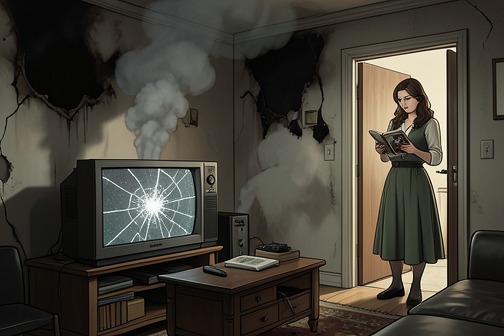
[The Birdsey family television catches fire](entity:event-recall-event-birdsey-14e68d15b261) on a Saturday morning when Dominick and Thomas are ten, turning an ordinary domestic stalemate into a scene of smoke, shattered glass, and mistaken nuclear alarm. The boys survive, and [Ma](entity:character-recall-character-ma-9cb60cf0594d) returns to the burning house for the family photo album. Recalled by Dominick as an adult, the episode binds childhood fear to the objects and gestures through which his mother makes the family feel safe.
## Setting and the first signs of danger
That morning begins with the twins in pajamas, watching cartoons and ignoring Ma’s orders to bathe, dress, and help wash the windows. [Ray](entity:character-recall-character-ray-b860e51616e4) is away duck hunting with his friend Eddie Banas, and the boys respond differently to the two adults: they obey Ray immediately, while Ma’s instructions seem optional. The television is part of this familiar scene, an appliance the children can watch without considering it—until a thin curl of smoke rises from its back.
The program is The Howdy Doody Show. Dominick remembers Clarabel the Clown chasing someone with a seltzer bottle; then picture and sound disappear, and flames rush up the parlor wall. The abrupt shift from children’s entertainment to a burning room makes the set suddenly visible as a dangerous physical object. Its failure is not explained: the fire is described as spontaneous, and the narrative supplies no technical cause.
## The boys’ mistaken emergency
Dominick interprets the smoke through the threat he already knows. He thinks the Russians have launched a bomb, recalling Ray’s dinner-table warnings that the submarine base and [Electric Boat](entity:location-recall-location-electric-boat-20276e7cc061) would be guaranteed targets in an attack. Ray had described the jolt reaching [Three Rivers](entity:location-recall-location-three-rivers-1f183a1f9bef) and fires breaking out everywhere, followed by a meltdown in which people’s bodies would melt. A household accident thus triggers the boys’ learned image of national catastrophe.
Dominick shouts, “[Duck and cover](entity:rule-recall-rule-duck-and-cover-6d06d6b61557)!” He and Thomas drop into the protective position they have practiced at school. Then an explosion sounds near the television; thick black smoke fills the room, and glass rains down. The civil-defense posture is real, but the danger it was meant to answer is not the danger before them. Ma runs in when the noise and smoke bring her from elsewhere in the house. She lifts Thomas and tells Dominick to climb onto her back. He insists they cannot go outside because of fallout; she answers that it is the television, not a bomb. Her correction replaces the imagined public disaster with the immediate household emergency, without making the fire any less frightening.
## Ma returns for the album
After the family reaches the sidewalk, Mr. Anthony calls the fire department while Mrs. Anthony brushes glass from the boys’ crewcuts with a whisk broom. They spit soot-flecked phlegm. When they realize Ma is missing, Thomas begins to cry; Dominick and Mrs. Anthony cry too as they wait for the siren. Through the parlor windows, Dominick sees the flames shriveling the lace curtains. The scene’s focus shifts from the children’s escape to the possibility that Ma has gone back inside.
A minute or so later, Ma emerges sobbing, clutching something to her chest. Paper towels in one pocket of her coat are on fire, and the coat is smoking. Mr. Anthony pulls it off and stamps out the flames. Ma’s face is sooty, and the fire has singed her eyebrows. When she reaches for the twins, loose photographs fall to the ground; Dominick understands that she returned for her album, kept in the bottom drawer of the china closet.
The rescued object gives the return a concrete purpose: Ma has risked herself to bring back the family’s photographs. Dominick says that the house her father built would be saved, that her twins are within arm’s reach, and that the album has been rescued. Those three conditions make up the reassurance she repeats: “It’s all right now.” The words do not undo the danger; in the passage, they mark what Ma has managed to gather back around herself and her children.
## The memory’s later return
The album continues beyond the emergency as a damaged, handled object. Ma repeatedly opens and closes it; over time, the two brass pins attaching its covers bend and break, leaving most of its black construction-paper pages loose and detached. The book’s slow deterioration stands beside the sudden violence of the fire: the album survives the burning house, but it is not untouched by years of use and family history.
Dominick’s adult narration returns to the scene through a dream of Ma, who has been dead from breast cancer since 1987. In the dream she stands at the picture window of the condominium Dominick shares with [Joy](entity:character-recall-character-joy-aa3ba3cae50b), looking in and mouthing the promise from the fire. The recollection therefore does not end with the children reaching safety. It carries Ma’s reassurance into Dominick’s later life, making the rescued album and the repeated words part of the same family memory. The episode’s decisive reversal is small in scale but lasting in effect: a television’s failure produces the children’s fear of national annihilation, while Ma’s return for the photographs turns the rescue into an image of what she wants to keep safe.
Event 4
1954 launch ceremony of the Nautilus
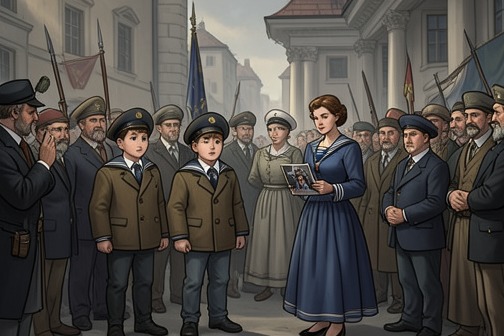
The [1954 launch ceremony of the Nautilus](entity:event-recall-event-1954-c7d80a25c099) is remembered as both a national spectacle and a family story: the day four-year-old twins [Thomas Birdsey](entity:character-recall-character-thomas-birdsey-8bc90de9bb24) and [Dominick Birdsey](entity:character-recall-character-dominick-birdsey-4a27b6b8228a) were photographed with Mamie Eisenhower, and [Ma](entity:character-recall-character-ma-9cb60cf0594d) understood their sudden access to the First Lady as confirmation that her sons were special. Recounted years later by Dominick and preserved in a newspaper clipping and family scrapbook, the episode sets the children’s bewildered presence beside the era’s confidence in technological power and its fear of Communism.
## A family enters a national ceremony
The ceremony took place in Groton, [Connecticut](entity:location-recall-location-connecticut-30b7fc394c2c), on January 24, 1954, when the President’s wife came to christen the USS Nautilus, America’s first nuclear-powered submarine. The launch carried a public significance much larger than the family’s place in the crowd: the Navy and [Electric Boat](entity:location-recall-location-electric-boat-20276e7cc061) were partners in building the vessel, presented as America’s best hope for containing Communism. [Ray](entity:character-recall-character-ray-b860e51616e4)’s work as a pipe fitter for Electric Boat gave the family tickets, placing them among the invited spectators below the dignitaries’ platform.
A newspaper photograph records the twins in matching sailor hats and wool pea jackets, saluting the readers of the [Three Rivers](entity:location-recall-location-three-rivers-1f183a1f9bef) Daily Record. In another image from the day, Mamie Eisenhower stands between them, a mink-coated arm around each boy. The caption turns the scene into a public novelty, describing the First Lady’s two-gun salute; the children themselves look bewildered and obedient. Their matching clothes and paired pose make them part of the ceremony’s visual pageantry, while their uncertain expressions register how little the event’s adult meanings belonged to them.
The occasion also fixed the family’s changed identity in the public record. The twins had been born as Thomas and Dominick Tempesta, but by the time of the launch they were Thomas and Dominick Birdsey, now part of Ray’s household. Their appearance with the President’s wife depended on the ordinary circumstance of their stepfather’s employment, even as Ma remembered the encounter as extraordinary and personal.
## Ma’s account of the day
Years later, while Dominick had begun renovating her kitchen, Ma recalled the launch with an animation that altered the mood of the room. She remembered a cold, foggy morning giving way to sunshine just before the christening. Having prayed to Saint Anne for good weather, she took the clearing sky as a small miracle and as a sign that Heaven supported America against the godless Communists she feared would conquer the world and destroy the country. The scene’s public optimism thus reached her through both national rhetoric and a religious interpretation of the weather.
Ma’s central memory was not the submarine’s engineering or the speeches of the dignitaries, but seeing her sons with the President’s wife. She remembered Mamie and an admiral’s wife waving from the VIP platform and believed Mamie was pointing directly at the boys. Ray dismissed the gesture as part of the show; Ma remained sure that Mamie had noticed them. Her conviction that people were always delighted by twins gave the encounter a personal continuity: the ceremony did not merely display two children but seemed, in her telling, to recognize their specialness.
That recollection had a visible effect on her as she spoke. The old pictures and the sudden morning sun through the kitchen’s front windows strengthened her voice and animated her gestures; remembering the day brought her joy and, Dominick thought, eased some of her pain. The launch therefore recurs in the narrative not just as a dated childhood episode but as a memory that can briefly change Ma’s present state.
## From the platform to the Officers’ Club
After the ceremony, the family followed Secret Service men to the Officers’ Club lounge. Ma remembered being frightened that they had done something wrong, only to discover that they were following Mamie Eisenhower’s orders: she wanted a picture with the twins. The episode reverses the family’s position in the public scene. They had begun as ticket-holding spectators beneath the platform; now the First Lady’s invitation brought them close to the dignitaries.
The adults’ reception underscored that shift. Ray took the encounter in stride, had a cocktail with Admiral Rickover and other senior officers, and answered questions about his service record. The boys were given orange sodas in frosted glasses almost as tall as they were. Ma, nervous at being so close to Mamie, drank nothing. She remembered Mamie ordering a Manhattan, eating liver pâté on a cracker, and asking whether Ma had sewn the boys’ sailor suits; she also remembered Mamie saying that she still knitted. These small exchanges leave the ceremony’s grandeur behind and preserve an ordinary social encounter within it: the First Lady’s interest in the children’s clothes, the mother’s anxiety about spilled soda, and Ray’s ease among the brass.
## The event as family memory
The launch survives in Dominick’s account through objects that hold different kinds of memory. The folded newspaper, browned and brittle with age, shows the newborn twins in one photograph and, in the later clipping, the boys beside Mamie Eisenhower. When Thomas unfolds the sailor-suit picture years afterward, Dominick smiles at their bewildered faces. Thomas has no recollection of the day; Dominick’s own memories are fragmentary. Ma’s detailed story therefore supplies what the twins themselves cannot reliably remember.
The family scrapbook is not a neat chronology. After Ray repaired it, its loose pages remained out of order, placing later snapshots beside old studio portraits and allowing the brothers to encounter their grandfather in photographs despite his death before their birth. Dominick connects the rescued image of the launch to this larger, disrupted archive: after he lost the story dictated by his grandfather, Ma had entered the burning house and saved the family’s pictures. The launch clipping is consequently more than a record of a public appearance. It is one surviving fragment through which a mother’s pride, the twins’ childhood image, and the family’s changing past can still be brought together.
Event 5
The 1958 movie theater and bus encounter
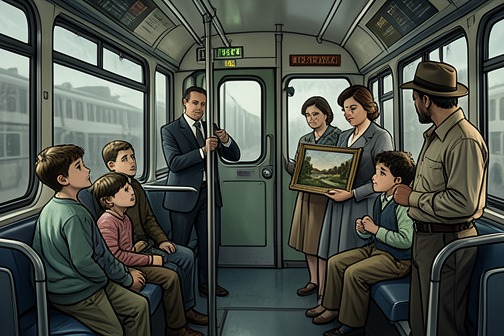
[The 1958 movie theater and bus encounter](entity:event-recall-event-1958-e065d2942fd4) begins as a family outing with [Ma](entity:character-recall-character-ma-9cb60cf0594d) and [Thomas Birdsey](entity:character-recall-character-thomas-birdsey-8bc90de9bb24), but becomes a childhood memory shaped by intimidation and fear. In the theater restroom, Lonnie Peck humiliates Dominick while [Ralph Drinkwater](entity:character-recall-character-ralph-drinkwater-42b07cfe79c4) turns the washroom into a noisy spectacle. On the return bus, a stranger stares at the twins and reaches toward Ma behind a painting she is carrying. The two episodes are distinct, but together they show how a child’s vulnerability is compounded when adults and bystanders do not make him feel safe—and how the family’s response is to keep the danger unspoken.
## The Outing and the Theater
In [1958](entity:time-recall-time-1958-869fc8a4622e), Ma takes Dominick and Thomas to the movies for the Back-to-School Festival of Fun. On the city bus, the boys take turns pulling the stop cord; Dominick gets his turn at the five-and-ten because Thomas had pulled it on their previous trip. The small ritual of fairness makes the outing feel ordinary and companionable. The bus driver jokes with the children, and when they get off, he calls out a playful goodbye. Dominick answers from the sidewalk, while Thomas says nothing. This light exchange establishes the outing as a place where children can play and speak freely—an expectation the later incidents overturn.
At the theater, the mood shifts in the bathroom. After Dominick is left alone, he tests a forbidden word aloud, then worries that saying it has left a dirty mark on his soul. Lonnie and Ralph arrive. Lonnie offers money, takes Dominick by the wrist, and makes him hold out his hand. Dominick recognizes the gesture as a trick but complies. Lonnie then jerks his wrist so Dominick’s own hand slaps his face, repeating the humiliation while laughing at him. Dominick says it stings rather than seriously hurts, but also measures the imbalance plainly: he is a third-grader facing a much larger fifth-grader who has repeated grades many times. The scene’s injury lies in the forced participation as much as in the sting; Lonnie makes Dominick’s body perform the joke against himself.
Ralph contributes a different kind of disruption. He rushes along the urinals, flushes them, and turns on the sinks until the pipes rattle; Lonnie pulls paper towels from their holder and calls the commotion a fun house. Dominick escapes, runs through the lobby, and returns to his seat without telling Ma what happened. He sits cross-legged so that, in his fear, rats will not walk on his feet. His heart pounds, his face feels hot, and the danger remains present in his body even while the family resumes its outing. Thomas, meanwhile, has hung the boys’ protractors from his ears as earrings. The childish joke provides a sharp contrast with the violence Dominick has just concealed.
## The Stranger on the Bus
On the bus, the twins and Ma are sent to the back because it is crowded. Ma sits opposite the boys, holding a new painting on her knees. A man with unkempt hair, whiskers, and a large lump on his forehead squeezes into the space beside her. Dominick remembers him as the frightening man he would see and dream about throughout his life. The stranger mutters and stares at the twins, making a remark about seeing double. Ma signals to Dominick not to stare, but the man turns his attention to her. He leans toward and sniffs her, while Ma leans away as far as she can, one hand against her lip and the other holding the painting. Thomas begins to cry.
Dominick expects someone else on the bus to intervene, but no passenger pays attention. The stranger’s hand comes out of his jacket pocket and moves toward the painting, then behind it near Ma’s legs. The painting, held tightly in Ma’s hands, becomes both a barrier and a visible point of threat. Ma’s hand shakes; she says and does nothing in the moment. Dominick, frightened and angry, describes his head as boiling hot. The episode does not establish what the stranger intends or that he touches Ma, but its uncertainty intensifies the boys’ helplessness: they see a threatening movement and cannot make the surrounding adults respond.
At the next stop, Ma gets the twins off quickly, striking the painting against things as she hurries up the aisle. When the driver asks whether everything is all right, she answers yes. The family has barely reached the sidewalk before the stranger appears there too. They run; Thomas’s pencil box slips open and its contents spill out. Ma orders the boys not to stop or look back. Dominick does look, and each time the man is farther away, until he stops and shouts something Dominick cannot understand. The scattered pencil-box contents are a small material consequence of the escape, but the more decisive consequence is that the family reaches home in tears.
## Fear, Secrecy, and Aftermath
At home, Ma locks the doors and windows and pulls down the shades. Then she sits in a dining-room chair and cries so violently that she shakes the table and rattles the dishes in the china closet. The boys stop crying to watch her. The scene reverses the children’s earlier view of Ma as the adult who could manage an ordinary excursion: her fear becomes visible in the whole house, while the locked doors and lowered shades extend the bus encounter into their home.
After she can speak, Ma tells Dominick and Thomas not to tell [Ray](entity:character-recall-character-ray-b860e51616e4) what happened. If he asks how the movie was, they should say it was good; she fears that if Ray learns of the incident, he will no longer let them go to the movies. She also minimizes the stranger’s responsibility, saying he was not really bad, did not know any better, and was crazy. Her explanation does not undo what the children witnessed. Instead, it turns the event into a secret the boys are required to help maintain, and makes preserving future outings part of the reason for their silence.
Ma later kneels on the bed in her and Ray’s bedroom and taps a nail into the wall to hang the new painting. She promises Thomas a replacement pencil box, a better one than the cheap boxes given out at the show. These ordinary acts restore some order after the flight, but they do not amount to a spoken account of what happened. The painting is hung; the damaged box is to be replaced; the frightening encounter is not to be reported to Ray.
## Narrative Significance
The recollection places two forms of childhood exposure in the same outing. In the theater, Dominick is physically overmatched and subjected to a joke he cannot stop; on the bus, he watches a stranger threaten Ma while the other passengers remain inattentive. In both situations he understands danger more clearly than he can control it. His choice to tell no one about Lonnie and Ralph, followed by Ma’s explicit instruction to conceal the bus incident from Ray, makes silence part of the event’s aftermath rather than merely an absence of information.
The memory also distinguishes fear from the language adults use to contain it. Ma cries, locks the house, and hurries the children away, yet later describes the stranger as someone who did not know better and insists that the outing must be reported as good. The episode does not resolve that contradiction. Instead, the physical details—the trembling hand, the painting held tight, the spilled pencil-box contents, and the dishes rattling as Ma cries—preserve what the family’s explanation asks the boys to suppress. The encounter’s lasting weight comes not from a single confirmed injury, but from the children’s exposure to humiliation and threat, and from the silence imposed after they return home.
Event 6
Ma is diagnosed with breast cancer
[Ma](entity:character-recall-character-ma-9cb60cf0594d)’s breast cancer diagnosis turns a small discovery into a family reckoning with limited time. As [Dominick Birdsey](entity:character-recall-character-dominick-birdsey-4a27b6b8228a) recalls it, the illness became a sentence that each family member tried, in a different way, to answer with care; its presence later persisted through the family’s gestures of repair and Ma’s remembered reassurance.
## Discovery and Prognosis
After several months of fatigue and a cold that would not go away, Ma felt a lump in her left breast, which she described as no bigger than a pencil eraser. Lena Anthony urged her to see a doctor. Ma’s breast was removed, and a week later she learned that the cancer had metastasized to her bones and lymph nodes. The oncologist told her that aggressive treatment might give her another six to nine months.
The diagnosis made the family’s efforts to care for Ma inseparable from the knowledge that the illness could not simply be repaired. Her stepfather, [Ray](entity:character-recall-character-ray-b860e51616e4), Dominick, and [Thomas Birdsey](entity:character-recall-character-thomas-birdsey-8bc90de9bb24) each struggled with her illness and pain in their own way, trying to make things up to her.
## The Family’s Acts of Care
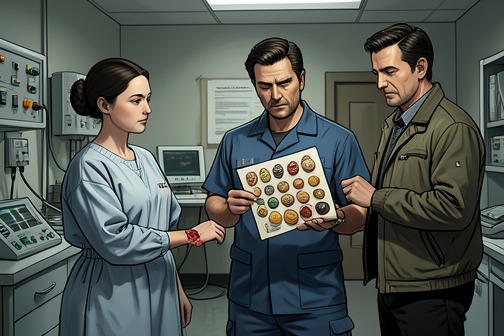
Thomas worked in the arts and crafts room at [Three Rivers State Hospital](entity:location-recall-location-three-rivers-state-h-d769b42b4083)’s [Settle Building](entity:location-recall-location-settle-building-5ce77e880d92) to assemble a hodgepodge collage from nuts, washers, buttons, macaroni, and dried peas. Its declaration of divine love made the crowded object seem almost alive to Dominick, who found it unnerving. Between hospital stays, Ma hung it on the kitchen wall: Thomas’s response to her illness was both an offering of love and a tangible object that remained in the household.
Ray turned to the family photo album, whose brass binding pins had bent and broken after years of use. He reinforced the binding with custom-cut aluminum strips and small metal bolts, then demonstrated that the covers could open and close again. Dominick, meanwhile, planned a major renovation of Ma’s pink 1950s kitchen, intending to replace its cracked plaster and creaky cabinets and add a central island with a built-in oven and cooktop. The three projects differed in scale and form, but each made care visible through something being assembled or restored.
## Memory and Continuing Presence
The album carries a particularly intimate connection to Ma. During an earlier house fire, she went back inside to rescue it from the bottom drawer of the china closet; when she reached for her sons, loose photographs fell to the ground. The fire had singed her eyebrows and sooted her face, but she reassured the twins that everything was all right: the house her father built would be saved, her sons were close, and the album had been rescued.
Years after [Ma’s death](entity:event-recall-event-ma-eaea498a4cb0) from breast cancer in 1987, Dominick dreamed that she stood at a window and repeated the reassurance she had given long before. The dream brings her familiar words into his present, so the memory of her care does not end with the prognosis or her death. Her album likewise persists as a family object whose damaged binding and repair echo the family’s separate attempts to hold together what illness threatens to break.
Event 7
Ma’s death
[Ma’s death](entity:event-recall-event-ma-eaea498a4cb0) on [May 1, 1987](entity:time-recall-time-may-1-1987-a4b605087024), closes the possibility that she might explain the twins’ parentage and places a promise of care at the center of [Dominick Birdsey](entity:character-recall-character-dominick-birdsey-4a27b6b8228a)’s bond with [Thomas Birdsey](entity:character-recall-character-thomas-birdsey-8bc90de9bb24). During the final vigil, Dominick gives his mother permission to let go while [Ray](entity:character-recall-character-ray-b860e51616e4) struggles to accept that choice. Afterward, the brothers meet their loss in different ways: Thomas asks about [Ma](entity:character-recall-character-ma-9cb60cf0594d)’s suffering and for the return of a collage, while Dominick stays beside him because he still needs his twin.
## The final vigil
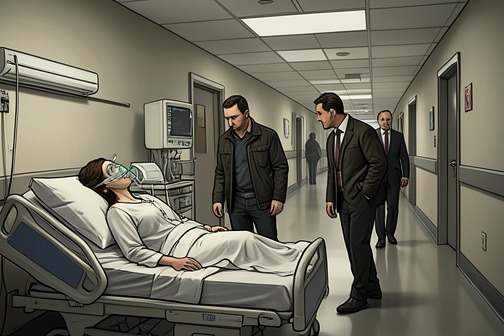
Ma slipped out of consciousness as Ray and Dominick kept watch through the night. Her breathing was labored, and she repeatedly tried to remove her oxygen mask. A hospice worker had explained that a person in a coma might still hear and understand, and suggested that the sons could give their mother permission to go if it felt right. Ray balked at the idea. For him, saying it aloud would mean accepting a departure he was not ready to authorize.
Ten minutes before Ma died, Ray went down the hall to the men’s room. Dominick leaned close to his mother and told her he loved her, that she need not worry, and that he would take care of Thomas. He then told her she could go. The promise made the moment both an act of tenderness toward Ma and an acknowledgment of the responsibility that had long shaped Dominick’s identity as Thomas’s twin. Ma died shortly afterward. Dominick had acted without Ray’s agreement, and the permission did not make the loss less real; it gave their mother a farewell that her sons could not provide together.
## What her death did not disclose
Dominick had imagined that Ma might reveal the identity of the man who had fathered him and Thomas. Her death offered no such answer. She did not wake to name him, just as she did not live to read her father’s history. Dominick had suspected different men at different times, and by the time of the vigil he had settled on [Angelo Nardi](entity:character-recall-character-angelo-nardi-cfaacaa699ba) as a theory, not a fact. Her silence left the twins’ parentage unresolved at the moment when they most needed an explanation from her.
After the hospital paperwork, Ray and Dominick drove to the funeral parlor to make arrangements, returned to [Hollyhock Avenue](entity:location-recall-location-hollyhock-avenue-00081328f039), and drank Ray’s good Scotch. [Ma’s photo album](entity:object-recall-object-ma-s-photo-album-0d8ee582cafa) lay on the dining-room table. Dominick could not bring himself to open it, but he took it with him when they went to tell Thomas. The album had already been rescued from the family house during a fire, a material link between Ma’s care for her sons and the family history she had preserved. Now it became part of the news of her death: too painful for Dominick to open, yet important enough to carry to his brother.
## Thomas and Dominick receive the news
Thomas’s eyes filled with tears when he learned that Ma had died, but he did not have the dramatic reaction Dominick had feared. When Ray asked whether he had questions, Thomas asked whether Ma had suffered at the end and whether he could have his [GOD = LOVE!](entity:expression-recall-expression-god-love-5cce1ffaaa67) collage back. Those requests register grief through immediate concerns: the condition of his mother at the end, and the return of an object associated with his own life. Ray left after about half an hour. Dominick remained, telling himself that he wanted to be there in case Thomas reacted later. He recognized that this was not the whole reason. On the morning of their mother’s death, he needed to be with his twin, regardless of who Thomas had become or how uncertain their lives had grown.
Dominick also apologized to Thomas for having lost his temper during an earlier visit to Ma. Thomas told him that her cancer was not his fault and attributed it to God. The response brought Dominick grim relief: Thomas was no longer blaming the Kellogg’s Cereal Company, which he had accused of putting carcinogens in Ma’s cereal. Yet his religious explanation also showed how he made sense of a loss that ordinary cause and blame could not undo. In a later account of the morning at [Settle](entity:location-recall-location-settle-037b6270bdf7), Dominick remembered Thomas as philosophical about the death, then recalled him showing the Lives of the Saints and comparing Ma to a saint. Thomas’s religious framing did not erase his concern for her suffering; it gave the loss a language shaped by his illness and beliefs.
## Grief that returns
Ma’s death does not end her presence in Dominick’s life. In a later dream, she appears at the picture window of the condominium he shares with [Joy](entity:character-recall-character-joy-aa3ba3cae50b), repeating the reassurance associated with the fire and her promise that everything would be all right. The dream binds the dying mother to an earlier image of Ma protecting her sons: after returning to the burning house to rescue the album, she had gathered the twins close and tried to comfort them. The reassurance survives, but now it arrives in a dream because Ma is gone.
Her care had also shaped the twins’ childhood responses to other losses. After [Penny Ann Drinkwater](entity:character-recall-character-penny-ann-drinkwate-3cc3048bbd58)’s unsolved murder, Dominick’s nightmares brought Penny back in frightening scenes. Ma came to the boys’ room, rubbed his arm, told him he was safe, and let him leave the light on. Dominick watched Thomas sleeping until the steadiness of his brother’s breathing helped him settle. Recalled beside Ma’s death, those childhood nights show the older pattern behind Dominick’s promise: Ma had comforted him through fear, and he understood caring for Thomas as the duty that passed to him.
The loss also remains entangled with other absences. Dominick later remembers telling Thomas he would become an uncle after [Angela](entity:character-recall-character-angela-8ec06be0ea1a) was born; Thomas smiled, but never saw his niece before she died three weeks and three days after her birth. In Dominick’s account, Ma’s death, Angela’s death, and Thomas’s illness belong to a life in which closeness is repeatedly threatened by separation. His vigil beside Thomas is therefore more than practical support. It is an attempt to preserve the twin bond Ma’s final promise entrusted to him, even as he knows that love cannot restore what has been lost.
Event 8
Domenico Tempesta’s death and the scattering of his manuscript
[Domenico Tempesta’s death and the scattering of his manuscript](entity:event-recall-event-domenico-tempesta-d6afd64525b0) form a single episode in the family’s history: while his life story was nearing completion, he died alone at his worktable, and its pages were blown across the yard. [Ma](entity:character-recall-character-ma-9cb60cf0594d)’s account of finding him and gathering the papers turns the manuscript into more than a record of his past. Its survival is bound to the daughter who recovered it and to the descendants who later tried to understand what it contained.
## The manuscript and its making
The manuscript was a substantial but materially mixed document. When Dominick later encountered it inside a manila envelope, it consisted of a small number of typewritten pages, including originals and carbon copies, followed by handwritten sheets in blue fountain-pen ink. The envelope had been wrapped around a coverless dictionary and secured with an elastic band. Those details give the family history a physical form: not a finished book, but loose and varied pages that had to be kept together.
Its production had already been difficult. Domenico devised a system involving a stenographer, a Dictaphone, and separate private rooms for the person dictating and the person taking dictation. The arrangement lasted about a week. A misunderstanding over the rental charge ended the use of the recording equipment: Domenico had expected to pay eight dollars a week, but learned that the charge was eight dollars a day. He and [Angelo Nardi](entity:character-recall-character-angelo-nardi-cfaacaa699ba) returned the machines, leaving them outside the house for two days before they were collected. Domenico then resumed dictating directly to Angelo, an approach that Ma recalled as no more successful than the first attempt. The scattered pages at the end of the story therefore belong to a manuscript whose creation had itself been repeatedly interrupted and reworked.
## The final morning
On the morning of his death, Domenico told Ma over breakfast that he was almost finished. Until then, he had not spoken directly to her about his progress. Ma assumed that, once the writing was complete, he might contact publishers in Italy and try to make a book of it. Instead, he considered destroying the entire manuscript after finishing it. The possibility complicates the meaning of the pages: the story mattered enough for him to persist through a troubled process, yet he contemplated burning it when the work was done.
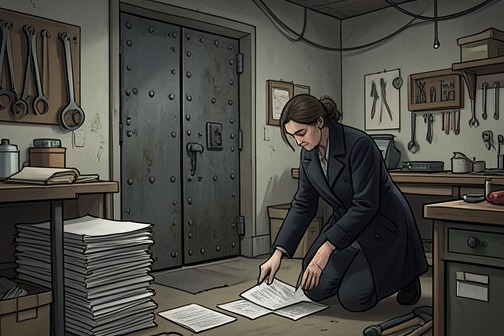
Ma remembered hearing him sobbing upstairs that morning, once with particular intensity. She wanted to go to him but believed that her presence might anger him or make matters worse; he had kept the project private. Later, when she went out with his lunch, she found him slumped over the table, his head down, while pages lay across the yard, caught in the hedges and against the chicken coop. Her recollection establishes that he was alone when she found him, and that his manuscript had been scattered around the place where he had been working. The account identifies a stroke in connection with his death, but does not describe its precise course.
## The pages across the yard
Ma ran inside to call both the police and a priest. Although Domenico had not been a churchgoer and held a grudge against St. Mary’s for an unspecified reason, she decided to call the priest as well. She then returned upstairs and stood about ten or twelve feet from him. Though she knew he was dead, she watched for a movement, hoping he might blink or yawn. The distance and waiting make her account a record of recognition resisted: she understood what had happened, but continued to look for evidence that it had not.
Afterward, Ma went around the yard picking up the pages. She described this as the one thing she could think to do for her father. Her action gives the manuscript its first clear custodian. The pages had been dispersed by the circumstances of his death, but she gathered them rather than leaving them scattered. The later discovery of the manuscript in a strongbox connects that act of collection to its subsequent presence in the family, without establishing that every page blown across the yard was recovered.
## Family memory and the unfinished record
Dominick encounters the manuscript years later, when Ma opens the strongbox and explains that it is her father’s life story, dictated during the summer he died. The account moves between the material evidence of the document and Ma’s remembered explanation of how it was made and found. The manuscript’s typed and handwritten sections, its improvised production, and the pages gathered from the yard all make its transmission part of the story: the family history reaches later generations through a fragile object whose creation and preservation were never straightforward.
Ma herself did not get to read her father’s history before her own death. That later loss sharpens the episode’s significance without resolving what Domenico intended to say or whether he would ultimately have preserved the manuscript. The death leaves both a narrative and an unanswered question: a life story nearly complete, and a writer who had considered destroying it. Ma’s recovery of the pages keeps that uncertainty in circulation. Rather than making the manuscript a settled explanation of the family’s past, the episode presents it as a record rescued from dispersal and passed on for others to confront.
Event 9
The failed plan to translate Domenico’s life manuscript
[The failed plan to translate Domenico’s life manuscript](entity:event-recall-event-domenico-576e3378592d) is [Dominick Birdsey](entity:character-recall-character-dominick-birdsey-4a27b6b8228a)’s effort to give [Ma](entity:character-recall-character-ma-9cb60cf0594d) her father’s story in a form she could read, and its failure leaves both a practical loss and an unfinished act of love. Conceived during Ma’s final illness, the project places hope in a written family history; when the manuscript disappears, the family is left with no translation and Ma dies without reading it. The later discovery of her photograph album offers a poignant contrast: the written account is lost, but her rescued images preserve a way of encountering the grandfather she never got to see again.
## The Gift and the Search for a Translator
The idea arrives in the middle of the night. Dominick wakes at 2:00 A.M. with what seems to him an obvious answer to the problem of what to give his dying mother: have her father’s life story translated, printed, and bound. The project is more than a book commission. It is a chance to return [Domenico Onofrio Tempesta](entity:character-recall-character-domenico-onofrio-te-496f9cb21da8) to Ma through the words he dictated, and to make that history available to her before time runs out.
The next day, Dominick drives to the university’s Department of Romance Languages. Its office is on the top floor of a stone building dwarfed by two massive, leafless beech trees. A secretary gives him a list of possible contacts. After an hour of false leads and locked doors, he climbs a narrow staircase to a half-landing and knocks on the office door of [Nedra Frank](entity:character-recall-character-nedra-frank-281a94c01dc9), the last person on the list. The drawn-out search gives the project an uncertain beginning: Dominick has found a possible translator, but only after other avenues have already failed.
Nedra examines Domenico’s pages and distinguishes between standard Italian and what she identifies as peasant Sicilian. She also asks whether their author was mentally ill. Dominick registers the question as an insult, and his account of the meeting dwells on his irritation: he scrutinizes Nedra’s appearance and office as he resists what he hears as her dismissive assessment. Her first response is that she is a scholar and that his request resembles commissioning serious art to match a sofa and drapes. The comparison makes clear that she does not initially regard a translation made to satisfy a family need as a straightforward academic task.
## A Commission Without Security
Nedra changes her mind and looks through the pages again. She notes that the typed pages are single-spaced, then sets terms: four hundred dollars up front and an estimated month or two to finish, given a schedule she describes as oppressive. Dominick accepts the arrangement and writes the check, although he is already anxious about how the manuscript will be handled. He fears she may summarize or omit pages and worries that the work will be shaped by her abbreviations and interpretations. The commission begins, but his dependence on a stranger’s judgment makes him feel exposed rather than reassured.
Over the following weeks, Dominick calls Nedra several times, hoping either to check her progress or answer questions. Each attempt goes unanswered. The silence does not prove that she has abandoned the translation, but it turns his concern into uncertainty: he cannot see what is being done with the manuscript or establish whether the work is moving forward. The project’s promised timetable is therefore not matched by any communication that might let him trust it.
At the same time, Ma’s illness demands attention. [Ray](entity:character-recall-character-ray-b860e51616e4) drives her to [Yale–New Haven Hospital](entity:location-recall-location-yale-new-haven-hospi-f6ad14687951) for chemotherapy and radiation, keeps her company, eats in the cafeteria, and sleeps in a chair beside her bed before driving north on I-95 to work his shift at [Electric Boat](entity:location-recall-location-electric-boat-20276e7cc061). Dominick worries that Ray is taking on too much; Ray responds by asking what else he is supposed to do. This parallel caregiving underscores the pressure surrounding the translation: while Dominick tries to preserve Ma’s connection to her father, the family’s immediate labor is focused on getting Ma through treatment and keeping her company.
## The Manuscript Disappears
By March, the oncology team at Yale has begun to sound unconvincing to Dominick. Ma is in near-constant pain, and the comfort she receives comes mainly from an old Polish priest and hospice volunteers. Painting season has also begun, and Dominick says he cannot afford to forgo the work. He does not return to the university until mid-April, when he has found both the time and the resolve to ask for Domenico’s story back, whether or not the translation is finished. The delay reflects competing demands, but by then the practical question is no longer simply when the book will be ready; it is whether the manuscript can be recovered at all.
Nedra’s office mate tells Dominick that she has withdrawn from the degree program for personal reasons. Her desk has been cleared and the bulletin board stripped bare. Dominick protests that she still has something important that belongs to him and asks how he can reach her. The office mate can offer no answer. The head of the department also cannot help, while the head of humanities says she will try to locate Nedra and convey Dominick’s concern, without promising that he will be contacted. Because the agreement was between Dominick and Nedra, the university says it cannot release her forwarding address.
The disappearance has a distinct consequence: Dominick loses access not only to the translation but to the manuscript itself. The university’s involvement stops at relaying his concern; it cannot restore the pages or give him a way to pursue Nedra. The account does not reveal where she went, what happened to the manuscript, or whether any part of the translation was completed. Its silence leaves the central loss unresolved rather than supplying a final explanation.
## Ma’s Death and the Other Family Record
On [May 1, 1987](entity:time-recall-time-may-1-1987-a4b605087024), Ma slips out of consciousness. Ray and Dominick keep vigil through the night as she breathes raggedly and repeatedly tries to pull away her oxygen mask. A hospice worker has suggested that, if it feels right, they might give her permission to go, since someone in a coma may still hear and understand. Ray cannot accept that suggestion. When he steps into the men’s room, Dominick leans close to Ma and tells her he loves her, that she need not worry, and that he will take care of Ray; he then gives her permission to go. She dies without receiving the book. The account also stresses that she never reveals the identity of the man who fathered the twins with her.
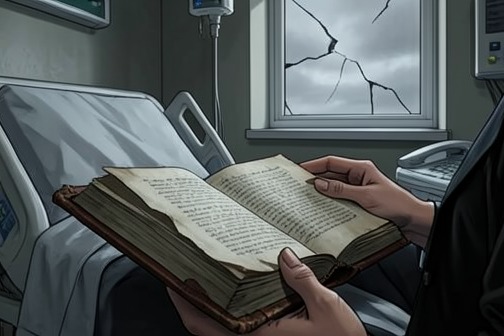
Later, Dominick and Thomas look through Ma’s repaired scrapbook. Its loose pages have not been restored to chronological order, so images from different periods sit side by side: the twins at the 1964 World’s Fair, Ray in his Navy uniform, and Domenico arm in arm with the young bride who would later drown at Rosemark’s Pond. Although Domenico died before the twins were born, the album makes him present to them through his image. Dominick recognizes the contrast sharply: he lost Domenico’s dictated story, while Ma entered the fire and rescued the family’s visual record. The translation never carries his grandfather’s life to Ma, but the photographs preserve a fragment of the family past that the failed commission could not deliver.
Event 10
Thomas’s psychotic breakdown at McDonald’s

[Thomas’s psychotic breakdown at McDonald’s](entity:event-recall-event-thomas-mcdonald-s-9d23a8c61d3f) marks the collapse of a period of fragile independence: after improving on [Haldol](entity:object-recall-object-haldol-6cff3a97c902), [Thomas Birdsey](entity:character-recall-character-thomas-birdsey-8bc90de9bb24) had moved to a group home and found steady work, but he stopped taking his medication and became convinced that hostile messages were reaching him through the restaurant’s new drive-through speaker. The crisis ended with damage to the restaurant, police involvement, and his return to the hospital. Recounted retrospectively by [Dominick Birdsey](entity:character-recall-character-dominick-birdsey-4a27b6b8228a), the episode is also an account of how apparent stability could conceal danger, and of a brother’s recognition that he had mistaken a reprieve for recovery.
## A Period of Apparent Stability
In 1983, Thomas’s treatment with Haldol was followed by a marked improvement. He left the hospital for a group home and obtained a maintenance job at McDonald’s. His first paycheck mattered enough to him that he asked Dominick to photocopy it before they cashed it; at the group home, Thomas framed the copy for his bedroom wall. Someone later stole a ten-dollar bill he had kept with it to buy cigarettes. The paycheck and its display made his new employment a visible achievement, while the theft punctured the security of this modest independence.
Thomas also had a girlfriend, Nadine, whom he met in a Bible study group. She was in her midforties, roughly ten years older than Thomas, and shared his intense religious faith. Dominick describes her as not officially classified as mentally ill. Their relationship formed part of the picture that encouraged him to believe Thomas was doing well: Thomas had a job, a girlfriend, and a semi-independent place to live. The improvement seemed substantial enough that Dominick began to take it for granted.
## Medication and Warning Signs
Nadine persuaded Thomas that strong faith meant he did not need medication, presenting reliance on treatment as inconsistent with the test God had set for him. Thomas stopped taking Haldol without telling anyone apart from Nadine. The account thus distinguishes the visible signs of progress from a consequential change that remained concealed from his family and care providers. His employment and relationship continued, but the treatment that had accompanied his improvement had quietly ended.
Thomas also began wearing a ring of aluminum foil around his head at night. He believed it would allow God’s voice to reach him while scrambling messages from his enemies. Dominick recounts this belief with a mixture of grim humor and awareness of its seriousness; the joke does not erase the fear and delusion it records. In hindsight, the foil was one of the signs that the apparent improvement had become precarious. Dominick acknowledges that he overlooked such indications, lowered his guard, and treated Thomas’s good stretch as a reason for optimism.
## The Breakdown at McDonald’s
The restaurant’s new drive-through window had been installed only a week or two before the breakdown. Thomas became convinced that Communist agents were using its outside speaker to mock and address him while he worked in the parking lot. He believed the messages urged him to go into the restaurant and eat rat poison kept in a utility closet. His experience of the speaker was therefore not an ordinary disagreement about work: it had become part of a persecutory system that connected the workplace to an immediate threat.
Thomas’s assistant manager objected when Thomas arrived wearing his aluminum-foil head covering. Thomas later blamed the manager’s reaction for the crisis, but the narrative presents that attribution as Thomas’s explanation, not as an established cause. By the time police arrived, Thomas had used a floor polisher to knock the head off a life-sized fiberglass Ronald McDonald and had damaged the newly installed drive-through speaker. The episode made his delusions visible to people at work and brought the police into the situation. It also turned equipment associated with his job—the speaker and the floor polisher—into the means and focus of the disturbance.
## Hospital Return and Aftermath
The crisis ended Thomas’s stay at the group home. He had to leave it and return to the hospital, reversing the step toward semi-independent living that his improvement on Haldol had made possible. The return to institutional care is the immediate consequence of the episode; the passage does not present the breakdown as an isolated act of misconduct, but places it beside the concealed discontinuation of medication and the escalating beliefs that shaped Thomas’s experience of work.
About a month later, Nadine sent Thomas a postcard from the Grand Ole Opry. She and Chuckie, another religious friend, had eloped and were honeymooning in Tennessee. Dominick worried that the news might further unsettle his brother. Instead, Thomas accepted it stoically and held no grudge. This restrained aftermath complicates the image of Thomas as defined only by crisis: even after the loss of his relationship, he did not respond with the resentment Dominick feared. The episode’s significance lies in the sharp contrast between an outwardly promising period and the concealed changes that preceded its collapse, as well as in Dominick’s belated recognition that employment and a relationship had not, by themselves, ensured Thomas’s safety.
Event 11
Thomas flees across the highway
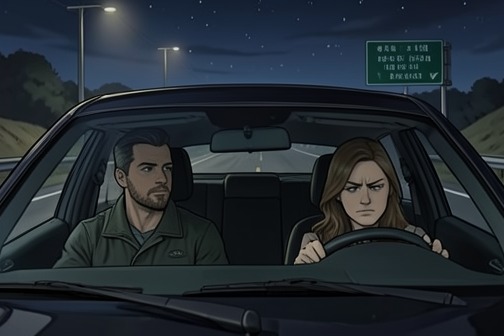
[Thomas flees across the highway](entity:event-recall-event-thomas-8c1f4a72fce1) during a drive home from a hospital visit with [Ma](entity:character-recall-character-ma-9cb60cf0594d), turning a quarrel about food and attention into a near-disaster. The episode exposes the gap between Dominick’s demand that Thomas respond to their mother’s illness and Thomas’s retreat from the confrontation; its lasting consequence is that Dominick stops taking him to visit Ma.
## The Visit and the Argument
Thomas has wanted a stop at McDonald’s on the way to see Ma. Dominick refuses, suggesting they might go on the return trip instead. At the hospital, Thomas remains in the solarium with his coat on, watches television in a trance-like way, ignores Ma’s attempts to talk, and repeatedly checks his watch. His focus on the promised food sits uneasily beside Ma’s effort to engage him, and Dominick leaves the visit already angry.
On the drive home, Thomas interrupts Dominick’s speech about his selfishness to ask whether they are still going to McDonald’s. Dominick’s anger sharpens around Ma’s condition: he sees Thomas’s question as evidence that Thomas is not attending to their mother, who is dying. The disagreement is therefore about more than a meal. Dominick tries to make Thomas acknowledge the family crisis; Thomas answers by disengaging from the reprimand and moving away from his seat.
## Flight Across the Interstate
Thomas unfastens his seat belt, climbs over the front seat, and crouches on the floor in a modified duck-and-cover position. Dominick pulls into the breakdown lane, puts the car in neutral, and orders him back into the front. When Thomas refuses to get up, Dominick pulls him out of the car. Thomas breaks free and runs across the interstate without looking. Traffic horns and swerves as drivers avoid him.
Dominick crosses after him and cannot immediately find him. His account follows the frantic search and the fear that Thomas may have been struck. He eventually finds Thomas in tall grass beside the highway, about a quarter of a mile from the car. Thomas’s eyes are closed, and he is smiling up at the sun. The grass is indented where he has been lying; Dominick associates the shape with the snow angels he and Thomas used to make as boys. That childhood image offers a brief counterpoint to the danger of the road: the brothers’ shared past returns at the very moment Dominick has feared losing Thomas.
## Immediate Aftermath
Dominick helps Thomas up and returns with him to the car. He grips the steering wheel to steady his hands and tries not to dwell on the cars that had swerved out of Thomas’s way. The event has changed the drive from an argument over a promised stop into a crisis in which Thomas’s safety has become uncertain within seconds. Dominick’s anger gives way to fear, but the episode does not end with a conversation resolving their disagreement.
In Madison, Dominick does take Thomas to McDonald’s. He buys him large fries, a Quarter Pounder with cheese, and a strawberry shake. Thomas is not exactly happy for the rest of the trip, but he is quiet and full. The meal grants the request that had fueled the argument, yet it does not undo the highway crossing or explain Thomas’s abrupt flight. Its immediate effect is practical: the car ride continues without another confrontation.
## Lasting Consequence
The incident remains consequential after the drive. When Ma’s third round of chemotherapy makes her too sick to eat, she is hospitalized again in February, weighing ninety-four pounds. By then, Dominick has stopped bringing Thomas to visit her. He connects that decision directly to the highway episode, which frightened him and kept him awake on multiple nights.
The visit thus acquires a lasting cost beyond the danger of the crossing itself. Dominick’s attempt to make Thomas face Ma’s illness ends with Thomas running from him, and Dominick responds by removing Thomas from later visits. The account presents this as a protective decision shaped by fear, while also showing its consequence: Thomas is no longer brought to see Ma during a period when her illness has worsened. The episode’s emotional center is that contradiction—Dominick is trying to insist on family attention, yet the confrontation leaves him unable to risk repeating the visit.
Event 12
Thomas’s severe mental illness episode
[Thomas Birdsey](entity:character-recall-character-thomas-birdsey-8bc90de9bb24)’s severe mental illness begins to surface during a summer job and becomes unmistakable in [March 1970](entity:time-recall-time-march-1970-faffd21db12d). Recounted by his twin brother, [Dominick Birdsey](entity:character-recall-character-dominick-birdsey-4a27b6b8228a), the episode is not an isolated crisis but the opening of a prolonged, uneven course of diagnosis, medication, institutional care, and legal review. Its history moves between fragile stretches of independence and decisions made by clinicians and review boards about how much risk Thomas posed and whether he could leave the hospital.
## Early Signs and the 1970 Crisis
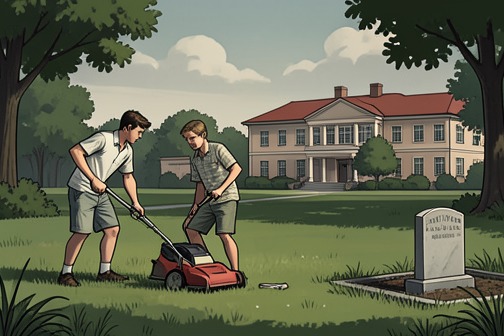
In the summer of [1969](entity:time-recall-time-1969-711fcc62f578), Thomas Birdsey and Dominick Birdsey were home from their freshman year of college and working as seasonal employees. They mowed and trimmed a small burial ground on the grounds of [Three Rivers State Hospital](entity:location-recall-location-three-rivers-state-h-d769b42b4083), on the southern edge of town. The hospital property lay beside the [Sachem River](entity:location-recall-location-sachem-river-5d6c2deedab1), with the town fairgrounds to the north and the sacred burial grounds of the [Wequonnoc Nation](entity:organization-recall-organization-wequonnoc-nation-73011ad7c10b) to the south. The work placed the brothers in the landscape of a hospital that would become central to Thomas Birdsey’s life, although at the time his illness was only beginning to show itself.
Dominick Birdsey remembers the signs as subtle enough that he could not, or did not, recognize their importance. Nine months after that summer, in March 1970, Thomas Birdsey experienced a severe mental health crisis. The contrast between the routine of the brothers’ seasonal work and the abruptness of the later breakdown gives the onset its retrospective force: what had seemed easy to overlook could no longer be ignored.
More than twenty years later, Dominick Birdsey was again traveling with Thomas Birdsey back to the state hospital, this time in a police cruiser. In the intervening years, Dominick Birdsey had graduated from college, taught high school history, and started a painting business; their mother and Dominick Birdsey’s baby had died, and [Dessa](entity:character-recall-character-dessa-983ee7270af6) had left him. His life had continued to change, but his brother’s illness kept drawing him back into the hospital’s orbit.
## Changing Diagnoses and Treatment
Dominick Birdsey describes the years of treatment as a succession of shifting diagnoses, medications, and state-appointed psychiatrists. The distinction between a diagnosis and an effective treatment remained unsettled for the family. In 1977 and 1978, Thomas Birdsey had what Dominick Birdsey recalls as comparatively good years. His doctors decided that he was not manic-depressive after all, stopped lithium, and prescribed Stelazine instead.
A later medication change brought a serious setback. After Dr. Bradbury retired, Dr. Schooner increased Thomas Birdsey’s Stelazine dosage from six milligrams a day to eighteen. When Dominick Birdsey visited, he found his brother markedly impaired and unable to function normally. Dr. Schooner said he had intended to check on Thomas Birdsey but had been busy covering for another doctor and attending to visiting in-laws. A nurse told Dominick Birdsey that staff had called Dr. Schooner and left messages throughout the weekend. The episode exposed the consequences of a treatment decision compounded by a failure to respond promptly to concerns about the patient.
A more stable period followed in the early 1980s. In 1983, Dr. Filyaw started Thomas Birdsey on [Haldol](entity:object-recall-object-haldol-6cff3a97c902), after which his condition improved enough for the hospital to transfer him to a group home. He also obtained a maintenance job at McDonald’s. The first paycheck mattered to him: before it was cashed, he asked Dominick Birdsey to photocopy it, then kept the copy framed in his bedroom. Beside it, he displayed a ten-dollar bill that was later stolen. The small exhibit of work and earnings marked a concrete return to ordinary independence, even though it did not end his need for care.
During this period, Thomas Birdsey also had a girlfriend, Nadine, who shared his religious enthusiasm but was not described as having an official mental illness. The relationship belongs to the account of an interval when his life extended beyond hospital routines and medication. It did not erase the recurring vulnerability that shaped the larger course of his illness.
## Commitment and the Review System
When Thomas Birdsey was admitted to [Hatch](entity:location-recall-location-hatch-fdeb24d75f73), the initial legal authority was a Physician’s Emergency Certificate initiated by a surgeon at [Shanley Memorial Hospital](entity:location-recall-location-shanley-memorial-hos-210284df7136). The certificate allowed fifteen days of observation so the hospital could assess whether he was dangerous to himself or others. The minimum period was court-ordered, and Dominick Birdsey was told that the commitment could not be ended immediately by a family member’s request. Medical observation and legal process therefore set the terms of the family’s first efforts to influence his care.
The review system itself had been reshaped by the public reaction to the Jimmy Lane murder. Jimmy Lane, who was on a supervised day-pass hike from Westwood, wandered away from the group and killed a child. The account emphasizes that he had no previous history of violent behavior. Public condemnation of the insanity defense turned the case into a political crisis: officials feared that the crime would reinforce the belief that mentally ill people were inherently violent, while anger also focused on the legal system that had found Jimmy Lane not guilty by reason of insanity. The governor fired the commissioner, the department was reorganized, and the Psychiatric Security Review Board was created.
That history forms the institutional backdrop to Thomas Birdsey’s confinement. At a later review, the board voted unanimously to retain him at Hatch for one year, finding that he had shown himself to be potentially dangerous to himself and others. His case was scheduled for another review in October 1991, when the board would decide whether to release him or continue his placement for a second twelve-month period. [Lisa Sheffer](entity:character-recall-character-lisa-sheffer-7a02d3d6d30b) requested a follow-up review after six months rather than waiting a year. [Richard Hume](entity:character-recall-character-richard-hume-70de931f2389) pointed out that, without the insanity ruling, Thomas Birdsey might instead have been convicted of a felony in criminal court.
## A Long Course, Not a Single Episode
The account’s repeated returns to Thomas Birdsey’s treatment resist presenting mental illness as one sudden event with a clean resolution. The March 1970 crisis makes the illness undeniable, but the ensuing history consists of changes in diagnosis, medication, staffing, living arrangements, and legal status. Improvement on Haldol opened the possibility of group-home life and work; it did not guarantee lasting freedom from institutional oversight.
The episode also reveals the burden placed on Dominick Birdsey as witness and advocate. He remembers particular years, medication dosages, the framed paycheck, and the calls a nurse said had gone unanswered. Those details distinguish administrative decisions from their effects on Thomas Birdsey’s daily life. At the same time, the board’s proceedings show how individual care was shaped by a system responding to public fear as well as to a patient’s assessed needs. Thomas Birdsey’s illness thus remains both a private family history and a recurring encounter with institutions that decide how treatment, safety, and liberty are to be balanced.
Event 13
Thomas Birdsey’s transfer to Hatch Forensic Institute
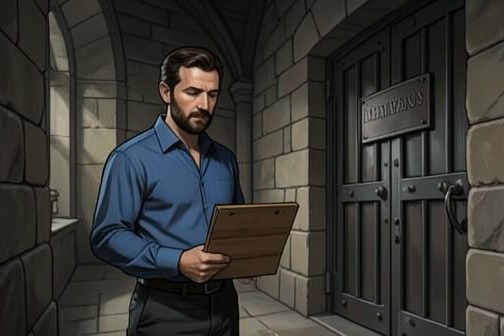
[Thomas Birdsey’s transfer to Hatch Forensic Institute](entity:event-recall-event-thomas-birdsey-hatch-fo-438a6e13292a) is both a change in his care and a sudden loss of control for his family. Set in motion by an emergency certificate after Thomas’s treatment at [Shanley Memorial Hospital](entity:location-recall-location-shanley-memorial-hos-210284df7136), the transfer places him in a locked ward under a minimum fifteen-day hold. [Dominick Birdsey](entity:character-recall-character-dominick-birdsey-4a27b6b8228a) responds as a brother trying to undo a mistake; the hospital responds through a process that leaves little room for his urgency.
## The Emergency Transfer and Its Legal Basis
A staff member opens Thomas’s file and explains that he has been admitted on a fifteen-day paper. The document is a Physician’s Emergency Certificate initiated by the surgeon at Shanley Memorial Hospital. It gives the hospital fifteen days to observe Thomas and decide whether he is dangerous to himself or others. Once that period ends, his case is due to go before probate and, most likely, the Psychiatric Security Review Board.
The hold is not presented as a brief administrative pause that Dominick can reverse by asking the right person. The staff member tells him that Thomas must remain for at least fifteen court-ordered days. A probable-cause hearing is possible, but it would require the hospital to prove that Thomas is dangerous. In her view, the visible condition of his amputated hand would itself give a judge a basis for finding probable cause. The explanation makes the bodily consequence of Thomas’s crisis part of the legal argument for keeping him confined.
Dominick arrives expecting to challenge the placement as a mix-up. He believes Thomas belongs at [Settle](entity:location-recall-location-settle-037b6270bdf7) and asks the hospital to contact [Dr. Willis Ehlers](entity:character-recall-character-dr-willis-ehlers-e9a5432f82f3), whom he expects to confirm that Thomas does not belong at [Hatch](entity:location-recall-location-hatch-fdeb24d75f73). Instead, he learns that Dr. Ehlers is no longer Thomas’s doctor: the hospital has reassigned him. The change closes off the route Dominick thought would settle the matter and makes clear that the transfer has already altered Thomas’s care as well as his location.
## Dominick’s Attempt to Get Him Out
The urgency of the transfer is visible in what Dominick gives up to confront it. A caller has complained that scaffolding is still outside an office window, but Dominick has no intention of returning to ladders for the next day or two. His priority is to go to Hatch and find a way to spring his brother. He even imagines hiring a helicopter, treating an escape from the hospital as the kind of rescue he has seen in an action movie. The extravagant plan registers the gulf between his determination and his actual power over the proceedings.
At the hospital, he tells the staff member not to bury him in medical and legal terminology. He insists that Thomas should be released that day and that Dr. Ehlers can verify the placement is wrong. The response is blunt: Ehlers has been reassigned, and the emergency certificate cannot be undone on Dominick’s timetable. The staff member recommends that he let the fifteen days run, allow the hospital to observe Thomas, and see whether Thomas improves after returning to his medication. She considers Hatch the safest place for him at that point. Her advice does not reassure Dominick, but it sets out the choice as she sees it: accept the hold while Thomas is observed, or pursue a hearing that is unlikely to free him.
Dominick asks whether there is any way to fight the order and hears that Thomas himself, or Dominick on his behalf, could request a probable-cause hearing. The option offers a formal challenge, but not an easy escape. The hospital would have to establish that Thomas posed a danger, and the amputation would be difficult to separate from that question. Dominick is left looking out the window as the patients in the recreation area go inside. The scene gives the legal process a physical setting: people move in and out of view, while Thomas’s own confinement remains beyond Dominick’s reach.
## Family News and the Weight of Confinement
After the transfer, Dominick considers calling [Ray Birdsey](entity:character-recall-character-ray-birdsey-3f59a8e925fb) to explain the mix-up and tell him that Thomas has been left at Hatch. He recognizes [Ray](entity:character-recall-character-ray-b860e51616e4) as Thomas’s stepfather, but the question of whether he ought to call underscores how little coordination the family has around the crisis. Even a familiar family phone number appears on a message tape as something Dominick might forget. His attention keeps returning to Thomas, while the ordinary demands and unanswered messages around him continue to accumulate.
The transfer also reaches [Leo Blood and Angie Constantine](entity:relation-recall-relation-leo-blood-and-angie-6c9b07e25330) through Dominick’s account. [Leo](entity:character-recall-character-leo-b697c7b2a8d5) has long known the history of Thomas’s decline and has continued asking after him. He has visited Thomas at Settle and tried to see him at [Shanley Memorial](entity:location-recall-location-shanley-memorial-7bc1c705dc7c) after Thomas’s accident, but he was not allowed upstairs because Dominick had not put him on the visitor list. When Dominick tells [Angie](entity:character-recall-character-angie-ab81440c0a94) that Thomas is now at Hatch, her response is immediate shock. These details show that Thomas’s care has involved a wider circle, but that access to him has depended on institutional restrictions and, at Shanley, on Dominick’s own choices.
Dominick’s memory of the previous night supplies the emotional image behind the transfer. In a half-awake recollection, a dreamlike scene gives way to the alarm clock; he then remembers Thomas in leg chains, screaming as staff lead him into the locked ward. The memory lands with the force of an anvil. The account does not soften confinement into a neutral change of address: it joins the legal hold to the sound of Thomas being restrained and to Dominick’s belated awareness of what has happened.
## The Transfer as a Rupture
The episode turns on the difference between Dominick’s understanding of brotherly protection and the hospital’s authority to decide where Thomas must stay. Dominick imagines a same-day release, an old doctor’s confirmation, even a helicopter rescue. The staff member answers with a certificate, an observation period, a hearing, and the possibility of review by the Psychiatric Security Review Board. The contrast does not establish that the hospital’s decision is mistaken or that Dominick’s proposed alternative is viable; it establishes how abruptly his wish to protect Thomas meets a procedure he cannot command.
For Thomas, the transfer follows an episode severe enough to leave him without his hand and brings him into a locked ward under legal observation. For Dominick, it begins a struggle to regain access and influence over his brother’s fate. The first fifteen days are therefore more than a timetable: they mark the point at which family intention is no longer enough to determine Thomas’s immediate care.
Event 14
A Hatch guard assaults Dominick Birdsey
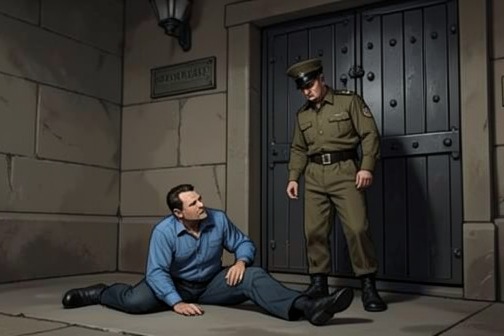
[A Hatch guard assaults Dominick Birdsey](entity:event-recall-event-hatch-dominick-birdsey-5591dfc43792) while Dominick is trying to get his brother, [Thomas Birdsey](entity:character-recall-character-thomas-birdsey-8bc90de9bb24), out of [Hatch](entity:location-recall-location-hatch-fdeb24d75f73). The encounter leaves Dominick injured before he has even passed the hospital’s locked doors. Its consequences extend beyond the immediate pain: they disrupt his work, sharpen his distrust of the institution, and turn a furious impulse to sue into a more practical question of how to document what happened.
## The confrontation at Hatch
Dominick’s account places the assault within his effort to free Thomas from what he regards as an intolerable place. He is determined to get his brother out and considers legal action against [Connecticut](entity:location-recall-location-connecticut-30b7fc394c2c), the hospital, and the guard who kneed him. His anger is not presented as detached judgment. He admits that he lost control, but immediately resists the idea that his own behavior could justify the guard’s force. The clash is thus both physical and institutional: Dominick is trying to act on Thomas’s behalf, while the hospital’s locked doors and security staff determine how far he can go.
The limit of the encounter matters. Dominick says he did not get beyond those doors, yet he has already been injured. When he later challenges the description of Hatch as humane, he makes the contradiction concrete: the place’s claim to provide care sits beside the force used against a visitor who has come to advocate for a patient. He describes himself as being unable to walk properly and identifies the guard as the person who caused the injury. A social worker says she saw the tail end of what happened and apologizes, giving Dominick’s account a witness within the institution, though the passage does not establish what formal action follows.
## Pain, anger, and interruption
Afterward, Dominick considers suing and imagines using a lawyer to make the state, the hospital, and the guard answer for the incident. He also thinks about returning to [Shanley Memorial Hospital](entity:location-recall-location-shanley-memorial-hos-210284df7136) to have the injury examined and recorded. But he refuses to go to any hospital that night. Instead, he drinks beer and searches for the codeine pills left over from [Joy](entity:character-recall-character-joy-aa3ba3cae50b)’s root canal. He finds them in the medicine cabinet, behind her Oil of Olay, and takes a couple with the beer. The sequence sets his desire to build a case against the carelessness with which he handles his own immediate medical needs; anger supplies an argument for action, but does not make him willing to seek treatment.
The injury remains visible the following day. Dominick hobbles toward the bathroom, and the guard’s knee has left him walking bowlegged. When he undresses for a shower, he sees a bruise on his inner thigh and swelling and discoloration. He says he cannot work on the scaffolding at [Henry Rood](entity:character-recall-character-henry-rood-363f788202fd)’s house on Gillette Street. The practical consequence is specific: his body, and therefore his ability to do his job, has been affected. His account does not offer a medical diagnosis or describe a later recovery, so the injury’s longer-term physical effects remain unspecified.
## Documentation and leverage
The social worker’s response changes the immediate direction of Dominick’s thinking. When he explains that Dr. Ehlers is no longer Thomas’s doctor and that the matter is out of his hands, she clarifies that he should see a medical doctor about his own bruises. She recommends having photographs taken while the swelling is still visible. Her suggestion turns the marks on his body into potential evidence: documentation could give him leverage in a later dispute with the state. She presents this advice cautiously, distancing herself from it as an employee of the institution, but the practical meaning is clear. The encounter may not be resolved by his threats or anger; a record could make it harder to dismiss.
Dominick had already imagined a lawsuit and noted that witnesses included the social worker who had appeared at the door. Her later advice adds a concrete step to that impulse, even though the passage does not say whether he follows it, obtains photographs, files a complaint, or sues. As he leaves, a guard and a metal detector remain between him and the social worker. She gives him a thumbs-up and bids him farewell in several languages. The gesture offers brief solidarity across the security barrier, but does not remove it.
## Narrative significance
The assault makes the conflict over Thomas’s care bodily immediate for Dominick. He has come to challenge Hatch’s treatment of his brother, but leaves—or prepares to leave—with his own ability to move and work compromised. That reversal complicates his role as advocate: he is forceful enough to threaten legal retaliation, yet his decision to avoid medical attention and drink while taking pain medication shows how poorly his own anger serves his safety. The narrative holds both responses together rather than making either a complete answer to the other.
The episode also distinguishes institutional security from humane care without claiming that every aspect of Hatch is abusive. Dominick’s injury gives him a specific counterexample to the social worker’s defense of the hospital, while her apology and advice prevent the encounter from reducing every staff member to the guard’s actions. What remains unresolved is as important as what is established: the guard injured Dominick, a staff member witnessed part of the incident, and the injury could have been documented, but no legal or disciplinary outcome is reported here.
Event 15
The Jimmy Lane murder
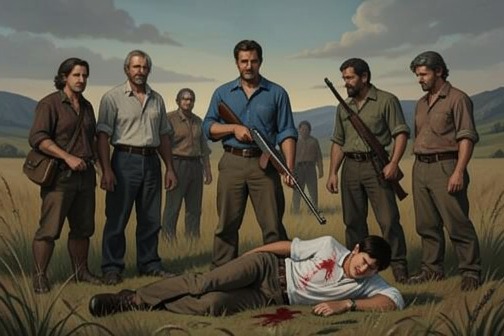
[The Jimmy Lane murder](entity:event-recall-event-jimmy-lane-da4ff4be8c0e) is a past crime whose consequences reach beyond its victim and perpetrator: as [Lisa Sheffer](entity:character-recall-character-lisa-sheffer-7a02d3d6d30b) recounts it to [Dominick Birdsey](entity:character-recall-character-dominick-birdsey-4a27b6b8228a), the killing turned a single failure during a supervised outing into a statewide political crisis. Its significance in the novel lies in the institutional response it set in motion, including the creation of the Psychiatric Security Review Board and the prospect of indefinite confinement for people found not guilty by reason of insanity.
## The crime and its public shock
Sheffer recalls that Jimmy Lane was a psychiatric patient on a day pass from Westwood, taking part in a supervised group hike on Avon Mountain. He wandered away from the group and killed a college student. The setting and circumstances made the event especially unsettling: the outing was supervised, yet supervision did not prevent the killing.
Sheffer stresses that Lane had no known history of violent behavior and that nothing in his record had suggested he was anything but passive. In her account, the crime appeared as a sudden break from what others had reason to expect, not as the culmination of an established pattern. That gap between the absence of warning signs and the fatal outcome became central to the public reaction: the case was treated as evidence about the danger of psychiatric patients generally, even though the facts Sheffer emphasizes described an individual episode.
The killing drew extensive attention. Sheffer recalls coverage in newspapers and on television, including national outlets, as well as letters to editors and editorials. Public anger was directed both at Lane and at the legal system after the insanity defense prevented his being treated as an ordinary criminal defendant. The episode thus became more than a local crime story: it made the public consequences of psychiatric treatment and legal responsibility a political issue.
## From backlash to a new review board
Sheffer describes the state’s response as an effort to contain the damage to its reputation. The governor fired the commissioner, the department was reorganized, and the Psychiatric Security Review Board was created. In her explanation, the Board was conservative and highly attentive to media scrutiny, and its authority amounted to sentencing power.
The change altered the practical meaning of an insanity plea. Sheffer says that, after the Board came into power, lawyers increasingly avoided that plea even when it was legitimate. A defendant who went through the criminal courts might serve only part of a sentence before release, because of prison overcrowding or good behavior. By contrast, a person committed under the insanity process could remain at [Hatch](entity:location-recall-location-hatch-fdeb24d75f73) indefinitely. Sheffer presents this as an emerging institutional pattern, not simply as a formal difference between two legal routes: the Board’s power could make psychiatric confinement longer and less predictable than prison.
The murder therefore functions in her account as the origin point for a policy climate in which public confidence and risk management weigh heavily. The same event that exposed the limits of supervision also prompted officials to build a system designed to answer public fears. That response did not resolve the tension between treatment, individual liberty, and public safety; it gave the state a more powerful mechanism for controlling the disposition of people found not guilty by reason of insanity.
## The case as context for [Thomas Birdsey](entity:character-recall-character-thomas-birdsey-8bc90de9bb24)
Sheffer raises the Lane case while discussing [Thomas Birdsey’s transfer to Hatch](entity:event-recall-event-thomas-birdsey-s-transf-2ad1d2657282). She first offers a theory, rather than a confirmed explanation: she suspects that the transfer order came from Hartford because the publicity surrounding Thomas’s self-mutilation had become damaging. She recalls that the story moved from local coverage to national attention, and says the state was hostile to negative publicity. Against the history of the Lane case, her suspicion is that officials might be especially cautious about another highly visible psychiatric case.
The comparison does not make Thomas equivalent to Lane. Sheffer recounts Lane’s killing to describe the political atmosphere and the state’s sensitivity to public reaction, not to claim that Thomas had committed a comparable act. The distinction matters: the memory of a violent crime shapes how officials may manage a case, even when the person whose future is at stake is not presented as having committed that crime. The murder thus shadows Thomas’s situation through institutional precedent rather than through a direct parallel between the two men.
Thomas’s immediate legal position is separately constrained by a Physician’s Emergency Certificate initiated by the surgeon at [Shanley Memorial](entity:location-recall-location-shanley-memorial-7bc1c705dc7c). The certificate gave the hospital fifteen days to observe him and determine whether he was dangerous to himself or others; Sheffer says that period could not be defeated that day and that he would remain for at least those court-ordered days. That emergency hold is distinct from the Board’s longer-term authority, but the murder’s legacy helps explain why the prospect of further review carries such weight for Dominick and Sheffer.
## The precedent and its consequences
The later review of Thomas’s case makes the system’s stakes concrete. The Psychiatric Security Review Board unanimously decided to retain him for one year, citing potential danger to himself and others, with another review scheduled for October 1991. Sheffer had requested a follow-up in six months rather than twelve. The decision illustrates the Board’s role in determining confinement and review intervals, while also showing that a patient’s future could be set through periodic assessments rather than a conventional criminal sentence.
Sheffer’s recollection gives the Jimmy Lane murder a double function: it is both a past killing and an explanation of the political machinery surrounding Thomas’s care. Public fear after a case with no apparent warning signs helped make the system more cautious and media-conscious; that caution, in turn, made psychiatric commitment capable of extending indefinitely. The event’s lasting force in the narrative comes from this chain of consequences. A crime that exposed the limits of supervision also helped create a framework in which the state could respond to uncertainty by keeping patients confined.
Event 16
Billy Covington is killed in Vietnam
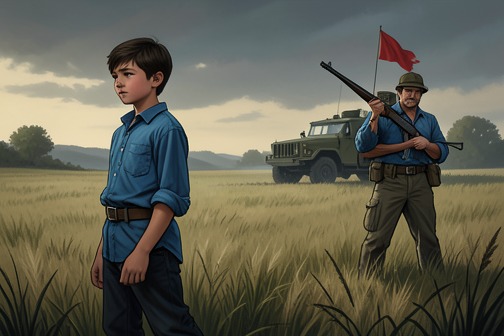
[Billy Covington is killed in Vietnam](entity:event-recall-event-billy-covington-bf00f4d2ef09) after a bombing raid near Haiphong, and his death becomes more than a wartime loss in [Dominick Birdsey](entity:character-recall-character-dominick-birdsey-4a27b6b8228a)’s retrospective account. Billy had been a boyhood companion to Dominick and [Thomas Birdsey](entity:character-recall-character-thomas-birdsey-8bc90de9bb24), then their paperboy and an older youth whose path seemed to preview their own. [Ma](entity:character-recall-character-ma-9cb60cf0594d)’s grief makes his death a warning about what might happen to her sons; the memory also reveals how differently a child and his mother can understand the same loss.
## Billy Before the War
Billy was four years older than the twins. As a child, he came to their house after school because his father had left the family and his mother worked downtown. He joined Dominick and Thomas in tag and baseball, and especially in their Superman game. Billy arrived with Superman pajamas in his school bag, changed into them, and completed the costume with a bath towel that Ma pinned around his neck. In the children’s play, he performed the hero’s opening boast; afterward, Ma would remark on the absence of a father in his life. The remembered episodes place Billy within the family’s ordinary routines before his later absence gave those scenes a different weight.
Years later, Billy was the twins’ paperboy, a lanky fourteen- or fifteen-year-old whose voice was changing. He could throw a folded copy of the Daily Record from the street to the base of the family’s cement flowerpot with striking accuracy. By the time Dominick and Thomas entered high school, Billy had graduated, enlisted in the Air Force, and receded from their daily attention. That change in perspective matters: the boy who had once seemed a vivid fixture of their childhood had become, to the teenagers, almost irrelevant. His death would abruptly restore his importance, though Dominick did not yet understand why.
## Death and the Funeral
Billy was shot down during a bombing raid near Haiphong. Dominick recalls attending the military funeral at sixteen, but his attention did not settle on the meaning of Billy’s life, the cost of the [Vietnam War](entity:time-recall-time-vietnam-war-e7a08391fc30), or the danger to himself and his brother. Instead, he noticed Billy’s grieving fiancée and considered whether Billy’s mother might sell his black GTO cheaply. The detail exposes the distance between the funeral’s public gravity and the adolescent concerns occupying Dominick. He could register the casket and the car while remaining emotionally removed from what Billy’s death might mean for the family.
Ma’s response was immediate and unmistakable. On the drive home from the memorial service, she cursed the war, shocking Dominick and Thomas because they had never heard her use God’s name in vain. Her words also startled them because [Ray Birdsey](entity:character-recall-character-ray-birdsey-3f59a8e925fb), their stepfather, had fought in [World War II](entity:time-recall-time-world-war-ii-d4353dde1684) and Korea and believed antiwar protesters should be shot. Ma’s condemnation therefore sounded especially forceful in his presence. Her reaction was not a passing remark: she remained subdued for days after the funeral.
## Ma’s Grief and the Family’s Memorial
Ma found an old snapshot of Billy, bought a frame, and placed it on her chest of drawers beside portraits of Dominick and Thomas and framed photographs of her father and [Ray](entity:character-recall-character-ray-b860e51616e4). She prayed novenas for Billy’s departed soul, and seeing Mrs. Covington pass the house in grief brought tears to her eyes. These acts made the loss part of the family’s home life. Billy was no longer only a boy who had played with the twins or delivered their newspaper; his photograph joined the household’s family images, and his mother’s visible sorrow kept his absence present.
Dominick, at the time, considered Ma’s mourning an overreaction. His later account revises that judgment rather than pretending he understood her at the funeral. Billy had once been a child in need of the kind of protection and fatherly care Ma wished for her own sons. Now that same older boy, only four years ahead of them, had been killed in a war. The difference between Ma’s understanding and Dominick’s is central to the event’s significance: she saw a threat to her children where he saw a funeral and, briefly, a possible bargain on a car.
## Safety, College, and Retrospective Meaning
The loss illuminates Ma’s insistence on her sons’ success. She had accumulated nearly 150 books of green stamps toward a German grandfather clock, which she loved visiting at the redemption store, but changed her plan and obtained a typewriter for the twins instead. She told them their success mattered more than the clock. Looking back, Dominick understood that success meant safety to her. Billy’s death had made that equation painfully concrete: if a boy who had seemed invulnerable in their Superman games could be killed, her younger sons could be vulnerable too. In her view, college might keep them safe from [Vietnam](entity:location-recall-location-vietnam-a68cec34d420).
That hope stood against Ray’s opposition to paying for both twins’ college education. He said the family could not afford two tuitions and distrusted colleges, which he associated with communism and drugs. His position sharpened the stakes of Ma’s investment in education: the typewriter and her appeal to the boys’ future belonged to a conflict within the household as well as to a national conflict over war. The book does not suggest that college could guarantee safety; rather, it shows how Ma grasped at it as a way to protect her sons after Billy’s death had made danger impossible to dismiss.
The event’s force thus unfolds after the death itself. Dominick’s first response is self-absorbed, while Ma’s grief takes the form of profanity, prayer, a framed photograph, and concern for the boys’ future. Years later, he recognizes Billy as a preview of what could happen to Thomas and him. The memory joins childhood play to military death without making the two equivalent: the towel cape and the fallen airman belong to different moments, but together they reveal how the imagined invulnerability of a boyhood hero gave way to a mother’s fear that war could take her sons as well.
Event 17
Ray agrees to pay for the twins’ college education
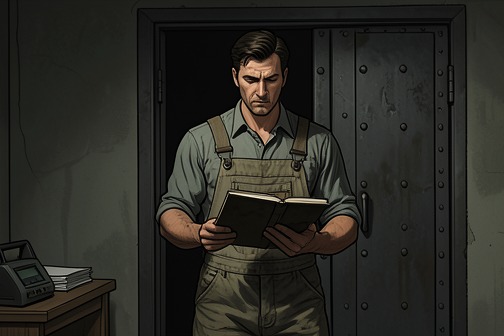
[Ray agrees to pay for the twins’ college education](entity:event-recall-event-ray-d77afd9a67ef) after [Ma](entity:character-recall-character-ma-9cb60cf0594d) confronts his opposition and prepares to work for the money herself. His eventual contribution of $4,000 helps [Dominick Birdsey and Thomas Birdsey](entity:relation-recall-relation-dominick-birdsey-and-fde8a4850518) attend college, but the agreement is not a simple expression of support: it follows a dispute over who controls the family’s finances and Ma’s willingness to face work she fears. The episode turns a question of tuition into a test of authority, dignity, and the twins’ prospects beyond the household.
## Background and opposition
[Ray](entity:character-recall-character-ray-b860e51616e4) initially opposes the twins’ college plans. He says the family cannot afford two tuition bills and insists that he, as the person who pays bills and manages savings, is the one qualified to judge what the family can afford. His argument also reflects his distrust of college life: he believes many professors are Communists and many students use drugs. Rather than treating college as the necessary next step after high school, he sees work, military service, or a shipyard trade as more practical alternatives.
Ray points to his own Navy service as a model and argues that the twins could enlist rather than face the draft. He also suggests that he might get them jobs as apprentice pipe fitters, electricians, or welders at [Electric Boat](entity:location-recall-location-electric-boat-20276e7cc061), where some positions carry deferments. In his view, building submarines is useful work that supports the war effort and provides for a household. His alternatives make the disagreement larger than a dispute about tuition: he wants the twins’ futures to follow routes he considers useful and financially responsible, while Ma insists that college is the goal.
## Ma’s challenge and the agreement
Ma challenges Ray during supper, saying that his reasons do not address the central issue. Ray responds angrily, striking the table and accusing the twins of taking from the family. He leaves the house and, after returning, speaks to them only in clipped remarks while refusing to speak to Ma for days. The college question thus becomes entangled with a household pattern in which Ray uses anger and silence to exert pressure.
In the arguments that follow, Ma says she will find work if necessary to pay for the twins’ education. Ray predicts that no one will hire her; she tests that claim by applying for a maid’s job at Howard Johnson’s. The application carries real anxiety for her. She is afraid of taking orders, making mistakes, and having strangers judge her because of her cleft lip. The restaurant nevertheless invites her to interview and offers her the job that afternoon, with a start date the following Monday.
On the morning she is due to begin, Ma prepares breakfast in her uniform while visibly nervous. Ray tries to dissuade her by emphasizing the unpleasantness of cleaning other people’s messes. Ma stops the taunting and makes clear that the twins will go to college. Only when the prospect of her working outside the home becomes immediate does Ray agree to provide $4,000 for their educations and let her stay home. His decision resolves the immediate tuition dispute, but it comes after Ma has taken the step he had said she could not take.
## Cost and consequences
Although relieved not to enter the outside workforce, Ma feels ashamed about failing to show up for the job. She asks Dominick to return her uniform to Howard Johnson’s. At the desk, an employee makes a joke at her expense. Dominick does not object; later, furious, he kicks Ray’s Fairlane hard enough to break his toe. He recognizes that his anger is directed at Ray, not the car or the employee. His failure to defend Ma in the moment and his later outburst mark the lasting emotional residue of the transaction: money has been secured, but the family has not emerged from the conflict unhurt.
Ray’s $4,000 is only part of the twins’ college resources. Student loans and the money they earn from part-time jobs also help fund their education. The account therefore does not present Ray’s agreement as making college effortless or wholly paid for; it establishes a contribution that, alongside borrowing and work, enables them to go. The twins do attend college, and after their first year away they return home for the summer. They find seasonal jobs with the [Three Rivers Public Works Department](entity:organization-recall-organization-three-rivers-pub-8529708f2fec), work that gives them paychecks and keeps them out of the house during the day.
## Significance in the family story
The agreement is a conditional opening toward independence. Ray’s money helps the twins leave for college, yet the route to it reveals how Ma’s wishes are constrained by his control of the household finances and by his power to decide whether she can work. Her application turns an argument into a concrete choice: rather than accept Ray’s judgment that college is unaffordable, she is prepared to earn the money herself. Ray’s reversal preserves her place at home while securing the twins’ education, but it does not erase the demand that she prove her resolve.
Dominick’s later recollection also revises his youthful understanding of Ma. In the moment, he experiences Ray’s behavior as an injury to her and responds with anger; he also recognizes that Ma’s determination has made the twins’ college plans possible. The episode places their education within a family history of protection and control: college offers a way beyond the home, while the means of reaching it are negotiated inside the very power structure they hope to leave. The $4,000 is therefore both practical help and evidence of the cost Ma and Dominick associate with obtaining it.
Event 18
Thomas gets trapped in the school bus bathroom
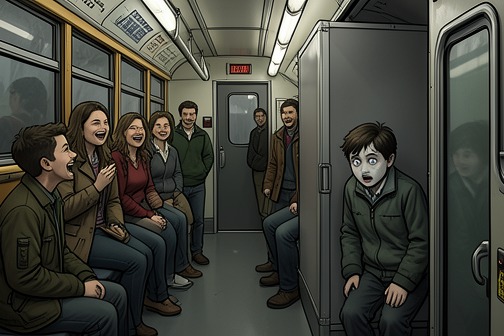
Thomas gets trapped in the bathroom of a school bus during a trip to [New York City](entity:location-recall-location-new-york-city-65df0a129d4c), and a stuck bolt transforms an ordinary stop into a humiliating crisis before classmates. Recalled by his twin, [Dominick Birdsey](entity:character-recall-character-dominick-birdsey-4a27b6b8228a), the incident is significant not only for Thomas’s panic but for the way the crowd makes the brothers’ shared identity a target—and for Dominick’s conflicted mixture of embarrassment, anger, and concern.
## The trip and the taunting
The trouble begins after Thomas gets up, climbs over Eugene Savitsky, and walks toward the back of the bus. Someone trips him, apparently under the cover of an accident, and the students laugh; Channy Harrington and Eddie Otero are among the loudest. Dominick looks out the window rather than at his brother. His narration records a sharp distance between them: Thomas’s behavior embarrasses him, and the other students’ amusement makes that embarrassment harder to escape.
Thomas enters the bathroom without answering the boys. Channy tells him not to get any on himself, and Otero promises to send Althea Ebbs in if she comes down the aisle. The jokes turn Thomas’s ordinary need for privacy into a performance for the bus. When several minutes pass, Marie Sexton and Bunny Borsa repeatedly get up to check whether the bathroom is free. Otero points Bunny toward Dominick as the person whose brother is inside, then makes a crude joke about Thomas. Channy adds another. Their laughter makes clear that, before anyone understands the door is stuck, the incident is already being treated as entertainment.
## The bolt becomes a crisis
The bathroom handle begins clicking back and forth. Thomas calls Dominick’s name, and the frantic movement of the handle, followed by fists thumping against the door, makes the problem unmistakable: Thomas cannot get out. Channy and Otero continue laughing. Dominick tells his brother to calm down and lower his voice, but Thomas insists that the door will not budge. The scene shifts quickly from teasing to alarm, though not everyone responds to the change at once.
More students gather around the bathroom, shouting instructions. Mrs. Hanka comes down the aisle and joins in, telling Thomas to push the bolt to the left. The driver stops the bus on the highway, a measure that tells Dominick how serious the situation has become. Yet he also describes his brother as wrecking the trip, revealing how strongly the public disruption presses on his own sense of humiliation. The driver tries to coordinate the bolt and handle, removes his uniform jacket, and sweats through the back of his shirt as the bus remains stopped for fifteen minutes. He explains that he has driven for twelve years and rarely forgets his tools; if the door cannot be opened, the group will need to reach a gas station for a bar or drill, or call for help from the bus company.
Thomas keeps shouting, “Let . . . me . . . out . . . of . . . here!” He apologizes to Dominick from behind the door, then begs to be released. The thudding of his body against the door accompanies his pleas. Dominick describes his own stomach as feeling like an elevator dropping too fast and thinks that, if he cries in front of Channy and Otero, he will change schools. His fear is therefore double: Thomas is trapped, while Dominick is exposed to the watching students and afraid of what their judgment will make of the brothers.
## A solution, and a public aftermath
At the next exit, the bus crawls through traffic on a main street. Eugene comes to the back and studies the locked door, then offers a different instruction: Thomas should push the bolt to the right, not the left. Someone objects that the bolt does not move that way, but Eugene asks Dominick to relay the suggestion anyway. Dominick tells Thomas to push right. The bolt thunks, the door squeaks open, and Thomas emerges to hoots and applause.
The release does not restore Thomas’s composure. He is so pale that his skin looks blue; he smiles at first, then his face crumples and he begins to cry. Dominick feels sorry for him, angry, and humiliated. The students are looking at both brothers, not just Thomas, and Dominick hears their situation reduced to the label of identical twins. His impulse is to strike Channy and Otero, whose mockery has helped turn the ordeal into a spectacle. The bus driver turns around in an empty parking lot and heads back toward the interstate. Mrs. Hanka changes the seating: the twins sit together near the front, while Otero sits with Eugene. Channy and two other students continue giggling in the back. For the remainder of the day, Thomas seems out of it.
## The incident’s significance
The stuck door briefly makes the bus bathroom a place of literal confinement, but the pressure around it is social as well as physical. Thomas cannot make himself heard in a way that stops the jokes; when his fear becomes impossible to dismiss, the crowd gathers and issues competing commands. The solution comes not from the driver’s tools or the shouted leftward instructions but from Eugene’s suggestion to push the bolt the other way. A small mechanical misdirection prolongs the crisis and makes the door, ordinarily an unnoticed part of the bus, the focus of everyone’s attention.
The episode also catches Dominick between loyalty and self-protection. He initially avoids looking at Thomas, then becomes the person Thomas calls and the one who relays the instruction that frees him. At the same time, Dominick fears crying in front of the boys who are laughing and resents the attention drawn to the twins. The incident does not resolve that conflict; Thomas’s tears, the classmates’ laughter, and his dazed manner through the rest of the day leave the release incomplete. In the remembered scene, the brothers are bound together in the same public humiliation even as Dominick struggles against being seen as part of it.
Event 19
Thomas’s freshman-year breakdown at UConn and destruction of the typewriter case
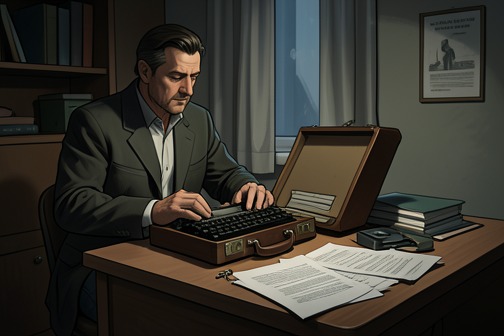
[Thomas Birdsey](entity:character-recall-character-thomas-birdsey-8bc90de9bb24)’s freshman-year breakdown at the [University of Connecticut](entity:location-recall-location-university-of-connec-ed2e8f3e0750) turns an ordinary academic crisis into a rupture between the twins: unable to find the key to their locked [Royal typewriter](entity:object-recall-object-royal-typewriter-32afab97c06a), Thomas breaks open its case, convinced that [Dominick Birdsey](entity:character-recall-character-dominick-birdsey-4a27b6b8228a) has hidden the key to make him fail. The episode exposes how Thomas’s difficulties have accumulated behind his complaints and withdrawal, while Dominick’s anger gives way to an uneasy act of care. The broken case and the late paper do not resolve the crisis; at the end of the second semester, Thomas is placed on academic probation.
## Background and mounting strain
Thomas had made a major fuss about the typewriter before college, but during freshman year he hardly used it. His academic decline was especially stark beside his high-school record: he had worked hard for modest grades, while Dominick had earned better ones with less effort. At college, Thomas struggled to sit still long enough to study and attributed his difficulty to the noisy dormitory, impersonal professors, an overheated room, and discomfort that he said made reading difficult.
His days settled into a pattern that further undercut his studies. He watched television in the lounge, drank cup after cup of instant coffee made on the brothers’ illegal hot plate, stayed up late, and slept through morning classes. He resisted forming friendships and resented the connections Dominick made with other men on their floor. Even routine interruptions could provoke him: a knock at the door, a request to borrow something, or Dominick’s invitation to play basketball became occasions for Thomas to feel overlooked and excluded.
The conflict placed Dominick in a position he both recognized and resisted. He argued with Thomas and defended him when other students questioned his behavior, but he also increasingly studied elsewhere, irritated by the sounds and habits that filled their shared room. He worried that Thomas would fail, disappoint [Ma](entity:character-recall-character-ma-9cb60cf0594d), and anger [Ray](entity:character-recall-character-ray-b860e51616e4); he also feared that his brother’s prospects might narrow further. Yet Dominick would not take responsibility for making Thomas attend class or study. His insistence on that boundary sits uneasily beside the care he later provides when Thomas can no longer manage the immediate crisis alone.
## The broken typewriter case
Near the end of the second semester, the freshman dean sent Thomas a notice advising him to make an appointment about his academic record. Rather than respond to the letter, Thomas began an urgent round of makeup work. He sought extensions and incompletes from professors, stayed up cramming, and relied on coffee and stimulants to keep going. The pressure did not produce a stable recovery: when Dominick returned to their room one afternoon, Thomas was sobbing on his bed and pleading for him not to be angry, a response that recalled the fear Thomas had shown as a child during Ray’s outbursts.
The room had been pulled apart. Papers covered the floor, and a screwdriver, a rock, a hammer, and the typewriter were on Dominick’s desk. The case had been split, with a six-inch piece broken away. Thomas explained that he had finished an overdue English paper and then could not find the typewriter key. He had waited for Dominick, increasingly feeling that he had no real roommate; eventually, he convinced himself that Dominick had taken the key and hidden it to make him flunk out. Dominick explained that the case was locked because things were stolen in the dorm. Thomas countered that a thief could take the whole portable typewriter.
The key had not been taken. Thomas had hidden it at the beginning of the semester in an extra soap dish on the top shelf, then forgotten where he put it. After failing to open the case, he had gone outside for a rock and broken it open; only afterward did he remember the hiding place. The key’s ordinary function—to secure a shared object against theft—had become the center of a mistaken accusation. Once the case was damaged, its broken surface made the conflict tangible: the brothers’ practical arrangement had been recast by Thomas as evidence of Dominick’s hostility.
## Dominick’s response and the overdue paper
Thomas asked Dominick to type the paper, promising that he would straighten out and replace the case. His hands were shaking, he said, and he could not concentrate. The assignment was due at nine the next morning, and he feared the instructor would refuse it even a minute late. The typewriter itself had been damaged: its W and S keys no longer worked. Another student had offered the use of his machine, but Thomas could not finish the task himself.
Dominick was angry about the broken case and about the work Thomas had neglected all year. At the same time, Thomas’s distress frightened him. He calmed his brother, heated him a can of soup, agreed to type the paper, and asked him to lie down without complaining about the noise. Thomas had written an essay on alienation in modern literature, assembled from study-guide material and lacking specific support or a coherent argument. Even his handwriting was difficult to recognize. Dominick typed it, making small corrections, and hoped the instructor would find enough sense in it to accept.
Thomas fell asleep before Dominick had finished the first page and slept through the night. At 8:45 the next morning he was still asleep, so Dominick walked across campus and delivered the late paper. The instructor mistook Dominick for Thomas and reprimanded him for poor time management and inconveniencing others. Dominick accepted the rebuke rather than explain the substitution. Back in the room, he stood before the smashed case, traced its sharp broken edge with a finger, and watched Thomas sleep. The task had been completed, but the damage and the unresolved misunderstanding remained.
## Outcome and significance
At the end of the second semester, the university placed Thomas on academic probation. The case-breaking episode therefore ends with a formal consequence rather than the academic rescue Thomas had hoped for. Dominick’s intervention gets the paper delivered, but it cannot undo the year’s absences, restore the typewriter case, or settle the deeper tension over Thomas’s dependence on his brother and Dominick’s wish to live apart from it.
The episode also complicates the contrast between the twins. Dominick has insisted that he will not carry Thomas to class or make him study; when Thomas is overwhelmed, however, he heats soup, types the paper, and takes it to the instructor himself. The act is care expressed as practical labor, not a solution to the pattern that produced the crisis. The typewriter case sharpens that contradiction: it was locked for a mundane reason, but Thomas read the lock as a personal rejection, and the attempt to force it open left a lasting break in the brothers’ shared space. In the remembered scene, academic failure, suspicion, and loyalty converge around an object that had once been meant simply to keep their possessions safe.
Event 20
The United States launches Operation Desert Shield
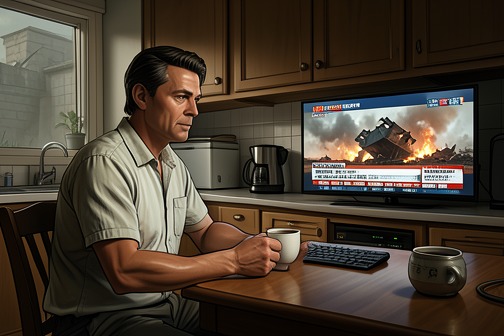
Operation Desert Shield is the impending military conflict that gives [Thomas Birdsey](entity:character-recall-character-thomas-birdsey-8bc90de9bb24)’s religious and persecutory delusions a new focus, turning a national crisis into the imagined stage for his antiwar mission. In [Dominick Birdsey](entity:character-recall-character-dominick-birdsey-4a27b6b8228a)’s account, the operation is not described through military action; it is encountered through news, public rhetoric, family arguments, and Thomas’s conviction that spectacular personal sacrifice can stop a war.
## Public Crisis and Narrative Setting
The novel places Operation Desert Shield in the period when the United States is gearing up for another war. Dominick recalls that his own coffee drinking resumed in the summer, when the developments around [Kuwait](entity:location-recall-location-kuwait-c1dd3c62a2d3) began to dominate conversation at home. Thomas repeatedly spoke about biblical prophecies and Armageddon, and Dominick recognized the fixation as part of a familiar pattern: Thomas would fasten on one subject and be unable to let it go. His doctors called this perseveration.
That pattern had moved from abortion to the hostages and the Ayatollah, and now settled on the [Persian Gulf](entity:location-recall-location-persian-gulf-f1b7a7dbee40). The change of subject does not mean the fixation has eased. Rather, each crisis gives Thomas’s repetitive thinking a fresh object and a new sense of urgency. Operation Desert Shield therefore arrives in the family narrative not as a detached political headline, but as the latest subject around which Thomas’s increasingly elaborate beliefs gather.
The operation also appears in the public language of patriotism. During a conversation with a clinician, Dominick hears the name Operation Desert Shield criticized as a noble-sounding label that encourages the country to forget the consequences of war. The clinician connects that rhetoric to the continuing effects of [Vietnam](entity:location-recall-location-vietnam-a68cec34d420), including veterans placed in an overcrowded system with diminished programs. Dominick answers that his brother had tried to stop the coming war in the library. The exchange makes the contrast plain: public preparations are framed as national purpose, while Thomas understands them as an impending catastrophe that demands intervention.
## Thomas’s Antiwar Mission
On [October 12, 1990](entity:time-recall-time-october-12-1990-18ff94a12147), Thomas’s act in the library unfolds alongside newspaper coverage of Operation Desert Shield. Dominick says his knowledge of what happened comes from Thomas’s account and the news reports printed at the time. After being reprimanded by Mrs. Fenneck near a study carrel, Thomas returns to silent prayer, repeatedly reciting Matthew’s instruction about removing an offending body part. He takes the Gurkha knife that their stepfather had brought home from [World War II](entity:time-recall-time-world-war-ii-d4353dde1684), previously left sheathed and forgotten on a bedroom wall.
Thomas’s amputation is the bodily act at the center of his response to the coming war. He has rehearsed the steps in his mind and carries them out with his left hand, cutting through the bone at his right wrist. The surgeon who later treats him is astonished that Thomas persisted through pain severe enough that it should have stopped him midway. The operation does not cause Thomas’s act in any simple sense; in his delusional understanding, however, the war gives the act its target and his sacrifice a supposed public purpose.
Thomas believes that if he can command people’s attention, he can prevent the war. He tells Dominick that people will hear him, that he will find a flock and establish a ministry. He imagines his message becoming a public movement, even as he fears that saving the world will place him on Satan’s list. The conflict is thus filtered through grandiosity as well as genuine opposition to war: Thomas casts himself as a chosen messenger whose injury will make his warning impossible to ignore.
## Publicity, Family Conflict, and Consequences
The prospect of a television segment brings Thomas’s imagined strategy into uneasy contact with reality. [Joy](entity:character-recall-character-joy-aa3ba3cae50b) tells Dominick that a special is being made about people’s reactions to Operation Desert Shield and advises him to hear the interviewer out before deciding. Dominick responds bitterly that Thomas’s reaction has already resulted in his confinement in a maximum-security institution. He imagines a sensational broadcast introducing the segment from among the patients, and rejects Joy’s assurance that the interviewer sounded sympathetic.
Yet Dominick understands the cruel irony of the offer. A national audience is exactly what Thomas had wanted when he cut off his hand: visibility for his warning and an opportunity to gather followers. The same publicity that might appear to validate Thomas’s campaign also threatens to turn his illness and injury into spectacle. Dominick’s reluctance is sharpened by the knowledge that the exposure answers the very desire behind the act, even though it cannot make Thomas’s vision of a ministry or a stopped war come true.
The political fixation also spills into other paranoid explanations. Thomas tells Dominick that the cereal their mother eats has been deliberately contaminated, that its manufacturer is secretly owned by the Soviets, and that the relatives of intended targets are being targeted in turn. He casts himself as a marked agent of God, considers exposing the company, and imagines becoming famous enough to need protection from stalkers. The episode shows how the news of war, Soviet conspiracy, personal persecution, and religious election become joined in Thomas’s thinking rather than remaining separate concerns.
## Narrative Significance
Operation Desert Shield provides a historical measure for Thomas’s deteriorating condition and for Dominick’s divided response to it. Newspaper reports place the library amputation in a recognizable public moment, while the family scenes reveal how that moment is transformed by Thomas’s private mythology. Later, Dominick again explains that his brother was trying to stop the war, this time while discussing the difference between public enthusiasm for military action and the recent history of veterans left without adequate support.
The operation’s importance in the narrative lies less in a record of military developments than in the way a distant crisis becomes intimate. It supplies Thomas with a new subject for perseveration, a prophetic framework for his self-injury, and the possibility of the audience he believes he needs. For Dominick, it makes his brother’s act legible as an attempted intervention while leaving him to confront its devastating reality: the gesture draws attention, but neither its bodily cost nor the promise of television exposure can deliver the world Thomas imagines.
Event 21
Murder of Penny Ann Drinkwater
[Penny Ann Drinkwater](entity:character-recall-character-penny-ann-drinkwate-3cc3048bbd58)’s disappearance during a surprise snowstorm and the later discovery of her murdered body at the Falls become, in [Dominick Birdsey](entity:character-recall-character-dominick-birdsey-4a27b6b8228a)’s recollection, both a childhood trauma and a lasting reckoning with his own complicity. The case remains unsolved in the immediate aftermath, then acquires a named suspect when former neighbor [Joseph Monk](entity:character-recall-character-joseph-monk-db7b84f6ae51) is charged. But Dominick’s account also turns inward: before Penny vanished, he had joined the adults and classmates who treated her as a likely thief, and had himself invented an accusation against her.## Disappearance and Discovery
Penny had already been singled out at school for taking other children’s belongings. The missing items included rhinestone barrettes, a glass egg, and an autographed photograph; she also took classmates’ snacks, including food belonging to Dominick and [Thomas Birdsey](entity:character-recall-character-thomas-birdsey-8bc90de9bb24). When something went missing, Miss Higgins routinely inspected Penny’s desk. Penny denied knowing how stolen property had ended up with her, and she often cried and coughed. The pattern of suspicion had become ordinary enough that Dominick, as a child, did not initially question it.
Penny disappeared on the day a surprise snowstorm sent the children home early. Their mothers came to collect them through the driving snow. The day before, Penny had told Dominick that her mother was buying her a Shetland pony after returning from a trip. That promise became a vivid detail in his memory of the last time he saw her before her disappearance: an ordinary schoolday conversation abruptly made consequential by what followed.
For about a week, the newspaper carried Penny’s photograph, first prominently and then less often. At school, her empty chair and the contents of her desk made her absence tangible. Her shabby blue sweater remained crammed inside, one sleeve hanging toward the floor. Dominick asked to move seats, but Miss Higgins refused. The desk preserved a small, unattended trace of Penny while the public attention to her case seemed to recede.
Then Penny’s photograph returned to the front page beside the news that her body had been found at the Falls. The report said that she had been murdered. Its account of the circumstances frightened and baffled Dominick, who remembered the winter setting and tried, as a child, to understand what had happened to her. The discovery changed an absence that had seemed to stretch indefinitely into the confirmation of her death.## A Child’s False Accusation
The case was preceded by Dominick’s own false report. When Oreo cookies went missing, he told Miss Higgins that Penny had taken them, although he knew he had made the story up. Miss Higgins sent him and Penny to the principal, Miss Haas, who believed Dominick. Penny’s denials gave way to crying and coughing; Dominick returned to class feeling that justice had been done. He then reassured himself that Penny must have stolen someone else’s cookies at some point. The reasoning let him preserve the accusation even as he knew its specific basis was false.
Miss Higgins publicly praised Dominick as a good citizen and wrote his name on the board. The recognition pleased him but also made him uneasy. Across the room, he could feel Thomas’s gaze, a silent counterpoint to the teacher’s approval. In retrospect, the episode matters because Dominick’s childhood status as a trustworthy witness rested on a lie: the adults accepted his claim over Penny’s, and he benefited from that choice.
After Penny’s murder, the school held a penny drive in her honor and appointed Dominick and Thomas as the student bankers, collecting coins from classroom to classroom. [Ralph Drinkwater](entity:character-recall-character-ralph-drinkwater-42b07cfe79c4), Penny’s brother, was in another class and did not contribute when Dominick brought the bucket to his desk. Dominick remembers pausing and waiting, registering Ralph’s refusal without understanding it. The memorial activity placed him in a visible role of service, but it did not by itself correct the earlier injustice or restore Penny’s complexity.## The Charge and the Community’s Response
During the summer, a newspaper announced that a former neighbor had been charged in Penny’s death. The suspect was identified as Joseph Monk, and the report included details of his confession. [Ray](entity:character-recall-character-ray-b860e51616e4) read the news aloud at breakfast and condemned [Monk](entity:character-recall-character-monk-29694dcf9cf9). Ray and Dominick’s mother had tried not to discuss their murdered classmate in front of the children, but Dominick overheard them from the pantry while making toast. The charge gave the crime a named perpetrator, yet the adults’ effort to shield the children could not keep the case outside their home.
Penny’s school community also commemorated her publicly. Dominick read an essay at a ceremony, and Miss Haas—whose strict reputation had made her tears unexpected to him—reached for his hand and squeezed it. Ralph stood beside his mother during the speech-making. Dominick remembers his fidgeting and his mother’s attempts to settle him, as well as the absence of any father at his side. The ceremony gathered the town around Penny’s memory, but Dominick later judged that public remembrance could smooth over the harms that had preceded her death.
The strongest later indictment comes when a classroom discussion reduces Ralph to the idea that his people have disappeared. Dominick feels himself abruptly taking Ralph’s side. He understands Penny’s stealing differently: she had taken food because she was hungry. He also reinterprets Ralph’s earlier aggression as an expression of anger toward people who had stolen from him, lied to him, and killed his sister. These reflections do not excuse every action, but they expose how little Dominick had understood when he treated the family’s pain as separate from his own conduct. He had lied about the Oreos, collected pennies in Penny’s honor, and helped present a cleaned-up version of her life at a tree-planting ceremony. In his later judgment, that memorial had also whitewashed his own wrongdoing.## Memory, Fear, and Guilt
Penny’s death returns in Dominick’s nightmares. In one, he rides her new Shetland pony as it gallops toward the edge of the Falls; in another, Penny dares him to lick a skeleton. A third nightmare transforms the school itself into a threat: Miss Haas announces over the intercom that Penny’s murderer has come to kill the kindergartners. The dreams turn news and remembered details into recurring danger, rather than allowing the murder to remain a closed episode in the past.
When the nightmares wake him, Dominick’s mother comes into the room he shares with Thomas, rubs his arm, tells him he is safe, and lets him keep the light on. Still afraid to sleep, he watches his brother on the bunk below and counts Thomas’s breaths until their evenness helps him settle. The memory binds Penny’s death to the twins’ childhood dependence on one another, and to the practical care their mother offers in response to fear. Penny is not restored by the dreams; instead, her absence continues to shape Dominick’s sense of danger, safety, and responsibility.
The event’s later meaning therefore exceeds the identification of a suspect. Dominick’s account moves from the news of a missing girl and the discovery of her body to an examination of how a child can participate in an unjust judgment without grasping its weight. His guilt is sharpened by the contrast between his false accusation and his later public role in Penny’s memorial. The penny drive, the essay, and the remembered tree planting are acts of remembrance, but they coexist with his recognition that he once helped make Penny’s life miserable. Her murder remains a source of fear and grief; recalling it also forces Dominick to question the innocence he had attached to his own childhood conduct.
Event 22
Thomas Birdsey’s hand amputation
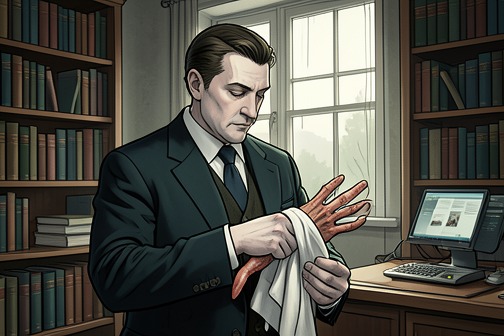
[Thomas Birdsey’s hand amputation](entity:event-recall-event-thomas-birdsey-s-hand-a-393870674eb3) is presented as a religiously charged act against the destruction of war and, at the same time, as an attempt to impose order on a world Thomas experiences as chaotic. Its consequences reach beyond the bodily injury: the act becomes a source of public attention, a painful subject in [Dominick Birdsey](entity:character-recall-character-dominick-birdsey-4a27b6b8228a)’s conversations with [Dr. Patel](entity:character-recall-character-dr-patel-a22e0ac3d85c), and a test of how his brother’s behavior can be understood without diminishing its harm.
## The Act and Its Stated Purpose
The amputation took place in a library. In discussing it afterward, Dr. Patel asks whether Thomas removed his hand as a sacrifice, with the aim of stopping the destruction war inevitably brings. The account gives the act a religious frame—Dominick describes it as Thomas cutting his hand off for Jesus—but does not present the religious explanation as making the injury less shocking or less consequential.
Dr. Patel offers a further interpretation: Thomas is struggling to cure himself of what she identifies as his gravest fear, chaos. In her account, the wish to order the world and save it is bound to the wish to save himself. The act therefore carries two connected aims, one directed outward at war and one inward at Thomas’s own distress. The evidence establishes this as Dr. Patel’s interpretation, rather than a settled explanation that Dominick accepts.
## The Recorded Thumping
A tape played during a later conversation contains an indistinct, staccato thumping sound. Dominick recognizes it as Thomas striking his stump against something. Dr. Patel confirms that Thomas had hit it against the table where they were seated, briefly and to make his point. The sound turns a discussion of the amputation into an immediate encounter with its aftermath: Thomas’s injured body is not merely being described but is heard making a forceful gesture during the recorded exchange.
The moment also resists a simple division between speech and action. Thomas makes his point through the stump, while the tape preserves the noise without identifying it until Dominick understands what he is hearing. Dr. Patel’s brief clarification gives the sound a concrete source and circumstance; Dominick’s recognition gives it emotional force. The record makes the injury present again in a form that is at first obscure and then unmistakable.
## Dominick’s Anger and the Public Aftermath
Dr. Patel asks Dominick to consider the possibility that Thomas’s struggle is noble. Dominick rejects that reading. He focuses instead on the library act’s extremity and on the attention it brings: he complains that Thomas has attracted media figures, including a call from Connie Chung, and the interest of a New York booking agent. His response makes the public consequences inseparable from his private distress. The event has become something other people want to cover or represent, while Dominick is left confronting what his brother did and what it means for their family.
Dominick’s anger appears again when he raises his voice and contrasts ordinary library use—checking out books—with Thomas cutting off his hand for Jesus. He connects the act to calls and media attention, then breaks off before finishing his thought. The interruption leaves his frustration exposed but unresolved: he is not persuaded by the language of sacrifice, and the attention surrounding Thomas’s act adds another burden rather than offering him comfort.
## Competing Interpretations
The amputation is thus recalled through sharply different emphases. Dr. Patel sees a very sick man who is also good, and understands the sacrifice as an attempt to resist war and overcome chaos. Dominick sees the catastrophic act, its bodily aftermath, and the public spectacle that follows. His skepticism does not disprove Dr. Patel’s interpretation; it shows how difficult that interpretation is to accept from the position of a brother facing the consequences.
The event’s force comes partly from that unresolved tension. The religious and antiwar purpose does not erase the injury, while the injury does not by itself settle what Thomas was trying to accomplish. The later tape and Dominick’s outburst return the reader to the act from different angles: first as a mission to save the world and himself, then as an unbearable event that has drawn strangers’ attention. The amputation remains both a bodily crisis and a point of conflict over whether Thomas’s sacrifice can be called noble.
Event 23
Thomas Birdsey’s transfer to Hatch
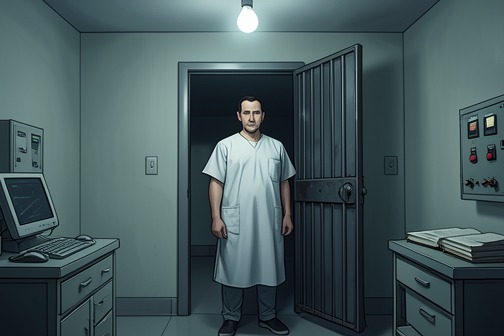
[Thomas Birdsey’s transfer to Hatch](entity:event-recall-event-thomas-birdsey-s-transf-2ad1d2657282) moved his care into a system of involuntary observation, restricted access, and formal review. What began as a fifteen-day emergency hold became a longer institutional commitment, with his treatment and possible release weighed against official judgments about risk.
## Legal Basis and Institutional Context
Thomas was admitted to [Hatch](entity:location-recall-location-hatch-fdeb24d75f73) under a Physician’s Emergency Certificate initiated by a surgeon at [Shanley Memorial Hospital](entity:location-recall-location-shanley-memorial-hos-210284df7136). The certificate gave the hospital fifteen court-ordered days to observe him and determine whether he posed a danger to himself or others; during that minimum period, his brother [Dominick Birdsey](entity:character-recall-character-dominick-birdsey-4a27b6b8228a) could not secure his release through an immediate challenge.
The procedure belonged to a system reshaped by the Jimmy Lane case. Lane, a patient on a supervised day pass from Westwood, wandered away from his group and killed a child despite having no recorded history of violence. The case intensified public hostility toward the insanity defense and revived stereotypes linking mental illness with violent crime. After the backlash, the governor fired the commissioner and reorganized the department; the Psychiatric Security Review Board, or PSRB, was established as part of that response. Thomas’s case therefore entered a framework formed both by individual clinical assessment and by the political pressure to demonstrate public safety.
## Observation and Treatment at Hatch
A week and a half after Thomas’s transfer, Dominick was still barred from visiting while awaiting security clearance. He relied on daily telephone updates from [Lisa Sheffer](entity:character-recall-character-lisa-sheffer-7a02d3d6d30b) and conversations with [Dr. Patel](entity:character-recall-character-dr-patel-a22e0ac3d85c), Thomas’s new psychologist. They reported that Thomas was holding his own: an infection at the skin-graft site had responded to a stronger antibiotic, and his vital signs were stable.
His adjustment remained difficult. Thomas was generally uncommunicative with other patients in Unit Two and troubled by the surveillance cameras throughout the institution, yet he was eating and sleeping satisfactorily. He had developed a rapport with Sheffer and seemed to trust her. After several days back on [Haldol](entity:object-recall-object-haldol-6cff3a97c902), his agitation was beginning to lessen, and his treatment was proceeding on course. These signs of stabilization did not, by themselves, resolve the question of whether he could leave.
## Review and Continued Confinement
At a later PSRB review, the board voted unanimously to retain Thomas at Hatch for one year, judging him potentially dangerous to himself and others. His case was scheduled for another review in October 1991, when the board would decide whether to release him or impose a second twelve-month period. Sheffer had requested a follow-up review in six months instead, seeking an earlier reconsideration.
The transfer thus led from emergency observation to a review process that could renew confinement in year-long increments. Thomas’s day-to-day treatment showed some improvement, but the board’s risk determination governed his continued stay. The distinction between clinical progress and legal freedom remained central to the consequences of his admission.
Event 24
Penny Ann Drinkwater’s death
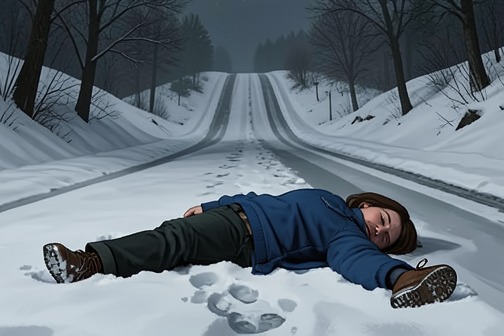
[Penny Ann Drinkwater’s death](entity:event-recall-event-penny-ann-drinkwater-s-b13aa0148784) is the childhood crime that transforms an ordinary classmate’s disappearance into a lasting source of fear and guilt for [Dominick Birdsey](entity:character-recall-character-dominick-birdsey-4a27b6b8228a). The delayed discovery of her body, followed by the identification of a former neighbor as the accused killer, leaves its mark in the classroom, in Dominick’s nightmares, and in his memory of how he treated Penny shortly before she vanished.
## Disappearance and discovery
For about a week after Penny disappeared during a snowstorm, her photograph appeared in the newspaper, moving from the front page to the inside pages before vanishing from print. At school, the absence became tangible in the empty chair beside Dominick: Penny’s desk was untidy, and her shabby blue sweater remained jammed inside, one sleeve hanging toward the floor. Dominick asked Miss Higgins to move his seat, but she refused.
Then Penny’s face returned to the front page beside the announcement that a girl’s body had been found at [The Falls](entity:location-recall-location-the-falls-5f49d510c64b). The report identified her as the victim of a killing but did not name the person responsible. It was the middle of February, with a foot of snow on the ground; Dominick’s recollection holds onto the bewilderment of imagining Penny exposed to the cold. Her disappearance had ended, but the news offered no immediate resolution about who had killed her.
## A child’s guilt and grief
The crime is bound in Dominick’s memory to an act of false accusation. Shortly before Penny’s disappearance, he told school staff that she had stolen Oreos, although he knew he had invented the theft. Miss Haas accepted his account, and Miss Higgins praised him publicly as a good citizen. Dominick remembers feeling pleased and queasy, while sensing Thomas watching him. After Penny was killed, that episode acquired a harsher meaning: the adults’ response had humiliated her, and Dominick had helped make her cry.
Penny’s death returned to him as a series of nightmares. In one, she rode a Shetland pony that galloped toward the edge of The Falls; in another, she dared him to lick a skeleton. A third dream placed the murderer at school, threatening the kindergartners. When Dominick screamed, his mother came to his and Thomas’s room, rubbed his arm, reassured him that he was safe, and allowed him to leave the light on. Still afraid to sleep, he watched Thomas on the bunk below and counted his brother’s breaths until the rhythm settled him. The loss thus entered his memory not only as news of a death but as recurring fear, soothed through the presence of family.
## School remembrance and the case
The school organized a penny drive in Penny’s honor, and Miss Higgins appointed Dominick and Thomas as the class bankers. They carried cardboard buckets from classroom to classroom to collect coins. Penny’s brother, [Ralph Drinkwater](entity:character-recall-character-ralph-drinkwater-42b07cfe79c4), was in Mrs. Jeffrey’s class; when Dominick passed his desk, Ralph did not contribute or look at the bucket. The small public ritual of remembrance did not erase the family’s grief or make it uniform: Ralph’s silence stood apart from the school’s organized tribute.
During a school ceremony, Dominick read an essay about Penny. Miss Haas, who had helped condemn Penny to embarrassment the day before her disappearance, surprised him by crying and taking his hand. Later, a summer newspaper report named [Joseph Monk](entity:character-recall-character-joseph-monk-db7b84f6ae51), a former neighbor, as the man charged in Penny’s death and described his confession. The revelation gave the crime an accused perpetrator, but the supplied account does not describe a trial or a later legal outcome.
## Lasting significance
Penny’s death exposes the gap between public moral certainty and private responsibility. Dominick had been rewarded for a false report, then had to remember that the girl he falsely accused was dead. His nightmares and his lasting attention to the episode make the memory an enduring reckoning with childhood cruelty, not merely a frightening news story. The reported charge against [Monk](entity:character-recall-character-monk-29694dcf9cf9) answers the immediate question of whom the authorities accused, while the narrative remains centered on what the loss—and Dominick’s own conduct before it—continued to mean to him.
Event 25
Angela Birdsey’s death
[Angela Birdsey’s death](entity:event-recall-event-angela-birdsey-s-death-32ec41eccdfb) is a defining bereavement in [Dominick Birdsey](entity:character-recall-character-dominick-birdsey-4a27b6b8228a)’s life: an ordinary morning’s delay brought him back to the house to kiss his infant daughter, where he discovered that she had died. The sudden loss ended the future he had imagined for his new family and remained vivid in his memories for years.
## Background and discovery
[Angela](entity:character-recall-character-angela-8ec06be0ea1a) died in May 1983, three weeks and three days after her birth. The night before, Dominick had stayed up correcting his students’ term papers, intending to return them before the weekend. In the morning he overslept after turning off his alarm in his sleep. He was already halfway out the door when he decided to go back and kiss the baby, rather than risk being late.
[Dessa](entity:character-recall-character-dessa-983ee7270af6) had been up twice with Angela during the night and was sleeping in. Dominick had expected to get to know his daughter more fully once the school year ended: his spring included assistant coaching track, union work, and regular visits to Thomas. He pictured July and August as time for his wife and baby, a stretch of family life he could begin once those obligations eased.
When Dominick returned, he found Angela unresponsive in her bassinet. He understood that she was dead before he picked her up and tried to call for Dessa. The death was described as crib death; the account offers no further medical explanation.
## The immediate aftermath
The loss left Dessa overwhelmed by grief. Dominick remembers her doubled over as the ambulance left their driveway, and later at the hospital, where the shock seemed to have diminished her. In the days that followed, he took charge of practical arrangements, dealing with the coroner and police while people brought food to the house. The casseroles accumulated uneaten; about a week later, he threw the food away, washed the dishes, and drove around returning them.
Dominick’s account sets this managerial role against the helplessness of the loss. Medical personnel, a priest called by Dessa’s family, and a hospital social worker took part in the aftermath, but their presence could not undo what had happened. The domestic tasks continued while neither parent could eat, giving the early grief a routine outward form without making it manageable.
## Family bonds altered by the loss
Angela’s death also meant that Thomas never met his niece. After her birth, Dominick had visited Thomas and given him a cigar to mark the news that he was an uncle. Thomas had smiled, but Dominick and Dessa had not yet taken the baby to see him; they planned to make the drive that weekend. Angela died before the visit took place.
Years later, Dominick connects the separation from Thomas to the course of Thomas’s illness. He reflects that the illness ultimately separated the brothers in a way he had been trying to do throughout his life, while acknowledging that he sometimes desperately wanted his twin back. Angela’s brief life therefore enters the story not only as a lost child but as a missed meeting: the family connection was announced, celebrated, and then left unrealized.
## Recurring grief and significance
In the seven years after Angela’s death, Dominick continued to relive the aftermath on sleepless nights. Her birthday and death day, and sometimes the holidays, brought back scenes from the ambulance departure and hospital. The memory returns in sharply particular circumstances rather than as a settled past, showing how the loss persists in his present recollection.
The event also exposes the distance between the future Dominick planned and the life that followed. He had postponed getting to know his daughter until work and other responsibilities subsided; the time he imagined with his new family never arrived. His memories preserve both the circumstances of the morning and the years of grief that followed, making Angela’s death a lasting measure of absence in his understanding of fatherhood and family.
Event 26
Leo’s cocaine scandal and reconciliation with Angie
[Dominick Birdsey](entity:character-recall-character-dominick-birdsey-4a27b6b8228a)’s recollection of [Leo](entity:character-recall-character-leo-b697c7b2a8d5)’s cocaine scandal traces a private crisis into public family negotiation: Leo’s drug use costs him his job and damages his marriage, but [Angie](entity:character-recall-character-angie-ab81440c0a94) argues for his capacity to change, and her father eventually brings him back into the family business. The episode turns on more than a return to employment. It shows forgiveness being tested against betrayal, money, family influence, and the unequal standards applied to the people closest to [Diogenes Constantine](entity:character-recall-character-diogenes-constantin-8595a23c6a11).
## Causes and Collapse
The trouble begins while Leo is managing [Le Club](entity:location-recall-location-le-club-e82b51e82fa2), a dance club whose wealthy owner, Rik, is described as a cocaine user. Leo becomes involved with cocaine during this period. Dominick remembers the drug’s effects as a change in Leo’s behavior and in how he treated Angie; for a time, he could not bear to watch and let his friendship with Leo lapse. His account does not present the scandal as a single indiscretion: it begins with a growing pattern that estranges two friends as well as putting Leo’s marriage under strain.
The club’s business difficulties bring that pattern to an abrupt professional consequence. Rik’s father sends an accountant to examine his son’s books, and Leo is dismissed soon afterward. The family’s influence then becomes part of Leo’s recovery and return to ordinary life: the Constantines pay for his drug rehabilitation. Yet treatment does not erase the damage or restore trust automatically. While Leo is in rehab, Angie learns that he had fathered a child with Tina, a hostess at Le Club. Tina has already had an abortion when she goes to Angie’s home and tells her, an act Dominick presents as intended to hurt Angie.
## Separation and Disclosure
Angie responds by obtaining a legal separation and moving with Shannon back to her parents’ home. The separation marks a clear break in the household, but it does not end the marriage’s story. Dominick places the news of Leo’s infidelity beside the practical and emotional circumstances of Angie’s decision: she has to contend not only with his cocaine use and treatment, but also with a concealed relationship and the revelation that he had fathered another child.
Three months after Leo leaves treatment, Angie and Leo are expecting another child together. The renewed pregnancy accompanies their return to one another, but the narrative does not suggest that it cancels what came before. Instead, it makes the question of Leo’s place in the family immediate. Diogenes has been advocating divorce; Angie asks that Leo be given another chance and maintains that he has changed. She also points to his being a good father to [Gene](entity:character-recall-character-gene-fba74de6c2d4) and [Thula](entity:character-recall-character-thula-bc762985b57b)’s grandchild. Her case is personal and practical at once: it rests on the possibility of change, on Leo’s place as a father, and on her own willingness to forgive.
## Angie’s Appeal and Diogenes’s Decision
Angie’s request puts the family’s standards of forgiveness into view. Gene distinguishes between forgiving Leo and placing him on the dealership payroll, treating renewed employment as a separate decision with consequences. Angie answers by invoking [Dessa](entity:character-recall-character-dessa-983ee7270af6): she believes Diogenes would agree immediately if Dessa were making the request, whereas Angie has to plead and endure humiliation to secure his consideration. Her comparison suggests that Diogenes’s willingness to help is not distributed evenly among his daughters; Angie uses that perceived difference to press for the same latitude she thinks Dessa would receive.
Thula also brings the family’s financial history into the discussion. She reminds her husband that his original business capital came from her family, a fact that Diogenes has remembered and ultimately respected. Her intervention supplies an understated counterweight to his authority: the dealership’s success is not solely his achievement, and his decision takes place within a marriage and a family whose support helped make that success possible. The episode does not depict Thula issuing an explicit demand, but Dominick understands her reminder as consequential to the outcome.
By the end of the month, Leo is working as a salesman at [Constantine Motors](entity:location-recall-location-constantine-motors-f72992cec971) and has joined the group of employees featured in a full-page advertisement in the [Three Rivers](entity:location-recall-location-three-rivers-1f183a1f9bef) Daily Record. The advertisement presents his broad, goofy face alongside the dealership’s promise of an honest deal. His public reappearance is concrete evidence that Diogenes has granted Angie’s request; it also turns a private reconciliation into a visible restoration of Leo’s working identity. The advertisement cannot establish that every injury has been repaired, but it records the family’s decision to let him return.
## Memory, Masculinity, and the Limits of Reconciliation
Dominick tells this episode as someone alert to the ways that households divide people into strong and weak. In his own childhood, he imagined a heroic father arriving to rescue him, [Ma](entity:character-recall-character-ma-9cb60cf0594d), and Thomas from [Ray](entity:character-recall-character-ray-b860e51616e4); later, to protect himself from Ray’s anger, he learned to hide fear and sometimes directed Ray’s attention toward Thomas instead. That remembered strategy gives Dominick’s account of Leo’s conduct a wider context: the story is attentive to the costs of weakness, the concealment of distress, and the compromises people make to remain safe or accepted. It does not equate Leo’s scandal with the brothers’ childhood, but it is narrated within a world where male behavior and family loyalty are often shaped by pressure and fear.
Other recollections reinforce that context without making it a simple explanation for Leo. Dominick remembers Ray as more often a shouter than a hitter, insulting the family and belittling Ma. In a later conversation, he recalls Ray goading him during basketball and insisting that he play defense rather than act timidly. Dominick also recounts Thomas’s distress after Dell humiliates him at work, a moment that makes the policing of masculine composure visible in another setting. These memories frame the family’s repeated demand that men endure, conceal, or answer vulnerability, even as the Leo episode centers on a different kind of failure and repair.
Ray’s account of war adds a further contrast: he describes returning from military service changed by what he had seen and done, and connects that experience to his distress over Thomas’s later act at the library. The recollection does not excuse Ray’s treatment of his family, just as the narrative does not make Angie’s forgiveness a declaration that Leo’s betrayal was harmless. Instead, Dominick’s episodic account allows injury and attachment to remain side by side. Leo’s return to the dealership is a material and social reconciliation, secured through Angie’s advocacy and family resources; the story leaves the deeper work of trust less neatly resolved.
Event 27
Dominick and Dessa’s separation
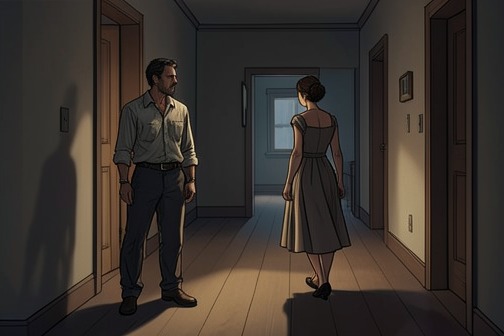
[Dominick and Dessa’s separation](entity:event-recall-event-dominick-and-dessa-s-se-edd537cea34e) is the consequence of grief made harder by silence: after their daughter [Angela](entity:character-recall-character-angela-8ec06be0ea1a) dies, Dominick secretly makes himself unable to father another child, while [Dessa](entity:character-recall-character-dessa-983ee7270af6) travels alone to decide whether she wants to try again. The operation becomes the immediate rupture, but the separation’s deeper cause is the anger and blame Dessa has experienced throughout their bereavement. Her departure leaves Dominick to confront how his attempt to control the future has helped destroy the marriage he wanted to keep.
## Background and bereavement
Angela died in May 1983, three weeks and three days after her birth. Dominick found her after turning off his alarm in his sleep and oversleeping; although he had been correcting students’ papers late the night before, he had started to leave for work and then returned to kiss the baby. Dessa had been up with Angela during the night and was sleeping in. Dominick later said he was grateful to have found his daughter himself, because that spared Dessa this particular shock. He had imagined getting to know Angela properly after the school year ended, an intention made painfully tentative by the shortness of her life.
The loss also marked a future that the couple had expected to share. When Angela was born, [Big Gene Constantine](entity:character-recall-character-big-gene-constantin-0d2c3a40afd2) had taken out a life-insurance policy on her, as he had for the children of [Angie](entity:character-recall-character-angie-ab81440c0a94) and [Leo](entity:character-recall-character-leo-b697c7b2a8d5). Dessa wanted to use the insurance money to travel with Dominick to [Greece](entity:location-recall-location-greece-6f5775f30806) and [Sicily](entity:location-recall-location-sicily-8d99f798a76e). She had hoped the journey would be something they did together, but Dominick declined, telling himself that he could not leave before the school year ended. The refusal concealed a more personal fear: he dreaded being confined with Dessa on a ship and feared that the trip might lead them to conceive another child.
## The trip and the concealed decision
Dessa anticipated that Angela’s first birthday would be especially painful. She had turned her leave from the day-care center into a resignation and arranged to travel alone. When she asked Dominick to go for her sake, he lost his temper and called a trip financed by the insurance money sick. His objection masked the fear he could not bring himself to explain. He encouraged her to go without him, and she did.
Dominick spent Angela’s first birthday getting a vasectomy. He chose a urologist from the phone book and presented himself as a single man who had made a conscientious decision because of overpopulation, saying there was no wife whose consent was needed. His account makes clear that he arranged the procedure without Dessa’s knowledge. The secrecy was not a misunderstanding about what she wanted: he had decided for himself that another pregnancy must be prevented, while she was away trying to understand what she wanted after their daughter’s death.
When Dessa returned, the couple’s intimacy faltered. Dominick thought she was afraid of becoming pregnant and chose that moment to tell her what he had done. She stopped crying, then reacted with a physical outburst. She told him that she wanted another child; the trip had helped her reach that decision. The news turned his unilateral precaution into a direct contradiction of the future she had come home ready to discuss.
## The rupture and departure
For the next couple of weeks, conversation dwindled to single syllables. Dessa cleaned closets, cooked meals she did not eat, rented a carpet cleaner, and stripped wallpaper from Angela’s room. Calls passed between her, her sister, and Eileen, a friend from the SIDS group. These domestic acts and calls followed the disclosure, but they did not repair the silence between the couple. On a Saturday morning in July, Dessa told Dominick she was leaving.
Dominick responded by pointing out that vasectomies could sometimes be reversed. Dessa rejected that solution as inadequate: in her view, the operation was a symptom, while the problem was his anger and the blame she felt he had directed at her throughout their loss. She described their marriage as a game of One, Two, Three, Red Light: each small step she made toward recovery seemed to be undone by his anger. Away from him, she had felt stronger; after returning and seeing him, she felt she was back at the beginning. She said she needed to protect herself and be able to breathe.
Dominick promised he could do better and offered to return to the support group. He followed her down the stairs and out to the car, begging and making promises, but her luggage was already packed in the back seat and the open trunk of the Celica. She left with the dog. The departure made the separation concrete: Dominick could offer reversal of the procedure and promise a change in himself, but neither could undo the decision she had reached or restore trust in time.
## Aftermath and continuing loss
Dominick spent the rest of that summer reading large books and avoiding looking up. His recollection of the separation is entwined with the grief that preceded it and the absences that followed. He had gone to tell Thomas that Angela was a girl, bringing him a cigar and making him an uncle; Thomas smiled, but never met his niece, because the planned visit did not happen before she died. Dominick later described Thomas’s illness as having accomplished what he himself had tried to do all his life: separate the twins. He could accept that separation at times, yet also remembered aching for Thomas and needing him.
The marriage’s ending likewise persists in Dominick’s inner life rather than closing neatly with Dessa’s departure. In a later dream, he imagines that she has not left him. That return of the lost marriage echoes his continuing effort to recover lives and futures that bereavement has taken away. The event’s significance lies in the contrast between Dessa’s journey toward a decision she hoped to share and Dominick’s secret attempt to make the decision for both of them. His concealment protects him temporarily from the possibility of another child, but its disclosure reveals that the marriage has already been made unbreathable for Dessa.
Event 28
Dominick’s breakdown at school
[Dominick Birdsey](entity:character-recall-character-dominick-birdsey-4a27b6b8228a)’s breakdown at school turns the private accumulation of bereavement, marital loss, and fear for his twin into a public crisis. It erupts during an ordinary classroom lesson, but its consequences reach beyond that afternoon: Dominick abandons both therapy and teaching, and begins to reconstruct his life outside the school where he could no longer perform normality.
## Circumstances and Trigger
After [Dessa](entity:character-recall-character-dessa-983ee7270af6) left, Dominick spent the rest of the summer reading and avoiding calls. The day after Labor Day, he returned to his classroom, prepared class lists and seating charts, and gave new students his familiar speech about high expectations and mutual respect. The routine held, but its words no longer felt true to him; he describes delivering them as if playing a record. He distributed books and matched unfamiliar names to faces, believing he was managing.
The rupture came in late September, in fourth period, while he was at the blackboard explaining how to punctuate the bibliography for the students’ first paper. The question was as small and safe as whether a period or comma should follow an author’s name. In that ordinary pause in the school day, his accumulated losses arrived together: his baby was dead and buried, Thomas was in a psychiatric institution, and Dessa had left because she needed room to breathe. The scene’s force lies in the disproportion between the minor task before him and the grief it could no longer contain. The lesson does not cause the losses; it becomes the point at which the effort to keep them separate fails.
## The Breakdown in the Classroom
Dominick knew he should leave the room, but he could not make himself do so. Instead, he went to his desk and began to sob. The students remained frozen, facing him, and neither they nor Dominick knew what to do. When one student fetched the vice principal, the adult response did not restore order: the vice principal called the police, for reasons Dominick says he still did not understand.
The officers took him out through the school and into an unmarked cruiser. They walked him past a boys’ gym class playing soccer and Jane Moss’s art class, whose students were outside sketching trees. The route made his distress visible across the ordinary life of the school: lessons and activities continued around the man being escorted away. Jane Moss touched his sleeve and addressed him by name. Dominick remembers the moment as happening both from within and at a strange distance, as though he were looking at it through the wrong end of binoculars. That divided perspective records not just embarrassment but the disorientation of experiencing a crisis while also watching oneself become its public subject.
## Diagnosis and Refusal of Treatment
A therapist called the episode an anxiety attack, situational and understandable under the circumstances, and told Dominick it was entirely fixable. Dominick suspected the reassurance was deliberately minimizing the event because he had confided his fear that Thomas’s mental illness might be beginning to claim him as well. His fear was not simply that he could not cope with bereavement; it was that his twin’s condition might be a future he was approaching himself.
At their second session, the therapist proposed addressing the anger, grief, and betrayal left by the baby’s death, then, in a month or two, exploring what it had been like to grow up as Thomas’s twin and as the son of his mother and [Ray](entity:character-recall-character-ray-b860e51616e4). Dominick interrupted to correct the family description: Ray was his stepfather, not his father. The brief correction gives the proposed therapeutic work a specific family fault line. Dominick could discuss the distinction plainly, but he did not continue the sessions: he never went back. The treatment therefore remains a plan rather than a process of recovery.
## Consequences and Significance
Dominick never returned to teaching either. He could not imagine crying in front of a class one week and coming back the next to resume a lesson as though nothing had happened. He mailed his resignation to the superintendent. The breakdown thus ends more than one school day: it marks the point at which the public role he had resumed after Dessa’s departure becomes untenable.
During the worst of his insomnia, Dominick read, turning to Solzhenitsyn, Steinbeck, and García Márquez after spending the summer with Styron, Michener, and Will and Ariel Durant. When spring came, he bought a compressor and scaffolding at an estate auction, stenciled Premier Painting on his pickup, and reinvented himself as a housepainter. The business name promised a full operation, though Dominick observed that he was the painter, bookkeeper, and everything else. This new work does not undo the losses that precipitated the classroom scene; it gives him a different daily structure after teaching and therapy have both ended. The abrupt passage from a punctuation lesson to resignation and a one-man painting business shows how a collapse can make an apparently stable life impossible to resume, even when the crisis itself is labeled situational.
Event 29
Ray’s confrontation with the Birdsey family over Thomas’s grades
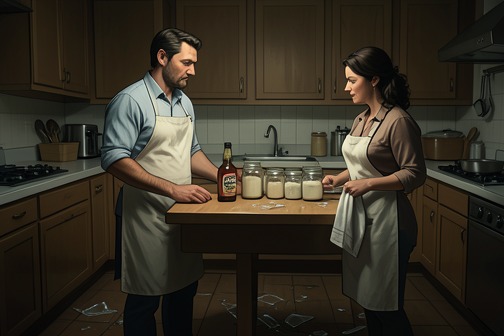
[Ray’s confrontation with the Birdsey family over Thomas’s grades](entity:event-recall-event-ray-s-confrontation-wit-465e4b74c3a8) is a kitchen-table reckoning that turns a hidden college report into a display of domestic violence. In [Dominick Birdsey](entity:character-recall-character-dominick-birdsey-4a27b6b8228a)’s recollection, [Ray](entity:character-recall-character-ray-b860e51616e4)’s anger over Thomas’s academic failure spreads from the son who concealed it to the whole family, while Dominick’s attempt to shield his twin ends not in rescue but in retreat. The shattered jars on the kitchen floor make visible the damage that the household’s usual strategy of silence and endurance is meant to contain.
## Setting and Trigger
The confrontation begins one day in July, when Thomas and Dominick return from work to find Ray waiting at the kitchen table with a bottle of Moxie. [Ma](entity:character-recall-character-ma-9cb60cf0594d) is there too, looking ashen and twisting a dish towel. She has spent the day making sweet cucumber pickles, a favorite of both twins; the filled canning jars stand in a row on the counter. The domestic details establish a kitchen prepared for ordinary family life before Ray turns it into a place of accusation.
Ray has found Thomas’s tissue-paper grade report from the [University of Connecticut](entity:location-recall-location-university-of-connec-ed2e8f3e0750). Its Ds, Fs, and Incompletes contradict the image of college progress Thomas had allowed the family to believe in: he has said nothing about the poor results. Ray holds the report up and demands an explanation, treating the grades as evidence in a case against Thomas. The immediate dispute is academic, but Ray quickly makes it about the money he has spent and whether the twins deserve the education he is funding.
## Ray’s Accusation and Dominick’s Intervention
Ray presses Thomas to explain himself, but Thomas sits with his hands in his lap, averts his eyes, and struggles not to cry. Dominick describes his brother as someone who cannot defend himself in these moments. Ray continues, complaining that he never went to college and cannot understand why his hard-earned money should go to a son who appears to make a joke of his education. His grievance combines financial sacrifice, resentment, and a demand that Thomas answer on Ray’s terms.
As Thomas’s body shakes and sobbing catches in his throat, Dominick decides that he does not want Ray to draw the same full-throated tears from his brother that he has drawn from him since childhood. He puts himself in the line of attack instead. Dominick cites his own 3.2 GPA and the fact that he has made the dean’s list, challenging Ray to say what is wrong with that. The diversion works in the narrowest sense: Ray turns his attention from Thomas to Dominick. But the shift also shows the limits of the brothers’ shared defense. Dominick can redirect the rage; he cannot stop it.
## Physical Violence and the Broken Jars
Ray answers Dominick’s intervention by grabbing the front of his T-shirt and pulling him to his feet. Dominick tells him to let go. When Ma asks them to calm down, Ray releases Dominick with a shove that makes him lose his balance and fall against a kitchen chair. Ray then turns toward Ma and the counter. His sarcastic claim that he will calm down precedes an outburst that makes the word mean its opposite.
He takes Ma by the arm and hurls one pickle jar against the refrigerator door. Another smashes on the floor in front of Thomas; a third breaks against a table leg. The violence destroys the result of Ma’s work and scatters glass, pickles, and juice across the kitchen. The jars are not incidental scenery: the preserved food that had marked the family’s ordinary care becomes the material through which Ray humiliates Ma and intensifies the fear around Thomas. Dominick imagines taking a jagged piece of glass and driving it into Ray’s heart, but remains standing, terrified. His imagined retaliation and his actual stillness register the distance between rage and the ability to act under threat.
## The Brothers’ Different Defenses
Dominick explains that trying to fight back during one of Ray’s rages is futile: any words the family manages to get in are outweighed by Ray’s response and by the toll the conflict takes on Ma. The available tactic is to hide emotion and play defense. Dominick says he has always understood this, whereas Thomas never has. The contrast is not presented as a difference in how much the brothers care or suffer, but in how they respond to danger: Dominick withdraws behind controlled expression; Thomas continues to answer the assault with tears and apologies.
After the jars break, Thomas sobs and apologizes as Ray continues to berate him. Dominick finds the sight of his brother enduring the renewed verbal attack unbearable. He heads for the back door, stepping through pickle juice and crunching glass under his work boots, while Ray calls after him. Dominick slams the door and runs from the house. His exit does not resolve the confrontation or protect Thomas from Ray; it marks the point at which remaining in the kitchen has become more than he can bear.
## Aftermath and Narrative Significance
Dominick runs from [Hollyhock Avenue](entity:location-recall-location-hollyhock-avenue-00081328f039) up toward Summit Street and through the woods. He passes a family having a picnic and a teenage couple beside Rosemark’s Pond, then plunges into the water still wearing his boots and work clothes. The movement from the broken, enclosed kitchen into the pond is abrupt, and the soaked clothing makes clear that he has not paused to prepare or change. The account does not describe this as a solution: it follows his flight from a scene in which he felt both murderous anger and terror, without suggesting that the family conflict has ended.
The episode links Ray’s authority in the household to money, humiliation, and physical force. Thomas’s undisclosed grades supply the occasion, but the confrontation exposes a larger pattern: the children manage Ray’s anger by anticipating its cost, and even an attempt to protect a sibling can draw the violence onto the protector. Ma’s presence and her broken jars show that the outburst harms more than its initial target. In Dominick’s account, the family’s defensive silence is not calm; it is a survival tactic imposed by the knowledge that speaking or resisting may bring another blow.
Event 30
Dominick’s confrontation with Thomas’s recorded therapy session
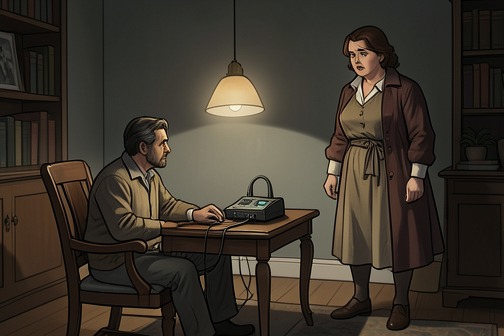
[Dominick’s confrontation with Thomas’s recorded therapy session](entity:event-recall-event-dominick-s-confrontatio-94a12fc3bbe3) turns an act of listening into a family crisis. As Thomas describes alleged abuse by their stepfather, [Ray Birdsey](entity:character-recall-character-ray-birdsey-3f59a8e925fb), Dominick’s immediate denial gives way to fury and distress. The recording cannot settle the family’s contested past, but it makes Thomas’s account impossible for Dominick to keep at a distance—and leads [Dr. Patel](entity:character-recall-character-dr-patel-a22e0ac3d85c) to recognize that the brothers’ suffering cannot be treated as one person’s story alone.
## The recording as a second encounter
The session being replayed was recorded on October 23, 1990, at 2:30 p.m. In it, Dr. Patel confirms that Thomas knows the conversation is being taped. For Dominick, hearing the session later creates an encounter with his brother at once intimate and mediated: Thomas speaks from a clinical interview, while Dominick listens in another setting, unable to answer the original questions or redirect what is being said.
The recording initially presents the allegations through fragments and prompts. Dr. Patel asks Thomas about earlier statements concerning [Ray](entity:character-recall-character-ray-b860e51616e4)’s treatment of their mother. Thomas’s first response echoes a familiar comic line, and Dr. Patel asks Dominick whether Thomas is quoting his stepfather. The tonal shift matters: an apparently recognizable joke or imitation gives way to testimony about violence in the household. What began as a recorded clinical exchange becomes a confrontation with memories that Dominick has not accepted as part of his own account.
## Allegations and denial
Thomas says that Ray assaulted their mother and made the boys watch. When Dr. Patel clarifies that Thomas means both brothers, Dominick interrupts the recording to reject the claim. His denial is immediate, but the scene does not establish that it disproves Thomas’s account. Instead, it shows the pressure the allegation places on Dominick: he must hear a description of their childhood that implicates the family and challenges his understanding of Ray.
As Thomas continues, he describes being forced to remain present while Ray threatened the family and framed the experience as preparation for a harsh world. Dominick tries to turn his attention elsewhere, studying details in the room and picking at a dried paint mark on his jeans until he makes a hole in the fabric. That involuntary focus on the immediate surroundings contrasts with the memories coming through the tape. Dominick thinks of his mother’s suffering and resents Thomas for bringing it back into view. The recording thus registers not only what Thomas alleges, but also how difficult Dominick finds it to listen without defending the version of the family he has carried.
Thomas then makes a further allegation of sexualized abuse by Ray. Dominick’s distress becomes unmanageable: he lunges forward and stops the tape himself. The act ends the playback, not the conflict. The recording has forced him to encounter claims he cannot calmly assess, and his refusal to hear more leaves the central question unsettled. The novel presents his reaction as evidence of the emotional force of Thomas’s testimony, not as independent confirmation of every detail.
## Anger, care, and the cost of listening
After stopping the tape, Dominick admits that he is furious. His anger is directed at the situation and at Thomas’s account, but it also reveals a response he has difficulty containing. The scene connects this loss of control with the family’s wider pattern of violence and emotional silence: what has been endured or denied returns through Thomas’s recorded words, while Dominick’s effort to shut them out becomes part of the event itself.
Dominick later apologizes to [Lisa Sheffer](entity:character-recall-character-lisa-sheffer-7a02d3d6d30b) for shouting and swearing. She does not treat his outburst simply as misconduct; she tells him that his reactions and insights have been useful. Yet she also decides that he should no longer listen to Thomas’s therapy recordings. Her reason is a boundary of care: helping one brother’s treatment must not put the other brother at risk. Dominick wants to keep listening in the hope that what he learns might help Thomas, but the exchange makes clear that his loyalty cannot require unlimited exposure to distress.
Sheffer’s conclusion reframes the scene. Rather than seeing Thomas as the only young man in trouble, she recognizes two brothers lost in the woods. The image broadens the meaning of the confrontation: Dominick is not merely an observer assisting Thomas’s care, but a person whose own pain and uncertainty have surfaced in the process. The session’s therapeutic value therefore has limits. Its revelations may matter, but the act of witnessing them cannot be separated from the listener’s wellbeing.
## The institutional frame and its limits
Thomas’s treatment unfolds within a system shaped by public anxiety about mental illness and violence. The Jimmy Lane case had intensified political pressure after an insanity acquittal; the resulting scrutiny contributed to the creation of the Psychiatric Security Review Board. Thomas, meanwhile, entered [Hatch](entity:location-recall-location-hatch-fdeb24d75f73) under a Physician’s Emergency Certificate, which allowed a fifteen-day period of observation to assess whether he posed a danger to himself or others. These procedures establish the restrictive institutional setting around the brothers’ encounter, but they do not resolve the family history disclosed on the tape.
The later review process likewise demonstrates that care and confinement remain entangled. The board votes unanimously to retain Thomas at Hatch for a year, citing potential danger to himself and others, with another review scheduled for October 1991. That decision is an institutional determination about risk, not a finding that verifies or refutes Thomas’s allegations against Ray. Read alongside Dominick’s interrupted listening, the distinction is consequential: clinical recordings, family recollection, and legal judgments each make different things audible, while none alone supplies a complete account of the brothers’ past.
Event 31
Thomas’s dining-room disturbance at Hatch
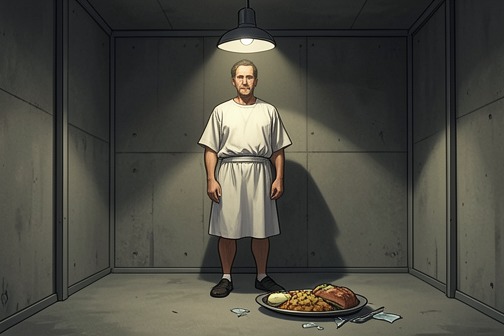
[Thomas’s dining-room disturbance at Hatch](entity:event-recall-event-thomas-s-dining-room-di-1ba684aa9a22) is a point at which his fear of being watched becomes an explicit account of persecution. After throwing food, he says that the [CIA](entity:organization-recall-organization-f8fce2cfb9d5) has targeted him before, using infrared lights and taking his thoughts; he connects that imagined interference to memory problems and to a mission he believes he must carry out for God and his country. The episode makes his distress legible to those questioning him, while showing how the hospital’s scrutiny can sit uneasily beside his suspicions of surveillance.
## Setting and circumstances
[Hatch Forensic Institute](entity:location-recall-location-hatch-forensic-insti-abd5e9d5e212) stands at the rear of the [Three Rivers State Hospital](entity:location-recall-location-three-rivers-state-h-d769b42b4083) grounds, a squat concrete-and-steel building enclosed by chain link and razor wire. It holds both high-profile patients associated with alarming public incidents and people whose behavior has left them without another place to go. The institution’s physical security is part of the disturbance’s context: Thomas is questioned within a setting organized around supervision and containment, precisely the conditions that can intensify his suspicions of being monitored.
The town’s attitude toward [Hatch](entity:location-recall-location-hatch-fdeb24d75f73) is described as more interested in keeping disturbing or dangerous people confined than in rehabilitation. Although some patients improve and leave, release is presented as uncommon; for many, the door seems to swing in only one direction. That institutional outlook forms a stark backdrop to Thomas’s episode. His fears are not simply met with reassurance: they arise within a system whose purpose includes watching patients and restricting their movement.
## The disturbance and Thomas’s account
The questioning begins with an inquiry into whether Thomas is afraid. He responds by describing the CIA as an enemy that has interfered with him before. In his account, agents beamed infrared lights at him and sucked out his thoughts, leaving him unable to remember as he once did. The explanation joins an outside threat to a personal loss of capacity: he fears that his memory has been damaged and insists that he wants to concentrate on the [Persian Gulf](entity:location-recall-location-persian-gulf-f1b7a7dbee40).
Thomas gives this concern a religious and patriotic purpose. He says he wants to serve God and country by turning people away from materialism and toward God, but believes that unnamed antagonists distract him because they recognize how dangerous he is to them. He invokes Salman Rushdie as another person supposedly targeted, extending his private persecution into a wider conspiracy. The account thus moves from fear and impaired memory to a claim of exceptional importance: Thomas imagines himself as both obstructed and consequential.
The food-throwing that prompts the interview is a visible disruption, but the questioning brings the focus to what lies behind it. Thomas describes a world in which ordinary institutions and public events are charged with hidden hostility. His conviction that he is being targeted does not establish that the alleged surveillance occurred; it reveals the structure of his fears and the mission he builds around them.
## Family and clinical response
The episode matters beyond the dining room because it contributes to the effort to understand Thomas’s earlier illness. In a later conversation, a clinician asks Dominick to retrieve childhood memories that might be significant and to recall Thomas’s earliest schizophrenic episodes and initial decompensation. The request places the disturbance within a longer search for the beginnings of his illness, rather than treating it as an isolated act of misconduct.
Dominick agrees to try. His role is complicated: he is not only a family member being asked to remember, but also the person who has repeatedly tried to interpret Thomas’s crises and challenge the conditions of his care. The memory request makes the gap between the event as an institutional incident and the event as part of a life especially clear. What the hospital can record as disruptive behavior does not, by itself, explain how Thomas came to understand himself as watched, endangered, and assigned a mission.
## Hatch, care, and the prospect of transfer
Dominick disputes the comforting account that Hatch is humane by describing his own mistreatment by a guard. A clinician acknowledges that problems occur on the wards while maintaining that the care is generally decent. Their exchange leaves a tension unresolved: an institution may provide treatment and still subject patients and visitors to force, surveillance, and restrictive security. Thomas’s suspicions therefore emerge against a real apparatus of monitoring, even though the specific conspiracy he describes is presented as his belief, not as fact.
There is also uncertainty about whether Thomas might do better elsewhere. The clinician recognizes that the tight security at Hatch may be difficult for a paranoid patient, while defending the care available there. Later, Dominick hears a rumor that the state may close [Settle](entity:location-recall-location-settle-037b6270bdf7) as early as March and proposes that Thomas be placed there until then, reasoning that five months might allow him to regain stability. This is a proposal under uncertainty, not evidence that a transfer occurs. The episode’s significance lies partly in that unresolved choice: Thomas’s fears are exposed, but the family and clinicians still have to weigh treatment, security, and the possibility of a less restrictive setting.
Event 32
Apollo 11 lands on the Moon

Apollo 11’s Moon landing is remembered not only as a historic broadcast but as the setting for [Dominick Birdsey](entity:character-recall-character-dominick-birdsey-4a27b6b8228a)’s deliberate departure from home and a night of searching reflection. The televised mission draws a crowd to the [Dial-Tone Lounge](entity:location-recall-location-dial-tone-lounge-b1a952600369), yet the event’s deeper force in his account lies in the contrast between a shared national spectacle and the isolation he recognizes in the people watching it—and in himself.
## The broadcast and Dominick’s departure
Dominick’s recollection places the landing on a night when he chooses to go out rather than remain within the family’s orbit. He presents leaving as a refusal, a way of declining what home and its expectations represent to him. At the front door, his stepfather asks whether the place Dominick is going serves alcohol. The brief exchange establishes the domestic setting he is leaving and the impending night out’s association with drinking, without making the departure seem accidental.
[Leo](entity:character-recall-character-leo-b697c7b2a8d5) arrives, and the two drive along Route 22 in a fast, reckless convertible. Dominick finds the driving appealing that night. The journey gives physical expression to his decision to get away: while the astronauts are associated with travel beyond Earth, he and Leo tear along a local road. The contrast is not a claim that their actions are comparable in scale; it is the parallel that Dominick draws between the public voyage into space and his own restless movement through a familiar landscape.
At the Dial-Tone Lounge, the moon landing is visible on a television above the bar. Roughly twenty or twenty-five people gather around the screen, but the music and the deejay make it impossible for them to hear the broadcast clearly. The astronauts have not yet emerged from the lunar module. The scene therefore holds the landing in suspension: the people have assembled to watch, but the televised image has not yet delivered the moment they are waiting for. A mission followed by millions is present in the room, though its sound is overwhelmed by the bar’s ordinary noise.
## Celebration, distraction, and partial memory
Dominick remembers reacting to the journey as an astonishing collision between scientific achievement and what had once seemed like science fiction. His recollection also retains a wry note about the calculations and expertise behind the mission. That response matters because he does not dismiss the landing; he registers its strangeness even as the bar’s distractions compete with it. The public event reaches him amid music, conversation, and drink rather than in a quiet or ceremonial setting.
Much of the night remains blurred in Dominick’s memory. He recalls dancing with a blonde woman in pigtails, an image he associates with Ellie May Clampett, and remembers the lounge giving away champagne after Armstrong and Aldrin’s moonwalk. He also recalls a patron throwing a punch and being escorted out by two bouncers. These fragments set the broadcast beside a loose sequence of entertainment and disruption. The landing becomes part of the night’s atmosphere, not its only activity: people watch, celebrate, dance, drink, and turn to other conflicts even as a historic event unfolds on television.
The episode’s uneven recollection is important to its shape. Dominick does not offer a complete record of the night; he marks the limits of what he can clearly remember and preserves particular details instead. The television, the free champagne, the dancing, and the ejection from the lounge form distinct points in a blurred evening. This mixture keeps the Moon landing from becoming a detached historical summary. It is recalled through the imperfect, selective memory of someone who was physically present but emotionally unsettled.
## From the bar to the shoreline
After leaving the lounge, Dominick walks along the shore. The cold sea air helps sober him, and the sounds and sensations of the interior recede as he moves farther from the building. He walks for roughly a mile or a mile and a half, looks back toward the moon, and thinks about what it might be like to view Earth from far above. The distance imagined by the astronauts becomes a way for him to consider what it means to look at the world without feeling part of it.
Dominick extends that thought beyond himself. In his reflection, he sees Leo, [Ralph Drinkwater](entity:character-recall-character-ralph-drinkwater-42b07cfe79c4), [Thomas Birdsey](entity:character-recall-character-thomas-birdsey-8bc90de9bb24), and his stepfather among those who seem like moonwalkers: people separated from a secure sense of belonging. He also includes the customers at the Dial-Tone Lounge, whose attempts to find brief closeness appear to him as efforts to tether themselves to someone, however temporarily. The comparison gathers people who differ in their circumstances under a shared image of disconnection. The moonwalkers are not only the men on the television; in Dominick’s inward account, they are also figures for those who feel apart from ordinary life.
The thought briefly gives Dominick a sense that things have become clear and meaningful. He tries to recall the existentialist philosopher he encountered in a course the previous semester, linking the experience to an intellectual idea without naming the philosopher. The Moon landing thus acts as a prompt rather than an answer: it makes distance visible, and for a moment allows Dominick to organize his perceptions of loneliness around it.
## A spectacle that meets private experience
The landing also enters a more intimate encounter later in the recollection. After several kisses with a woman, Dominick becomes intensely eager to continue, but she stops him, removes his hands, and gets down from the tower. She looks toward the moon and remarks on the strangeness of people walking there at that very moment. Her response returns attention from their immediate interaction to the astronauts above them. The passage does not present the moon as a mere backdrop: the televised and imagined mission interrupts the night’s private momentum and gives the woman a different point of focus.
Across these scenes, the event produces contrasting forms of attention. The bar crowd gathers around a screen but cannot hear it; Dominick later watches the moon directly and thinks about separation; the woman pauses their encounter to contemplate the astronauts. His recollection moves from noisy public viewing to solitary reflection and then to shared wonder. The Moon landing’s significance in this episode is therefore both historical and personal: it supplies a vast image of human distance through which Dominick perceives the fragile connections, attempted escapes, and moments of clarity in the people around him.
Event 33
Dominick meets Dessa

[Dominick meets Dessa](entity:event-recall-event-dominick-dessa-d6d6590b2d5f) at a lifeguard’s perch on a moonlit night, in an encounter that turns a small practical question into the beginning of their intimacy. The scene moves through a sequence of tentative approaches: recognition, conversation, laughter, a kiss, and the shared discovery of phosphorescence in the water. Dominick later marks the instant as decisive: he fell in love with her before he had even climbed down from the tower.
## The Encounter at the Perch
[Dessa](entity:character-recall-character-dessa-983ee7270af6) calls up from the lifeguard’s perch to ask whether Dominick has jumper cables. He says he does not, then asks whether she was the person he had heard trying to start a car earlier; he suggests that the engine may be flooded and that she should wait before trying again. As he approaches, he recognizes her as the waitress from the [Dial-Tone Lounge](entity:location-recall-location-dial-tone-lounge-b1a952600369). She is sitting with her knees drawn to her chest, her hands tucked inside her sweatshirt sleeves.
Their exchange is shaped by a prior moment of intervention: Dessa thanks Dominick for trying to make a group of men back off, calling the gesture sweet. He deflects the possibility that he is there to rescue her, and she invites him to sit beside her in the perch. The meeting therefore begins with both a trace of mutual recognition and a resistance to turning that recognition into a grand gesture. A question about a car gives way to the more consequential invitation to stay.
## Conversation and Recognition
Dessa has been reading by moonlight. When Dominick asks what has captured her attention, she hands him a paperback by Richard Brautigan. She admits that she does not quite understand the book but cannot stop reading it; its mystery and intrigue hold her. Dominick reads aloud its opening line, and she points to Brautigan’s photograph on the cover. His comparison of the author to Mark Twain on acid makes her laugh. She runs a hand through his curly hair and musses it, a small, playful gesture that Dominick’s retrospective narration isolates as the instant their connection becomes unmistakable to him.
The conversation gives Dessa a life beyond the brief image of the waitress at the perch. She is twenty-one, a senior at [Boston College](entity:location-recall-location-eb2838747d0f) majoring in early childhood education, and works mornings at a Head Start program as well as waitressing. Her father had wanted her to return to his car dealership’s bookkeeping department, where she had worked for three summers, but she wanted a change and some independence. She had deliberately sought work outside her family’s business, applying and interviewing to find out whether someone beyond her relatives would hire her. The detail makes independence part of the person Dominick is getting to know, not merely a subject she mentions in passing.
Dominick talks at length, and Dessa listens. She recognizes the strain of having someone so close who depends heavily on him, and names the lack of breathing room such dependence can create. Her response matters because Dominick feels that someone has actually heard and, at some level, understood him. The scene’s turn toward intimacy comes not only through attraction, but through the experience of being listened to without interruption.
## A Kiss, a Boundary, and the Water
Dominick reaches over and kisses Dessa; she kisses him back and tells him he tastes nice, a little salty. The exchange quickly intensifies for him: after several kisses, he feels wired and hungry for her. Dessa stops that acceleration. She pulls his hands off her, jumps down from the tower, and turns their attention to the moon and the people walking on it. Her interruption establishes a boundary, while the conversation continues rather than ending in rejection or estrangement.
Dessa walks slowly to the water’s edge and wades in. Dominick follows, and she takes his hand as she looks into the water. She recalls seeing phosphorescence there as a child. She and her sister used to call it pixie dust, and she points out another glimmer. Dominick keeps missing it and suspects she may be teasing him; then he sees the phosphorescence himself. The moment draws them together through shared attention rather than through another declaration: her childhood name for the light becomes the scene’s intimate image, and Dominick’s delayed perception lets the discovery unfold between them.
## The Scene’s Outcome and Significance
Dominick’s account joins the first kiss to a sequence of concrete details—the paperback held up to the moon, Dessa’s hand in his hair, her hand in his at the water, and the visible phosphorescence. In retrospect, he questions whether he remembers the gesture with her hand in his hair correctly, but insists on the certainty of his response: he fell in love with her there, before leaving the lifeguard tower. The memory thus presents love as both a sudden recognition and an accumulation of small acts of attention.
The practical problem that begins the encounter remains modestly unresolved until its closing beat: Dessa’s car starts on the first try. That ending returns the scene to the ordinary circumstance that brought her to the perch, but the two have already moved beyond the exchange of advice. The event establishes their attraction while also introducing qualities that shape the connection: Dessa’s independence, her direct attentiveness to Dominick’s burdens, her humor, and her ability to redirect intimacy when it moves too fast. Its closing image is not the stalled car but the light in the water, first missed and then unmistakably shared.
Event 34
Ralph’s crisis at the waterfall

[Ralph’s crisis at the waterfall](entity:event-recall-event-ralph-21e6f1e0c70a) unfolds when [Leo Blood](entity:character-recall-character-leo-blood-809eb2ff86de)’s joke about a dead woman collides with [Dominick Birdsey](entity:character-recall-character-dominick-birdsey-4a27b6b8228a)’s knowledge of [Ralph Drinkwater](entity:character-recall-character-ralph-drinkwater-42b07cfe79c4)’s loss. As Ralph climbs above the water and rocks a branch at the edge of [Three Rivers](entity:location-recall-location-three-rivers-1f183a1f9bef) Falls Canyon, Dominick sees a possible act of self-harm; the scene turns a cruel prank into a confrontation about grief, responsibility, and what the men do not know about one another.
## Setting and Trigger
The episode takes place during a work outing with [Leo](entity:character-recall-character-leo-b697c7b2a8d5), Dominick, Ralph, and [Dell Weeks](entity:character-recall-character-dell-weeks-1b4f7e53aac4). Leo has gone underwater and resurfaces pretending that a dead woman has floated downstream, before revealing that he meant to fool the others. Dominick looks nervously toward Ralph and tells Leo to stop. The joke is not merely in poor taste: Ralph’s sister, [Penny Ann Drinkwater](entity:character-recall-character-penny-ann-drinkwate-3cc3048bbd58), died at the Falls, and Dominick understands the connection that Leo does not.
Ralph goes underwater and resurfaces some distance upriver, then climbs out and disappears into the woods. Dominick swims away from Leo to cool off and put distance between them. This pause separates the prank from its consequences without resolving the tension: when Dominick returns to the Falls, Leo points upward, drawing his attention back to Ralph.
## Ralph Above the Water
Ralph has returned by the path, but instead of crawling through an opening in the fence, he climbs the remaining ten or twelve feet of cliff. He reaches the exposed ledge and then climbs a large oak growing at its edge. From high in the branches, he sits with his legs dangling and looks down toward the falling water. Dominick notices both Ralph’s smirk and the loneliness of his position, describing him as an isolated Indigenous seasonal worker and as a twin without his other half. The scene lets the visible act speak while acknowledging that Ralph’s pain is not fully legible to the observer.
Leo calls up to Ralph and urges him to jump. Dominick’s response is immediate: he sees Penny Ann’s body falling over the edge in memory and strikes Leo. The remembered image makes clear why the taunt has crossed a line for him. In the ensuing scuffle, Dominick tells Leo that Ralph’s sister died there and that her body had been thrown over the edge. Leo asks who Dominick means, revealing that he had not understood the personal history behind the place or his joke.
## A Threat, Then a Retreat
While Dominick and Leo stop fighting, Ralph stands on the branch and rocks it. For a few seconds, Dominick believes they may be witnessing Ralph’s suicide. The narration presents this as Dominick’s fear, not as a confirmed account of Ralph’s intention. Ralph turns back toward the trunk, climbs down branch by branch, reaches the ledge, and returns through the fence opening into the woods. His departure ends the immediate danger as Dominick perceives it, but gives no explanation of what prompted the climb.
Dominick swims as far from Leo as he can, recognizing that he is still angry enough to attack him again. The water thus marks both the setting of Ralph’s danger and Dominick’s means of separating himself from the confrontation. Neither man follows Ralph into the woods; the account remains with the observers and with the uncertainty of what they have seen.
## Aftermath and Significance
By the time Dominick and Leo have dressed, returned to the truck, and roused Dell, Ralph has still not come back. Dell decides that the workday is over and drives them away. On the ride back, Dominick and Leo say nothing for a time. At the Public Works yard, Leo apologizes and explains that he did not know Ralph had a sister: he and his mother had not moved to the area until 1963. His apology confirms the gap between the casual joke and the history it struck, though it does not undo Dominick’s anger or the danger of the moment.
The episode is shaped by sharply unequal knowledge. Leo treats the supposed discovery as a prank; Dominick recognizes its connection to Penny Ann; Ralph’s own intentions remain unknown. Dominick can identify the source of the pain and challenge Leo’s conduct, but he cannot tell the reader what Ralph’s climb means. The scene’s brief movement from laughter to apparent peril therefore depends on the limits of witnessing as much as on action. Its resolution is practical rather than explanatory: Ralph descends, the workers leave, and Leo offers an apology, while the grief that made the joke so damaging remains unresolved.
Event 35
Joy tells Dominick she is HIV-positive and asks him to care for Tyffanie
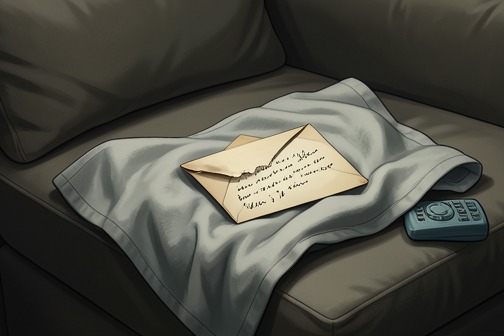
[Joy’s letter](entity:object-recall-object-28a7c7f20ae6) to Dominick discloses that she is HIV-positive and asks him to consider taking responsibility for her baby, [Tyffanie](entity:character-recall-character-tyffanie-e10ac3c4e71f), if he tests negative and [Joy](entity:character-recall-character-joy-aa3ba3cae50b) becomes seriously ill. The event binds a new, frightening medical uncertainty to an intimate act of trust: Joy cannot bring herself to make the request face to face, and Dominick encounters it as both a confession and a possible future obligation.
## The letter and its circumstances
Dominick finds the envelope hidden beneath Tyffanie’s changing blanket, folded on the arm of the living-room couch. He opens it with the wary care of someone handling a bomb; the comparison is his, and the letter does in fact detonate the assumptions he had been living with. Joy explains that she had hoped to find the courage to tell him in person, but wrote because she feared she would lose her nerve. Her written confession makes the letter a substitute for a conversation she cannot yet manage, and its concealment places the revelation among the ordinary objects of caring for a baby.
The letter also shows Joy trying to establish a workable life for herself and Tyffanie. She plans to move on August 1 and has already found temporary waitressing work at Denny’s, three nights a week, Monday through Wednesday. She intends to look for a job with benefits when she returns; her landlady will watch Tyffanie while she works. Joy acknowledges that the landlady has serious personal difficulties, including weighing more than three hundred pounds, but stresses that she is a licensed day-care provider and good with children. These arrangements give the letter a practical texture: even while disclosing a frightening illness, Joy is thinking about housing, employment, child care, and the conditions under which Tyffanie might be safe.
## Diagnosis and uncertainty
Joy says that she learned she was HIV-positive during her pregnancy with Tyffanie, a time she had expected to be among the happiest of her life. She connects her infection to Thad’s conduct, explaining that he had not been as careful as he claimed in his other relationships. Her account makes his claimed precautions part of the betrayal: the danger has reached beyond their relationship and now touches the child’s health as well.
Tyffanie has been tested three times—twice in California and once in New Hampshire—and appears not to have the virus. Joy does not present that result as final. The baby must continue to be tested until eighteen months, and only then will the doctors know for certain; three doctors have nevertheless told Joy that they think Tyffanie will be fine and that the infection would likely have appeared by then. Joy clings to that possibility because it has helped keep her from despair. The letter thus holds reassurance and unresolved risk together: the available medical opinions offer hope, but not certainty.
## The request concerning Tyffanie
Joy tells Dominick, “You have to get tested, Dominick,” and apologizes for asking. She says she has no right to make the request, but is desperate and expects that fear will prevent her from asking when she sees him. Her central plea is conditional, not an immediate transfer of care: if Dominick’s HIV test is negative, she asks him to consider taking Tyffanie only if Joy becomes very sick, or if her HIV develops into AIDS. She also acknowledges that this may never happen and that there may be a cure. The request is therefore made in the shadow of possible illness, not as a report that Joy is already dying.
Her fear is specifically that Tyffanie might end up with strangers or with people who would treat her badly. Joy does not want her own mother to raise the baby; she notes that her mother is fifty-one and has never wanted children. Against those feared alternatives, Dominick represents a person Joy knows and loves. She writes that Tyffanie and Dominick are the only people in the world who mean anything to her, and that she still loves him. The request consequently carries several meanings at once: it is an appeal for the child’s security, a declaration of continuing attachment, and an acknowledgment that Joy cannot guarantee what her health will allow her to do as a mother.
## Dominick’s response and the stakes
Dominick reads the plea to get tested and stands numb. His thoughts move immediately from his own possible infection to Thomas’s: he wonders whether both twins are going to die, then asks where a person even gets an AIDS test. His next thought is about [Ray](entity:character-recall-character-ray-b860e51616e4) and who would shave him if Dominick died. That abrupt sequence connects the new threat to the people already bound up in his daily life; even as Joy asks him to imagine caring for Tyffanie, Dominick’s mind measures the possible losses through his responsibilities to his brother and Ray.
Joy also tries to make sense of the request through Dominick’s bereavement. She suggests that God may have taken his daughter from him so that he could have her little girl, framing the thought as a possibility rather than knowledge of divine purpose. The appeal links Tyffanie’s uncertain future to Dominick’s loss, but it cannot make that loss or the prospect of illness simple. He lets the letter fall, goes to the bathroom, and vomits. That bodily reaction is the scene’s immediate consequence: the information and the responsibility arrive together, before Dominick has any answer about his test or any assurance about Joy’s future.
Event 36
Dominick's negative HIV test
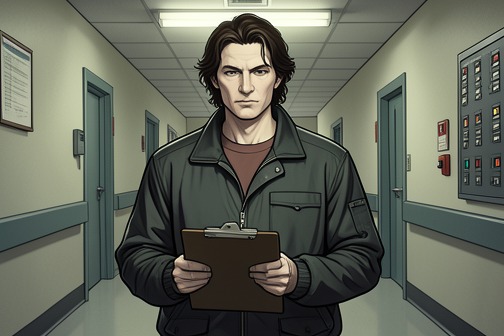
[Dominick Birdsey](entity:character-recall-character-dominick-birdsey-4a27b6b8228a)’s negative HIV test turns an interval of private dread into a reprieve: after arranging a confidential blood test and waiting several days for the result, he learns that it is non-reactive. The relief is real but unsettled. He has imagined illness as punishment for harm done to his family, and the first place he goes after receiving the result is the hospital, where other people’s vulnerability prevents the moment from becoming a simple celebration.
## The test and the wait
On a Friday, Dominick drives to Farmington, pays twenty dollars, receives a confidential number, and has his blood drawn. The test center instructs him to wait three business days before calling the lab; the expected result time is around three in the afternoon, with calls advised between four and five-thirty. The procedure is practical and carefully timed, but the days that follow are dominated by what Dominick cannot yet know. He cannot eat or sleep, and he keeps the test secret.
The secrecy is not abstract. Dominick thinks that if he tells [Leo](entity:character-recall-character-leo-b697c7b2a8d5), Leo will tell [Angie](entity:character-recall-character-angie-ab81440c0a94), who will tell [Dessa](entity:character-recall-character-dessa-983ee7270af6). The chain of disclosure would carry his private fear back into the circle of people closest to him. He also wonders what [Dr. Patel](entity:character-recall-character-dr-patel-a22e0ac3d85c) could say that would change anything. Until the lab responds, neither explanation nor reassurance can settle the question for him.
During the wait, Dominick continues his visits to [Ray](entity:character-recall-character-ray-b860e51616e4). He brings clean laundry, shaves him, and talks with him and his companions. At the entrance, he meets the fixed stare of an elderly woman he privately calls Princess Evil Eye. On this visit, he stares back instead of turning away. The gesture does not resolve his fear; he recognizes its futility even as he makes it. His thoughts move from his own possible illness to children dying of cancer, accidents, or AIDS, including a newspaper story about a seventeen-year-old who died while waiting for a bone-marrow match. The contrast makes his anger at the woman’s continued existence feel both forceful and morally uncomfortable.
## Illness, faith, and guilt
The test anxiety belongs to a family world in which physical illness, religious belief, and fear repeatedly become entangled. Thomas invokes Saint Agatha, whom he understands as a protector against fire, volcanoes, and cancer. He also suspects that cereal has been deliberately contaminated and imagines himself targeted because he serves God. His account connects illness to persecution and a special religious mission; it does not offer Dominick a dependable way to distinguish danger from delusion.
In another conversation, Thomas casts himself as a divinely appointed keeper of souls and keys, grounding his claim in Scripture. Elsewhere, after worrying about an infection, he asks for river water because he hopes washing with it might purify and heal him. These episodes show how bodily vulnerability can acquire religious meaning for Thomas. They do not establish the cause of Dominick’s test or any connection between the brothers’ medical situations, but they help place his fear within a family history where illness is difficult to separate from guilt, spiritual interpretation, and uncertainty.
Dominick’s own private interpretation is punitive. Before the lab gives its answer, he believes he has contracted the virus as payment for sins against his brother, his mother, and his wife. That thought makes the wait more than a question of medical status: the result seems to threaten confirmation of a moral sentence he has already passed on himself. The narrative presents that belief as part of his anxiety, not as evidence that illness is deserved.
## The result and its immediate aftermath
On Wednesday afternoon, Dominick finally reaches the test center after encountering busy signals. The woman who answers asks him to repeat his confidential number, then checks the result. When she tells him it is non-reactive, he asks what that means; she confirms that it is the desired result. The exchange is brief and procedural. Its plainness contrasts with the fearful certainty Dominick has built during the wait, when he had already imagined the test confirming punishment.
Afterward, he walks around his condominium, takes deep breaths, and does push-ups. He considers going to a bar to get drunk, then tells himself to celebrate life. The sequence registers relief through action rather than a long declaration: his body, held in suspense, can move again. Yet the impulse to celebrate does not keep him at home. He grabs his keys, gets into his car, and drives to the hospital.
## The hospital as a measure of relief
At the hospital, Dominick passes sleeping and fretful children, empty cribs, and two rabbits used for pet therapy. A bald-headed girl playing Nintendo offers him one of the two controls and asks him to play. He declines for the moment, saying perhaps later. The scene does not cancel his relief; it places it beside other people’s ongoing vulnerability. His negative result is a personal reprieve, not a resolution of illness or suffering around him.
The ending also carries the event beyond a private medical answer. Dominick arrives at a place associated with care and exposed need, rather than turning the result into a final escape from fear. The rabbits and the child’s invitation provide a small, concrete opening toward companionship, but he does not take it up then. The test establishes that he is HIV-negative; it does not erase his guilt, repair the family relationships he fears he has damaged, or make the hospital’s other lives less precarious. Its significance lies in that limited but decisive change: the feared result does not arrive, and Dominick can turn toward life without mistaking one reassuring answer for a cure for everything else.
Event 37
Ray reveals Dominick's parentage
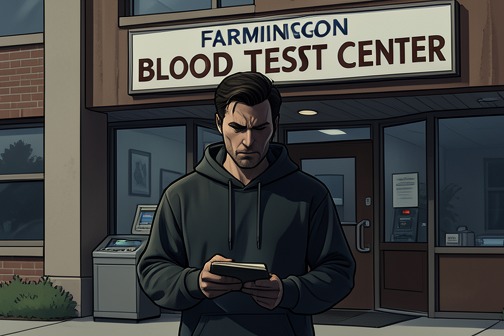
[Ray](entity:character-recall-character-ray-b860e51616e4) reveals Dominick’s parentage in a quiet conversation that overturns a defining uncertainty in Dominick’s life: Ray is his stepfather, and [Henry Joseph Drinkwater](entity:character-recall-character-henry-joseph-drinkw-3022339ab0ad), a man Dominick never knew, was his biological father. The revelation comes not as a dramatic confession from [Ma](entity:character-recall-character-ma-9cb60cf0594d), who died without naming the man, but through Ray’s account of what she told him near the end of her life. Its belatedness makes the disclosure both an answer and a measure of how much family history has been withheld.
## The Conversation and Its Occasion
The conversation follows a painful exchange in which Dominick had failed to promise [Joy](entity:character-recall-character-joy-aa3ba3cae50b) that he would care for her daughter, [Tyffanie](entity:character-recall-character-tyffanie-e10ac3c4e71f). He had offered practical help and pointed to support services, but Joy wanted reassurance that her daughter would be cared for by someone she trusted. She ended the call in tears. Ray then says that something has been bothering him. Dominick assumes they are returning to the subject of Ray’s leg, and takes a sip of coffee before realizing that Ray has something else to discuss.
Ray connects his decision to speak with a previous conversation and with the fact that money is now involved. He says Ma disclosed her secret to him only a couple of months before she died, after her illness made the burden of keeping it weigh on her. Until then, he says, he had been as much in the dark as Dominick. Ma had also made him promise not to tell. Ray now considers the circumstances different, though the precise financial issue behind that judgment is not explained in the exchange.
Ray’s explanation is personal as well as practical. He invokes his own experience of not knowing who his mother was and of learning about [Edna](entity:character-recall-character-edna-41902b7ec072), and says Dominick had a right to know just as he had. Dominick understands that the conversation has reached the truth he had long feared and sought. His physical reaction—racing heart and shallow breathing—registers the strain of finally hearing it, even before Ray identifies the man.
## What Ray Reveals
Ray says that Dominick and [Thomas Birdsey](entity:character-recall-character-thomas-birdsey-8bc90de9bb24)’s father died several months after the twins were born, without ever knowing about them. He describes Ma as having been unaware of her pregnancy until she was nearly halfway through it, and explains that she learned of the man’s death through a newspaper notice. She subsequently contacted a woman connected to his family to learn more. According to Ray, the man had been stationed in Europe and was sent to Korea after the conflict began; he died during the early fighting, around the time of the Inchon landing.
The man’s name was Henry Joseph Drinkwater. Ray says he was Black or of mixed ancestry, and that Ma feared her father would disown or harm her if he knew she was carrying children by a man of color outside marriage. Ray describes the racial and social pressures of the period as part of the reason for her silence. The secret therefore concerns not simply the identity of a father, but the discrimination and family authority that made disclosure seem dangerous to Ma.
Ray also says that Ma’s father, [Domenico Onofrio Tempesta](entity:character-recall-character-domenico-onofrio-te-496f9cb21da8), had introduced Ma and Henry Joseph Drinkwater: he had worked with Henry’s father at the mill. That detail complicates the family’s account of secrecy. The connection began within the family’s own social world, yet the relationship and its consequences were concealed from Dominick and Thomas. Ray’s version places that concealment against the grandfather’s influence, even as it identifies him as the person who first brought the couple together.
## A Record That Could Not Supply the Answer
The revelation arrives in the shadow of another missing family account. Dominick had discovered a manuscript in a strongbox: a thick sheaf of pages, partly typewritten and partly handwritten in Italian. Ma identified it as her father’s life story, dictated in the summer he died. This was Domenico Onofrio Tempesta’s history, not an account that supplied the twins’ paternity. Ma had never read it, and she died without telling Dominick who had fathered her sons.
Domenico’s attempt to preserve his life story had itself been unstable. A stenographer and rented Dictaphone were part of a recording arrangement that lasted about a week; the rental cost was far higher than he had understood, and he sent the equipment back. He resumed dictating directly to Angelo, but the work remained private and difficult to preserve. On the morning of his stroke, he told Ma he was nearly finished and contemplated burning the manuscript when it was complete. Later, she found him slumped at his table, with pages scattered around the property. The surviving manuscript preserves one family history in fragments while the crucial history of Ma’s relationship with Henry Joseph Drinkwater remained unspoken until Ray’s late disclosure.
[Ma’s death](entity:event-recall-event-ma-eaea498a4cb0) on [May 1, 1987](entity:time-recall-time-may-1-1987-a4b605087024), closes off the possibility that she might explain the secret herself. Dominick and Ray kept vigil as she struggled to breathe, and Dominick gave her permission to let go shortly before she died. He later reflects that she never read her father’s history and never revealed the identity of the man who fathered the twins. Ray’s account eventually fills that gap, but cannot restore the conversation Dominick did not have with Ma.
## Consequences for Identity and Family Memory
The disclosure changes the meaning of Dominick and Thomas Birdsey’s origins without changing the fact that they were raised by Ray and Ma. Ray’s place as stepfather is not erased; instead, the revelation exposes an unspoken division between biological descent and lived family relationship. Henry Joseph Drinkwater died before he could know the twins, leaving Ray to raise them and, much later, to deliver the truth about the man whose absence shaped their beginnings.
The scene also shows how family knowledge passes through partial, delayed records rather than a single authoritative account. Ma’s secret reaches Ray shortly before her death; Ray relays it to Dominick only after a separate conversation has made the question of care and responsibility newly pressing. His recollection includes a timeline that Dominick immediately recognizes as mistaken about Domenico: his grandfather had died before the twins were born, after suffering a stroke in August. That correction does not undo Ray’s central disclosure, but it makes the account visibly human and imperfect. What Dominick receives is not an omniscient family record, but Ray’s remembered explanation, with its facts, uncertainties, and inherited silences.
The revelation’s emotional force rests on that mixture of certainty and incompletion. Dominick learns his biological father’s name, the circumstances of his death, and why Ma feared the truth would endanger her standing with her father. He does not hear the story from Ma, and Henry Joseph Drinkwater never knew that the twins existed. Ray breaks a promise he had made to Ma because he believes Dominick has a right to know. In doing so, he turns a secret once preserved as protection into a belated act of recognition.
Event 38
Dominick meets Ralph and learns about his Wequonnoc family

[Dominick Birdsey](entity:character-recall-character-dominick-birdsey-4a27b6b8228a)’s meeting with [Ralph Drinkwater](entity:character-recall-character-ralph-drinkwater-42b07cfe79c4) turns a newly disclosed surname into a family history and a first, tangible lesson in Wequonnoc belonging. Dominick arrives expecting only to find Ralph and ask for help; he leaves with a cousin, an account of the families that connect them, and a smooth gray stone that gives their shared past a shape.
## The search at the new headquarters
Dominick drives to the reservation past bulldozers and cement mixers, through land cleared and stumped for the coming casino. At the end of a rutted road, where the woods begin, the tribe’s new three-story headquarters of cedar and glass is still under construction. Drilling and hammering echo inside. Dominick asks an electrician where he can find Ralph, who is working upstairs in a room that looks out onto the back.
Ralph is hand-sanding a seam in the Sheetrock. Dominick watches without being noticed as Ralph sands, blows away the dust, passes his fingers over the surface, and sands again. The care of the repeated gesture gives the meeting a quiet, material beginning: before either man speaks about ancestry, Ralph is already working to smooth and join a surface. When Dominick finally approaches, Ralph turns, startled, and studies him. Dust from the sanding has left Ralph looking frosted.
Dominick says he has just learned that his father’s name was Drinkwater. The news is immediate for him, but Ralph’s surprise comes from the opposite direction. He has known they were cousins all along and had assumed Dominick wanted the connection kept secret. Dominick explains that he had been in the dark until that afternoon, when a conversation with [Ray](entity:character-recall-character-ray-b860e51616e4) disclosed the name. The meeting therefore begins with an uneven inheritance: Ralph has carried the kinship as knowledge, while Dominick has only just received it.
## The family connection
Ralph explains that their fathers were brothers. His aunt [Minnie](entity:character-recall-character-minnie-7a217c066ad6) had told him about the twin boys at [River Street School](entity:location-recall-location-river-street-school-08a1ceb37bd5), Thomas and Dominick, and identified them as cousins, just as Ralph and his sister Penny Ann were twins. That childhood memory establishes the relationship not as a new bond created in the room, but as a connection already recognized by one branch of the family and unknown to the other.
Ralph sets out the Drinkwater family’s history through four children who lived: Henry, Minnie, Lillian, and Asa, in that order. Asa, Ralph’s father, was called Ace; he was the youngest and, in Ralph’s account, the wildest. Their mother, Dulce Ramos, was Creole and Portuguese; their father, Nabby Drinkwater, was Wequonnoc, African, and Sioux. The account gives Dominick more than a name: it places his newly discovered paternal connection within a family of mixed ancestry and names the people and histories behind it.
The surviving family had been scattered by early deaths. Lillian died of encephalitis; Henry died in the Korean War; and Ace died after driving drunk and flipping his car. He had never married Ralph and Penny Ann’s mother, and the twins were three when he killed himself. Minnie, the one sibling who had not died young, was a widow and retired from a packing-company job in San Ysidro. Ralph had hitchhiked most of the way to visit her; the two kept in touch by writing, and she was considering a return to [Three Rivers](entity:location-recall-location-three-rivers-1f183a1f9bef) as the casino project got underway.
Ralph’s account also reaches beyond the siblings. Minnie had four other children, two sons and two daughters, all with families. Her son Max, Maxwell Peck, worked as a gaffer at Columbia Pictures, where Ralph had seen his name in movie credits. Another son, Lonnie Peck, had died in [Vietnam](entity:location-recall-location-vietnam-a68cec34d420). As Ralph points out, these relations are Dominick’s too: the newly disclosed cousinship opens outward into a wider family network, including people Dominick has never met.
## Old hostility and new recognition
The discovery does not erase the past between the cousins. Ralph says he hated Dominick and Thomas when all four children attended River Street School together. His childhood resentment gives the scene a counterweight to the newly stated kinship: being cousins did not make the boys intimate, and the shared history includes distance and hostility as well as blood relation.
At first, the men sit beside each other on the raised hearth and look out at the trees. The pause follows the family history rather than resolving it. Dominick has asked for help because he is trying to understand what Ray told him; Ralph has supplied names, relationships, and losses, but the information cannot make their past suddenly familiar. Their meeting instead makes room for a different kind of recognition, one that begins with listening and a shared view beyond the room.
## The stone and the lesson of roundness
Ralph then goes to a plastic-shrouded desk, opens a drawer, and tosses Dominick a small object. It is a simple, smooth gray rock, which Ralph says he found alone at the edge of a stream on the reservation. Dominick identifies its shape as oval and closes his fingers around it. The exchange shifts the meeting from genealogy told aloud to an object Dominick can hold.
Ralph describes a Wequonnoc birth practice in which women shape a newborn’s umbilical cord into a circle, bind it so it has no beginning or end, and burn it in thanks to the Great Creator. He explains the circle as an image of wholeness and of recurring cycles—the moon and the seasons—and of new life joined to the life from which it came. Past and future are cinched together. The smooth stone does not itself become a ritual object; rather, Ralph uses its shape to begin explaining an outlook in which connection and continuity matter.
Dominick palms the rock, squeezing and releasing it as he repeats Ralph’s phrase, the roundness of things. Ralph presents this as Dominick’s first lesson in how to be Wequonnoc. The lesson is modest and specific: not a complete account of identity, but an invitation grounded in family history, a circle, and a stone found beside a stream. Afterward, the narration moves to [Dr. Patel](entity:character-recall-character-dr-patel-a22e0ac3d85c)’s office, where Dominick watches the river and the wind in the trees as Hurricane Bob approaches. The transition places the lesson’s images of cycles and flowing water beside the unsettled weather, without turning the meeting into a final resolution of Dominick’s newly discovered past.
Event 39
Henry Drinkwater's death in the Korean War
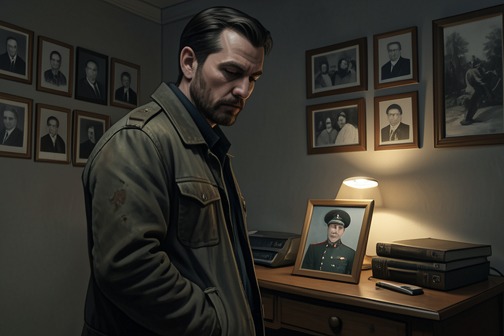
[Henry Joseph Drinkwater](entity:character-recall-character-henry-joseph-drinkw-3022339ab0ad)’s death in the Korean War is disclosed not through a direct account of the battle, but through [Ray](entity:character-recall-character-ray-b860e51616e4)’s explanation of the father Dominick and Thomas never knew. The revelation identifies their biological father, clarifies why their mother concealed the relationship, and shows how war and racial prejudice shaped the family story before the twins were born.
## The Revelation and Its Timing
Ray tells Dominick that Henry was killed in Korea and never came home. Dominick is startled by the disclosure and asks how his mother learned what happened. Ray’s account places Henry’s death before the twins could know him; it also establishes that Henry never knew they existed.
The conversation distinguishes Henry’s death from that of [Domenico Onofrio Tempesta](entity:character-recall-character-domenico-onofrio-te-496f9cb21da8). Dominick corrects Ray’s earlier confusion about when Domenico died: Domenico had a stroke and died before the twins’ birth. The correction underscores how the family’s history reaches Dominick in fragments, with one absent father’s death initially blurred into another’s.
## Wartime Circumstances
According to Ray, Henry had been stationed in Europe, probably in Germany, before being sent to Korea after MacArthur went there. Ray says Henry was killed near the beginning of the war, possibly during the landing at Inchon, but his phrasing makes the precise circumstances uncertain. The account therefore gives Dominick a broad outline rather than a verified military history.
Henry’s death reached [Connie Birdsey](entity:character-recall-character-connie-birdsey-ad4203debe00) through a newspaper notice. Ray says she then contacted a woman she knew, apparently one of Henry’s cousins, who provided further information. Henry’s absence from home meant that his death and the story of his last months came to the family through reporting and secondhand recollection.
## Family Consequences
Ray connects Connie’s silence about the relationship to the racial prejudice and social conventions of the time. He explains that Henry was of mixed racial ancestry and that people with any Black ancestry were treated as Black; an unmarried pregnancy in that context, Ray says, could have led Connie’s father to disown or harm her. The relationship was therefore concealed, even though Connie’s father had introduced the couple and knew Henry’s father.
The revelation changes the meaning of the twins’ unknown parentage: their father was not simply absent, but a man killed in a war before he could return or learn of his sons. Yet the account remains mediated by Ray’s memory and by information Connie pieced together after reading the newspaper. That distance leaves the boys with a family fact, but not with a direct memory of Henry or a complete account of his death.
Event 40
Hurricane Bob strikes Three Rivers

[Hurricane Bob strikes Three Rivers](entity:event-recall-event-hurricane-bob-strikes-t-046fd2b76922) during a day when [Dominick Birdsey](entity:character-recall-character-dominick-birdsey-4a27b6b8228a) has an appointment with [Dr. Patel](entity:character-recall-character-dr-patel-a22e0ac3d85c) and, as the storm intensifies, becomes convinced he must visit [Prosperine Albrizio](entity:character-recall-character-prosperine-albrizio-b3c72fb08d1b). The storm turns that choice into a perilous journey: forecasts warn of winds approaching a hundred miles an hour, power fails, and Dominick drives through rain and debris despite repeated warnings to stay home. In the novel, the hurricane is not merely weather in the background; it presses on a decision about care, recognition, and the family history Dominick is trying to understand.
## Forecast and Appointment
The storm is already approaching when Dominick looks from Dr. Patel’s office window at trees tossed by the wind and the surface of the rushing river rippling below. Rain has been falling for most of the morning, and the gusts are strengthening. Forecasters warn that Hurricane Bob could bring winds of ninety or a hundred miles an hour by midday. Dominick has called to ask whether Dr. Patel wants to cancel their 10:00 A.M. appointment; she declines, leaving the choice of whether to attend with him.
That ordinary appointment takes place under an increasingly unsettled sky. The scene joins the weather to Dominick’s ongoing effort to make sense of his family and his connections to others. When the conversation resumes, the question of how to be Wequonnoc has just been raised. The storm does not answer it, but its approach gives the discussion a charged setting: outside, the river and trees are already being moved by forces neither person can control.
## The Storm Reaches [Three Rivers](entity:location-recall-location-three-rivers-1f183a1f9bef)
At the residence where [Prosperine](entity:character-recall-character-prosperine-0d0e69bc4a4a) is staying, the people Dominick calls sentries, including Daphne and Warren, are at their posts in the front foyer. They are unusually animated by the approaching hurricane, a change Dominick notices as he prepares to leave. Prosperine is angry that he has come and urges him to go home, insisting that she is fine. Her response makes the visit a choice made against both her protest and the danger outside, rather than a routine call.
The storm then changes the light and the conditions around them. The power flickers and goes out; daytime becomes as dark as night. Dominick thinks Prosperine may not survive the storm, puts on his slicker, pulls up the hood, and goes out to the car. He gets soaked in the fifteen steps between the house and the vehicle. The progression from forecast to blackout gives the weather a clear narrative course: something expected at a distance becomes an immediate emergency, and Dominick acts when he believes waiting could mean losing the chance to see her.
## The Journey Through the Weather
Dominick drives despite the warnings on television to stay home. The streets are empty, and even the windshield wipers at their fastest setting are nearly useless. Sirens sound in the distance; fallen limbs and flying shingles obstruct the route. A couple of times he thinks the wind may blow the car off the road. The account does not present the drive as a safe or measured response: its danger is the cost of his decision to reach Prosperine while the storm is arriving.
The destination matters as much as the ordeal. During the visit, Dominick realizes that Prosperine has not recognized him; she has recognized his grandfather. The moment redirects his understanding of her response and connects the encounter to the older family story he has been uncovering. The hurricane therefore frames more than a rescue attempt or a visit. It brings Dominick to a meeting in which recognition is both intimate and mistaken, attached to an inherited past rather than to the person standing before her.
## Aftermath and Narrative Significance
The narration places Hurricane Bob’s passage alongside events in Moscow: the coup leaders falter, Gorbachev is freed, and Soviet Communism is described as coming to an end. The two crises are distinct, but their juxtaposition gives the storm a wider historical frame. While the hurricane crosses Three Rivers and moves out to sea, political events elsewhere also reach a sudden turning point. The novel links these upheavals in sequence without suggesting that one causes the other.
Afterward, Dominick reflects on the difficulty of recovering the past. Prosperine had been among the last groups of psychiatric patients discharged from the [Settle Building](entity:location-recall-location-settle-building-5ce77e880d92) before it closed in March 1992, but no surviving records establish her history there or any connection with Thomas during their long stays. That absence of documentation leaves the possibility of a connection unresolved. The hurricane scene sits at the meeting point of physical peril and incomplete family knowledge: Dominick can drive through the storm and make the visit, but he cannot make the past fully legible. The image of a coiled umbilical cord that never truly begins or ends gives this uncertainty a family shape, linking the storm’s passage to the enduring ties and gaps that structure his search.
Event 41
Dominick's visit to Prosperine during the hurricane
[Dominick's visit to Prosperine during the hurricane](entity:event-recall-event-dominick-s-visit-to-pro-1b1789f0bdd3) is a bedside plea for forgiveness staged through the image of two rabbits becoming one. As wind and rain strike the building, he brings the rabbits to a woman whose chart says Do Not Resuscitate, asks her to make him whole again, and repeats before her the reversal of a mysterious event she had witnessed long ago. Her final response is a touch and a sequence of gestures, not a spoken assurance; Dominick leaves without looking back.
## Arrival at the bedside
Dominick reaches [Prosperine](entity:character-recall-character-prosperine-0d0e69bc4a4a) during the hurricane with two borrowed rabbits in a box. The borrowing is awkward and urgent: he backs away from the person who has lent them, explaining that there is an emergency. His own description of the undertaking as a rabbit emergency underscores how strange the errand must seem against the storm outside. The animals are not incidental cargo. Dominick carries them into the room because the plea he needs to make depends on their presence.
The name on the medical information identifies the patient as [Prosperine Albrizio](entity:character-recall-character-prosperine-albrizio-b3c72fb08d1b), while Dominick also considers her as [Prosperine Tucci](entity:character-recall-character-prosperine-tucci-efa1b22804ea). He sets aside the uncertainty of which name applies, concentrating instead on arriving before it is too late. The chart's Do Not Resuscitate instruction makes the room a place where the possibility of death is explicit, even as Dominick's purpose is not medical intervention but an attempt at reconciliation.
He places the box on the floor and stands before her. Prosperine is barely responsive: her breathing is wheezy, her eyes are filmy and narrowed, and at first she gives no clear sign that she knows anyone is there. Dominick's request therefore begins under radical uncertainty. He cannot tell whether she hears him or understands why he has come.
## The plea and the rabbits
Dominick asks Prosperine to forgive him, then asks whether she can forgive him and make him whole again. The repeated appeal makes the visit more than an act of companionship at a deathbed. He presents himself as someone who needs forgiveness, but also as someone who feels incomplete without it. He does not explain the offense in this moment; the scene gives the request its force through repetition, the dying woman's condition, and the rabbits he has brought to her.
He lifts both rabbits by the scruffs of their necks and holds them before her. One kicks in the air and then becomes still as the pair rocks back and forth before the Monkey. The handling is deliberate and visible: Dominick positions the animals in Prosperine's line of sight, making them the focus of his appeal. When he puts one rabbit back in the box and holds the other alone before her, the two have become one in the scene's staging.
Dominick connects this image to the dark magic Prosperine had witnessed long ago. The encounter thus turns on a reversal: he brings before her a paired image, then reduces it to one, recalling an earlier experience without explaining it anew. The rabbits give his request a form that words alone cannot supply. Whether he intends the display as a re-creation, a correction, or an appeal for release, its meaning is anchored in the past event she saw and in his present need to be forgiven.
## Prosperine's response
After Dominick whispers for forgiveness, Prosperine's hand emerges from beneath the sheet. She reaches out and caresses the rabbit's fur. The gesture is the clearest sign of contact in the encounter: she has not answered his question aloud, but she touches the animal he has held before her. Her hand then moves back to touch her forehead, heart, left shoulder, and right shoulder, in that order.
The scene preserves the difference between response and certainty. Prosperine's eyes close again, and Dominick does not report that she speaks, recognizes him, or grants forgiveness. Her touch may carry significance for him, but the narration does not convert it into an explicit answer. Instead, the reader sees a frail hand move from the rabbit to Prosperine's own body while the storm continues outside. The gesture is concrete; its ultimate meaning remains unstated.
## Departure and significance
Dominick puts the rabbit back in the box, picks it up, and leaves without looking back. The departure ends the scene without resolving the plea in words. He has brought the animals, arranged the reversal, and asked to be made whole; Prosperine has touched the rabbit and made a measured gesture, but the question of forgiveness remains open to interpretation.
The visit concentrates several of the novel's recurring concerns in one sharply bounded action: pairedness and loss, memory made present through an object, and the wish to undo or reverse what cannot simply be undone. The rabbits make the past visible in the room, while Prosperine's condition places the possibility of a reply beyond Dominick's control. His final choice not to look back gives the encounter its quiet ending: he carries the box away, but the scene does not claim that his burden has been lifted.
Event 42
1991 Soviet coup attempt
The [1991 Soviet coup attempt](entity:event-recall-event-1991-soviet-coup-attemp-f3feb448d826) enters the novel not as a distant history lesson but as breaking news competing with Hurricane Bob for [Dominick Birdsey](entity:character-recall-character-dominick-birdsey-4a27b6b8228a)’s attention. Reports of Gorbachev’s house arrest, tanks in Moscow, and a news blackout make political upheaval part of the same uncertain night in which Dominick faces the storm alone.
## News from Moscow
Dominick flips between the Weather Channel and CNN, where live coverage of Hurricane Bob alternates with file footage of Gorbachev. The Soviet leader is reported under house arrest in Crimea. The reports remain sketchy, but one detail sharpens the danger: tanks have begun rolling into Moscow as resistance swells. The coup leaders’ news blackout then closes off information just as the storm outside intensifies.
## The Coup’s Collapse
The novel gives the event’s outcome in compressed, emphatic strokes. The coup leaders falter, Gorbachev is freed, and the neck of Soviet Communism is snapped. The decisive image is Yeltsin climbing onto a tank to face oppression while a hundred thousand resisters roar. Against the earlier uncertainty and blackout, the crowd’s collective voice marks a sudden reversal: an attempt to impose control gives way to public resistance.
## [Cold War](entity:time-recall-time-700d9e46b459) Memory and the Hurricane
The crisis also gives shape to Dominick’s recollection of growing up as a Cold War child. School drills had taught his generation to duck and cover against the threat of Communist attack, and they had maintained that defensive posture into adulthood. Seeing Yeltsin confront the tanks, and hearing of the resisters, becomes the moment when that inherited expectation of catastrophe gives way to a different political possibility.
The coup unfolds alongside Hurricane Bob, which darkens the daytime sky and cuts the power in Dominick’s home. The parallel does not make the two crises equivalent; it places them together in his immediate experience of danger, incomplete information, and sudden change. The news from Moscow breaks through the storm-bound night as evidence that a political order he had long feared could also falter.
Event 43
Closure of Three Rivers State Hospital
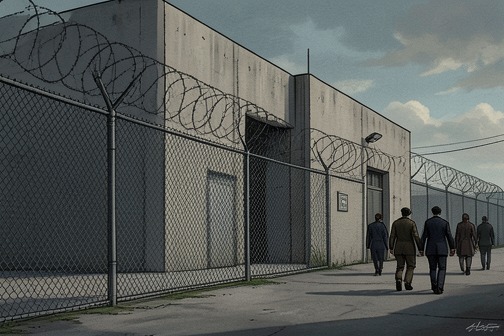
The closure of [Three Rivers State Hospital](entity:location-recall-location-three-rivers-state-h-d769b42b4083) culminates in February 1994, when [Hatch Forensic Institute](entity:location-recall-location-hatch-forensic-insti-abd5e9d5e212)—the system’s last operating facility—ceased to exist. It followed a three-month trial over negligence related to the spread of AIDS and HIV at [Hatch](entity:location-recall-location-hatch-fdeb24d75f73): [Richard Hume](entity:character-recall-character-richard-hume-70de931f2389) and four other physician-administrators were cleared, while the facility’s 127 remaining inmates were transferred to Middletown. The ending is both administrative and physical: patients leave, the forensic hospital closes, and the future of its former grounds remains unresolved.
## Political and Legal Background
The book links the institution’s history to the public and political consequences of the Jimmy Lane murder case. Lane had wandered away from a supervised group while on a day pass from Westwood and killed a child. Because he had no prior record indicating violent behavior, the case intensified public fears about mental illness and provoked anger when the insanity defense prevented a criminal conviction. The account describes a political backlash against the system as well as the stigma reinforced by the case.
In response, the governor fired the commissioner and the department was restructured; the Psychiatric Security Review Board was established. The book later shows how institutional rules shaped [Thomas Birdsey](entity:character-recall-character-thomas-birdsey-8bc90de9bb24)’s confinement. After a surgeon at [Shanley Memorial](entity:location-recall-location-shanley-memorial-7bc1c705dc7c) initiated a Physician’s Emergency Certificate, Hatch could hold Thomas for fifteen court-ordered days of observation to assess whether he posed a danger to himself or others. At a subsequent hearing, the Board voted unanimously to retain him for a year, citing potential danger to himself and others, with a review scheduled for October 1991. His case illustrates the review and detention system operating within the institution that would eventually close.
## Discharges and the Institutional Record
The closure belongs to a longer process of patients leaving the state hospital. In March 1992, [Prosperine Albrizio](entity:character-recall-character-prosperine-albrizio-b3c72fb08d1b) was among the third-to-last wave of psychiatric patients discharged from the [Settle Building](entity:location-recall-location-settle-building-5ce77e880d92) before it closed. The narrator found no surviving—or existing—record of a [Prosperine Tucci](entity:character-recall-character-prosperine-tucci-efa1b22804ea), and no evidence that Prosperine Albrizio and Thomas Birdsey had known one another during their long stays at [Settle](entity:location-recall-location-settle-037b6270bdf7). The account therefore leaves both the identification of the two Prosperines and any possible encounter between her and Thomas uncertain; the institution’s records cannot settle the questions the family history raises.
## Closure and Aftermath
The final transfer marks the end of Three Rivers State Hospital’s remaining operation: after the 127 inmates at Hatch were moved to Middletown, the forensic hospital ceased to exist. The narrative places this institutional ending after the negligence trial, but does not present the acquittals as restoring the hospital or resolving the questions surrounding care and oversight. The closure is instead a concrete endpoint to the state system’s operation, following years in which confinement, risk assessments, and review procedures shaped patients’ lives.
The grounds carry a separate, unresolved history. They had once formed part of the sacred hunting and fishing lands of the [Wequonnoc Nation](entity:organization-recall-organization-wequonnoc-nation-73011ad7c10b), and the narrator says they may revert to the Nation through annexation for expansion. Tribal officials and the Governor of [Connecticut](entity:location-recall-location-connecticut-30b7fc394c2c) are still negotiating; the possible return is not described as completed. The hospital’s end therefore leaves the land’s next use open, linking institutional closure to an ongoing question of who will hold and shape the former grounds.
Event 44
Hatch HIV-negligence trial
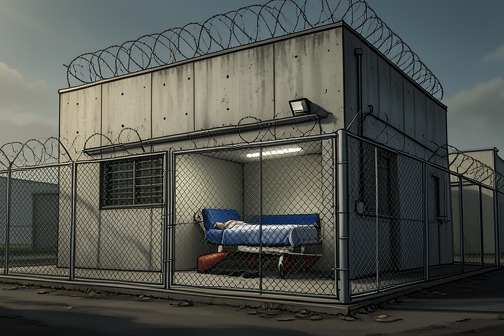
The [Hatch HIV-negligence trial](entity:event-recall-event-hatch-hiv-negligence-tr-172185c6efb9) concluded in February 1994 with the clearing of [Richard Hume](entity:character-recall-character-richard-hume-70de931f2389) and four other physician-administrators, charged with negligence related to the spread of HIV and AIDS at [Hatch Forensic Institute](entity:location-recall-location-hatch-forensic-insti-abd5e9d5e212). Its conclusion came as the maximum-security hospital’s remaining patients were moved elsewhere and [Hatch](entity:location-recall-location-hatch-fdeb24d75f73) itself ceased to exist, bringing the institutional history of the [Three Rivers State Hospital](entity:location-recall-location-three-rivers-state-h-d769b42b4083) grounds to a close.
## The Institution Behind the Case
Hatch stood at the rear of the Three Rivers State Hospital grounds: a squat concrete-and-steel building encircled by chain-link fencing and razor wire. It housed people whose cases drew public attention as well as patients sent there for less sensational disturbances. Releases did occur, but the account presents them as uncommon; for many patients, institutional confinement seemed to have no clear exit. The surrounding town was more invested in keeping people it feared off the streets than in rehabilitation.
That custodial purpose was reflected in the small procedures of admission. A visitor’s belongings were searched and passed through an X-ray machine; the patient’s possessions were catalogued and stored, and reading materials required approval. Security staff ordered Thomas back into restraints. Such measures belonged to a wider institutional system that could present itself as protective while sharply limiting the choices and privacy of those confined within it.
## Legal and Public Context
The novel also shows how public fear could reshape psychiatric procedure. After Jimmy Lane, a patient on a supervised day outing, wandered away and killed a child, the case became a political flashpoint. The public response to the insanity defense prompted the governor to fire the commissioner and reorganize the department; the Psychiatric Security Review Board followed. The episode does not establish the cause of the later HIV-negligence case, but it situates Hatch within a system shaped by public scrutiny, risk judgments, and disputes over who should be confined.
Thomas’s own admission illustrates the system’s formal mechanisms. After his hospitalization at [Shanley Memorial Hospital](entity:location-recall-location-shanley-memorial-hos-210284df7136), a surgeon initiated a Physician’s Emergency Certificate, allowing fifteen court-ordered days of observation to determine whether he posed a danger to himself or others. Later, the Psychiatric Security Review Board voted unanimously to retain him at Hatch for a year, citing potential danger and setting another review. These procedures show how questions of care and release were bound to official assessments of risk; the trial’s eventual outcome, by contrast, concerned alleged negligence in the institution’s handling of HIV and AIDS.
## Verdict and Closure
At the end of a three-month trial, Hume and four other physician-administrators were cleared of the negligence charges. The account states the result without elaborating on the evidence presented or the court’s reasoning, so the verdict does not establish further details about how the disease spread or how individual decisions were made.
By then Hatch’s institutional future had reached its end. Its 127 remaining inmates were transferred to Middletown, and the forensic hospital—then the last operating facility of Three Rivers State Hospital—ceased to exist. The closure followed the trial’s conclusion, although the account does not say that the verdict itself caused the transfer or shutdown.
## The Grounds After Hatch
The closure also returns the narrative to the history of the hospital grounds. They had once formed part of the sacred hunting and fishing lands of the [Wequonnoc Nation](entity:organization-recall-organization-wequonnoc-nation-73011ad7c10b). After the hospital was abandoned, the possibility arose that the land might revert to the tribe for expansion, but tribal officials and the Governor of [Connecticut](entity:location-recall-location-connecticut-30b7fc394c2c) were still negotiating. The future of the site therefore remained unresolved even as the institution that had defined it disappeared.
Event 45
Opening of Wequonnoc Moon Casino
The opening of Wequonnoc Moon Casino in September 1992 transformed the economic prospects of eastern [Connecticut](entity:location-recall-location-connecticut-30b7fc394c2c) and brought the [Wequonnoc Nation](entity:organization-recall-organization-wequonnoc-nation-73011ad7c10b) into a new position of regional influence. The casino’s rise followed the decline of [Electric Boat](entity:location-recall-location-electric-boat-20276e7cc061), the area’s long-standing defense-industry anchor, and unfolded alongside negotiations that could return former state hospital grounds to the Nation. The event thus joins a dramatic shift in local employment to a longer history of dispossession, assimilation, and Indigenous persistence.
## Economic Change and the Casino’s Opening
Electric Boat had been the region’s economic backbone for much of the second half of the twentieth century. In the post–[Cold War](entity:time-recall-time-700d9e46b459) era, however, the nuclear-submarine manufacturer reduced its workforce to a small fraction of its former payroll. The once-booming shipyard became known locally as the ghost yard; it was also a place where [Dominick Birdsey and Thomas Birdsey](entity:relation-recall-relation-dominick-birdsey-and-fde8a4850518) had earlier witnessed the launching of the Nautilus and posed for a photograph with the First Lady of the United States.
The casino represented an alternative to that shrinking industrial economy. Before it opened, uncertainty about submarine contracts and possible layoffs was already part of local conversation. [Leo Blood](entity:character-recall-character-leo-blood-809eb2ff86de) warned that matters would worsen if the Navy canceled the Seawolf contracts and Electric Boat laid off workers, while pointing to the jobs expected at the casino. The contrast was not abstract: a community whose work and family prospects had long been tied to shipbuilding now looked toward a gaming complex for employment.
Wequonnoc Moon Casino and Resort opened in September 1992. Its impact on economic revival exceeded even the most optimistic predictions. Expansion continued through its first six years, as casinos and hotels rose in the woods off Route 22. The account gives the complex an employment figure of seventy-five thousand and describes the 415 members of the Wequonnoc Nation as millionaires. Those figures convey the scale of the reversal the opening came to represent: the Nation was no longer described only through losses, but also through the wealth and economic reach associated with the resort.
## Land, History, and Public Memory
That economic change sits against the history of the land around [Three Rivers](entity:location-recall-location-three-rivers-1f183a1f9bef). The [Indian cemetery](entity:location-recall-location-e0446d33709a) beside [Three Rivers State Hospital](entity:location-recall-location-three-rivers-state-h-d769b42b4083) occupies part of territory that had been sacred hunting and fishing land for the Wequonnoc Nation. At its center stands a ten-foot pyramid of fist-sized stones commemorating Samuel, the Great Sachem, whose seventeenth-century alliance with white settlers proved disastrous for his people. As Three Rivers grew after its incorporation in 1653, the reservation contracted and the tribe’s numbers dwindled. The cemetery’s later markers include Wequonnoc war dead, and its final stone, erected during the late 1960s, honors Lonnie Peck, killed in [Vietnam](entity:location-recall-location-vietnam-a68cec34d420) in [1969](entity:time-recall-time-1969-711fcc62f578).
The history of loss also appears in the town’s classroom narratives. [Mr. LoPresto](entity:character-recall-character-mr-lopresto-8c0eef7791d5) presents Indigenous people as vanished and treats their history through a hierarchy that elevates Western civilization over Indigenous culture. [Ralph Drinkwater](entity:character-recall-character-ralph-drinkwater-42b07cfe79c4) challenges that account by identifying himself as a full-blooded Wequonnoc Indian and rejecting the suggestion that Indigenous people had disappeared. Rather than engage with his correction, the teacher sends him to the office. The episode makes the casino’s later presence more than an economic turn: the Nation that a classroom lesson renders absent is present in the region’s public life and shaping its future.
## Negotiations and Regional Significance
The casino’s opening coincided with negotiations between tribal officials and the Governor of Connecticut over the abandoned state hospital grounds. Because the grounds had once formed part of the Nation’s sacred hunting and fishing lands, the possibility that they might revert to the tribe links contemporary political negotiations to the earlier history of dispossession. The account presents the discussions as ongoing, not as a completed transfer, and does not say that the casino itself settled the land question.
The resort’s rapid growth nevertheless changed the balance of regional economic power. Cars and buses traveled to it around the clock, and planners were considering routes to bring gamblers by river from New York and by private high-speed railroad from [Boston](entity:location-recall-location-ccccb9ca0ba9). Its champions and detractors disputed the project, but its scale and continuing expansion made it a defining feature of the region’s economic revival. In the novel’s longer view, the opening marks a sharp contrast with the dwindling shipyard and with earlier portrayals of the Wequonnoc as people who had disappeared: the Nation emerges as an employer, a source of wealth, and a party to negotiations over its ancestral land.
Event 46
Dessa and Dominick remarry

[Dessa and Dominick remarry](entity:event-recall-event-dessa-and-dominick-rema-6b3a99af3682) after a separation that had made a shared future seem uncertain. Their reunion does not begin with a grand gesture or an effortless return to the marriage they once had: at Long Nook Beach, Dominick asks [Dessa](entity:character-recall-character-dessa-983ee7270af6) to take another chance, and she first declines. Her eventual agreement rests on a change she names plainly—she still loves him, and she is no longer afraid of him. The small wedding that follows gives that change a form without pretending the past has disappeared.
## The proposal at Long Nook Beach
The proposal comes later in the spring of 1995, after Dessa and Dominick have spent the season following women’s basketball together. Dominick has learned the players’ names and positions, and they have traveled to Minneapolis to watch Lobo and Company win the national championship. Their shared outings establish renewed closeness, but they do not settle what that closeness means for their future. At Truro, on Long Nook Beach, Dominick puts his arms around Dessa, kisses her forehead, and asks whether she would take another chance on him.
The setting is open and bright, a mid-May day of sun and blue sky, but the proposal itself is unplanned. Dominick has no ring and has not prepared a formal appeal. The simplicity makes the moment intimate, while also leaving Dessa free to answer without the pressure of a public spectacle or an elaborate commitment already arranged around her. The central question is not whether they have recovered the past; it is whether they can choose a future together.
## Hesitation and a week to decide
Dessa does not smile. She looks frightened, and Dominick immediately recognizes the force of his own earlier promise not to pressure her. Her hesitation makes his proposal a test of the autonomy he says he wants to respect: he has asked for another chance, but must accept that she may refuse it. When she says she is pretty sure returning is not a good idea, she gives a concrete reason—she has come to like living by herself. She does not offer a quick reconciliation merely to soothe him.
Dessa leaves the possibility open, saying she will think about it. Dominick tells her he can withdraw the offer if she wants, making clear that an answer is not owed simply because he has exposed his hopes. She asks for a week. That interval matters: the proposal does not end in an immediate romantic resolution, and the renewed relationship must survive uncertainty. The space between asking and answering distinguishes this second attempt from a restoration imposed by nostalgia or by Dominick’s desire to undo their separation.
## Dessa’s answer
A week later, Dessa wakes Dominick by crying and shaking his bed. When he asks what is wrong, she tells him, “All right.” He has to ask what she means, and she clarifies: “Let’s try again.” Her answer arrives not as a polished declaration but as a vulnerable decision made in the middle of the night. The scene’s pause and repetition register how much is at stake in a short phrase.
Dessa then identifies the conditions that make her yes possible: “I still love you,” and “I’m not afraid of you anymore.” Love alone is not presented as sufficient. Her second statement marks the decisive change in the relationship, acknowledging that fear had been part of their history and that reconciliation depends on its having receded. The answer therefore carries both affection and a measure of regained safety. She is not simply returning to the old marriage; she is agreeing to try again from a changed position.
## A deliberately small wedding
The remarriage is kept small and simple. [Leo](entity:character-recall-character-leo-b697c7b2a8d5) and [Angie](entity:character-recall-character-angie-ab81440c0a94) stand up for the couple, just as they did at the first wedding. That repetition gives the ceremony a connection to their shared past, but its modest scale avoids treating the event as a public triumph or proof that every earlier hurt has been erased. The familiar witnesses return; the marriage does too, but only after Dessa has been able to hesitate, live apart, consider the choice, and speak for herself.
The event’s emotional resolution is consequently qualified rather than absolute. Dominick’s spontaneous beach proposal opens the possibility of reunion, Dessa’s week of reflection protects her freedom to refuse, and her eventual answer names love without concealing the importance of no longer being afraid. The ceremony confirms their renewed commitment, while its smallness suits the terms on which they reach it: not a return to an untouched beginning, but a deliberate attempt to build a life together again.
Event 47
Joy's death
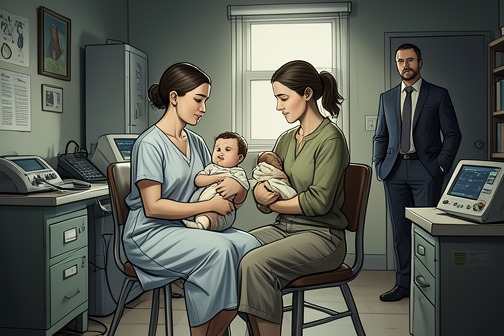
[Joy](entity:character-recall-character-joy-aa3ba3cae50b)’s death in March 1997 closes a difficult illness but does not sever her ties to the family she helped create. Before she died, she had signed the papers for Dominick to adopt [Tyffanie](entity:character-recall-character-tyffanie-e10ac3c4e71f); the adoption went through afterward, making her last arrangement a lasting connection between her daughter, Dominick, and [Dessa](entity:character-recall-character-dessa-983ee7270af6).
## Death and its immediate weight
Joy’s death was a draining loss for Dominick and Dessa, as well as for those around them. She had put up a hard fight, but the account gives no specific medical cause of death. Its emphasis falls instead on the relationships that remained active around her: during her final year, she and Dessa became friends, and Joy’s decisions helped secure Tyffanie’s future.
## Joy and Dessa
Their friendship came after years in which Joy had watched Dessa from a distance. During a visit to the hospital, Joy told Dessa that she had once seen her with [Angie](entity:character-recall-character-angie-ab81440c0a94) at the mall, followed them to the food court, and sat nearby listening to their conversation. At the time, she had wished she could be Dessa’s friend. In Joy’s last year, that wish became real: the two women formed a friendship, turning an old, private longing into a present bond.
## The adoption and its aftermath
Joy signed the adoption paperwork two or three months before she died. By then she was very weak, and signing brought both laughter and tears. She regarded the arrangement as the fulfillment of a long-held wish: Dominick would become Tyffanie’s father. The adoption was finalized the following January, after Joy’s death.
Tyffanie and Dessa had taken to each other from the start, before Tyffanie began living with Dominick and Dessa. Their growing closeness continued in ordinary family life, including the UConn women’s basketball games Dessa took her to. Joy’s death therefore leaves grief alongside a concrete legacy: Tyffanie remains connected to her mother through the family Joy chose for her.
## Narrative significance
The account gives Joy’s death meaning through acts and relationships that outlast it rather than through a description of the final moments. Her remembered wish for Dominick to be Tyffanie’s father becomes a posthumous family bond, while the friendship with Dessa brings two women together shortly before Joy’s death. Loss does not undo those connections; it changes the form in which they continue.
Event 48
Dominick adopts Tyffanie
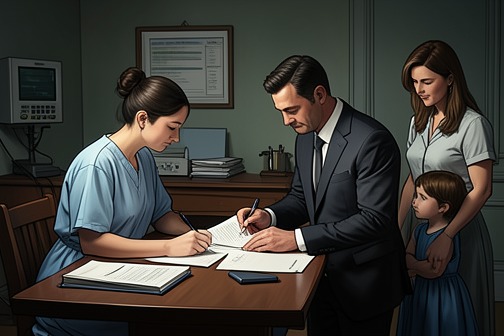
[Dominick adopts Tyffanie](entity:event-recall-event-dominick-adopts-tyffani-8473a6c3072c) after [Joy](entity:character-recall-character-joy-aa3ba3cae50b)’s death, turning Joy’s carefully arranged wish into a lasting family relationship. The adoption formalizes Dominick’s role as [Tyffanie](entity:character-recall-character-tyffanie-e10ac3c4e71f)’s father and gives a legal future to the bond already formed between Tyffanie and [Dessa](entity:character-recall-character-dessa-983ee7270af6).
## Background and Relationships
Joy and Dessa became friends during Joy’s final year. Their connection reached back to a much earlier moment, when Joy had seen Dessa and [Angie](entity:character-recall-character-angie-ab81440c0a94) together at a mall and wished she could be Dessa’s friend. By the time Joy was ill, that wish had become a friendship between the two women.
Tyffanie and Dessa also grew close quickly, before Tyffanie began living with Dominick and Dessa. Dessa took her to [University of Connecticut](entity:location-recall-location-university-of-connec-ed2e8f3e0750) women’s basketball games; at six, Tyffanie knew the players and had collected many of their autographs. Her first basket in the driveway—made at regulation height—marks how naturally she was settling into this shared family life.
## The Adoption
The adoption was completed in January, a few days after Dominick’s birthday. Joy had signed the necessary papers two or three months before she died in March 1997. By then she was very weak, and signing brought both tears and laughter. Her decision was not merely a practical arrangement: she understood the adoption as a way for Dominick to become the father she wanted him to be to Tyffanie.
## Aftermath and Significance
The adoption took effect after Joy’s death, but its meaning was shaped by her choices while she was still alive. Her friendship with Dessa and her signed papers connected the two women’s care for Tyffanie, allowing the child’s place in Dominick and Dessa’s household to continue beyond Joy’s illness and death.
For Dominick, becoming Tyffanie’s father answers a wish Joy had expressed and establishes a new parent-child bond. The account emphasizes the adoption’s everyday substance as well as its legal conclusion: a child who knows the basketball players and makes her first driveway basket is already part of the household before the paperwork is complete.
Event 49
Thomas's death
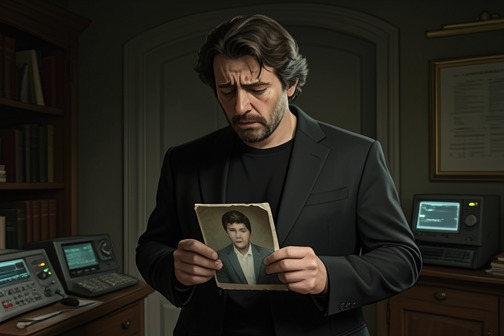
[Thomas Birdsey](entity:character-recall-character-thomas-birdsey-8bc90de9bb24)’s death is presented through [Dominick Birdsey](entity:character-recall-character-dominick-birdsey-4a27b6b8228a)’s later reckoning with loss, rather than through an account of the circumstances of the death. Dominick remembers the year he lost his brother as also the year he found his fathers, bringing the end of the twins’ bond into the same frame as a long-delayed discovery about family and belonging.
## Narrative Context
At thirty-six, while [Ma](entity:character-recall-character-ma-9cb60cf0594d) was dying of cancer, Dominick had imagined that she would reveal the identity of his father before her death. He had spent much of his life inventing possible fathers and distinguishing the one he sought from [Ray](entity:character-recall-character-ray-b860e51616e4), whom he regarded as an intruder in the family. This earlier fantasy gives his later account of Thomas’s death a particular resonance: loss and the search for a father had long been entangled in Dominick’s understanding of family.
## Retrospective Account
At forty-one, Dominick describes himself as having lost his brother and found his fathers: one had died years before, while the other had been there all along. The account does not specify when or how Thomas died. Instead, it identifies the death by its place in Dominick’s life and pairs it with the changed understanding of fatherhood that he had reached by then.
## Significance
The retrospectively stated loss is set against an earlier scene in the same booth where Thomas had spoken of fasting and sacrifice in the hope of averting a holy war. The contrast places Thomas’s sense of a world-changing mission beside the intimate consequence Dominick later names: the death of his brother. The account’s closing emphasis is not on the circumstances of that death, but on how Dominick holds grief and recognition together, naming Ray as the father who had remained present and acknowledging the father who had died before he could know him.